
The Spinal Fitness Desk Standard interrupts a working day with a 10 to 30 second micro-break every 45 to 60 minutes: 2 to 3 Neck Flexion reps, standing and a brief walk, and a rib-over-pelvis reset. A sleeping position holds the spine without those scheduled breaks. Sleep is a posture, and I changed my mattress and my pillow because of it.
Why a held position matters to a disc
My book Spinal Fitness describes disc nutrition as a mechanical process. After early adulthood, each disc relies heavily on motion to circulate nutrients inward and remove metabolic waste outward, and the process is essentially osmotic. Compression squeezes fluid out of the disc; decompression draws fresh fluid back in. A cervical spine with healthy lordosis keeps that exchange going through small movements of the head and neck during the day, so the disc stays hydrated and nutrients reach the inner cells of the nucleus pulposus.
When the curve is lost, what remains on the disc is downward, constant, unrelieved compression. The book states the consequence: the disc sits under sustained pressure without the periodic relief that drives fluid exchange, and over time the nucleus pulposus loses hydration, disc height decreases and the fibrocartilage degrades. A straight neck loses the pump as well. The goal the book sets for the neck is proper curvature, not straightness.
The book applies the same motion requirement to sitting: sitting reduces normal movement-based disc hydration and creates stiffness cycles, and sitting in poor posture is sustained mechanical work in a poor leverage position. The micro-break schedule exists to break up that hold every 45 to 60 minutes.
The load figures behind the neck curve
For upright posture, the book gives the effective head load by neck shape: 32 lb with proper lordosis, 64 lb with a straight neck and 117 lb with forward head posture. Each inch of forward head position adds about 10 lb of effective load to the cervical spine. Over an 8-hour shift with a 4-kilogram head, joint strain totals 18,048 kg in proper posture and 35,904 kg with the head forward, and muscle effort totals 6,336 kg against 26,736 kg: the head did not become heavier, the leverage changed.
Those figures are calculated for an upright head and neck. The book’s visual check for that posture is the ear over the shoulder with a visible cervical lordosis, and in side view the ear, shoulder and greater trochanter stacked.
What the book says about sleep
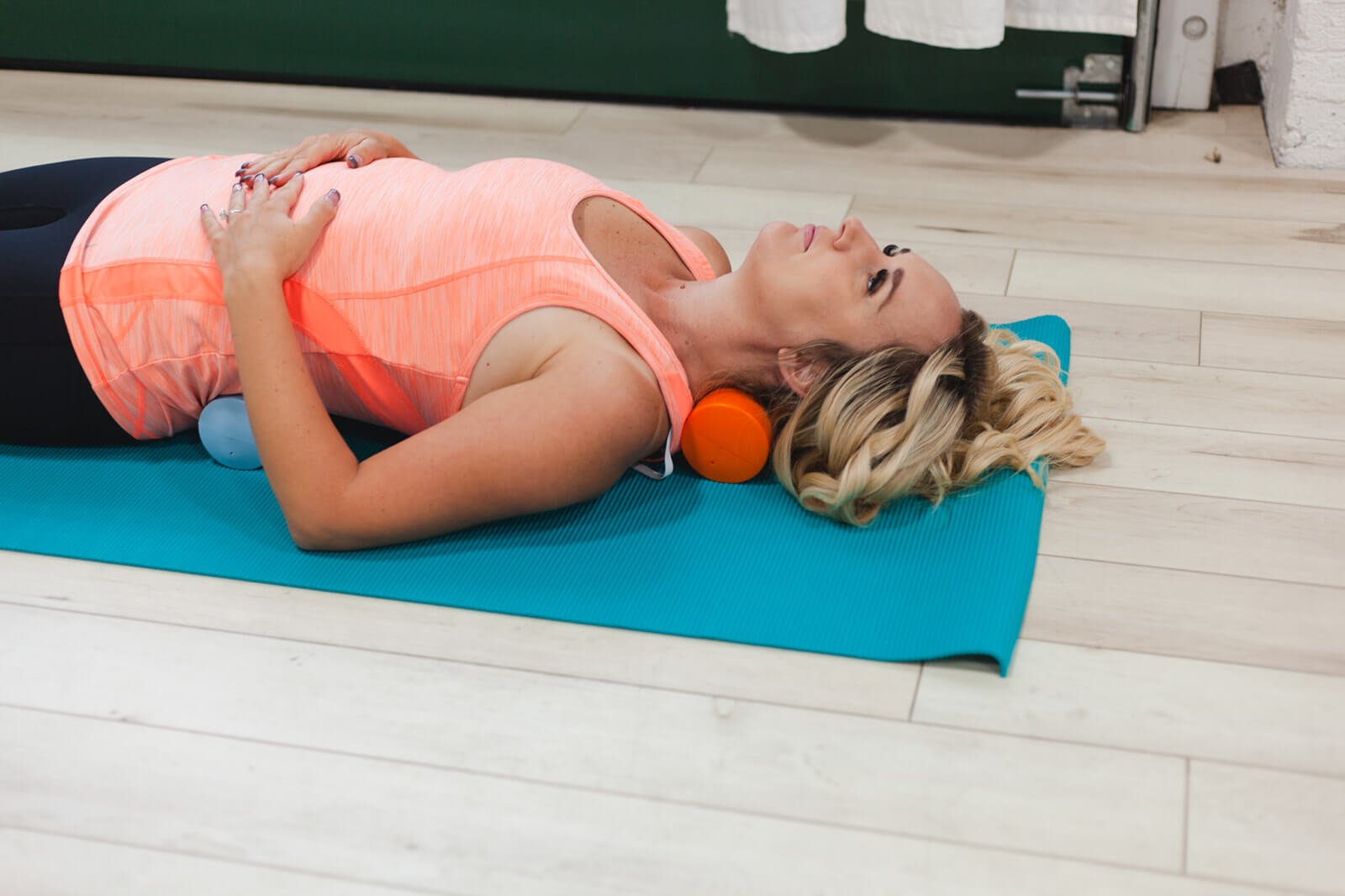
Step 5 of the system, the Spinal Twist followed by supported rest on the Neck and Back Shaper rolls, is the step the book credits with improving recovery and sleep quality. The best times for the rolls session, per the book, are before bed, after strenuous activity or after long driving days, and it is described as a nightly home ritual.
The supported rest is capped at 18 to 20 minutes, with the twist done first. The book’s reason for the cap: longer sessions can cause the nervous system to lose tension in ways that may increase instability. The twist itself is 25 seated reps, with left and right counted as 1 rep. The surface under the spine progresses from soft, a bed or massage table, to a mat, then to a firm floor as tolerance improves.
Sleep also appears in the book’s list of supports for cellular energy, beside red and near-infrared light, heat, oxygen, circulation, minerals, protein and appropriate pacing. Pillow height, mattress firmness and sleeping position are outside the scope of the book’s 5 steps.
The support criteria the book gives for the rolls
The book’s criteria for a spinal support are written for the Neck and Back Shaper rolls. The goal is a supported curve without pain, pinching, numbness or tingling, or breath restriction. A support should never create pain, numbness or tingling, dizziness, headache spikes, or a feeling of being jammed; if symptoms increase, the instruction is to reduce diameter or density, reduce load, or remove the roll.
The rolls come in 5 diameters, 2.75, 3.0, 3.25, 3.5 and 3.75 inches. The Neck Shaper is 7 inches long and the Back Shaper 12 inches, and each has a center groove so the spinous processes float instead of being pressed into the support. A flatter or stiffer spine typically starts with a smaller diameter and softer density, and progression runs in a set order: time tolerance first, then diameter, then density.
Passive support and active correction
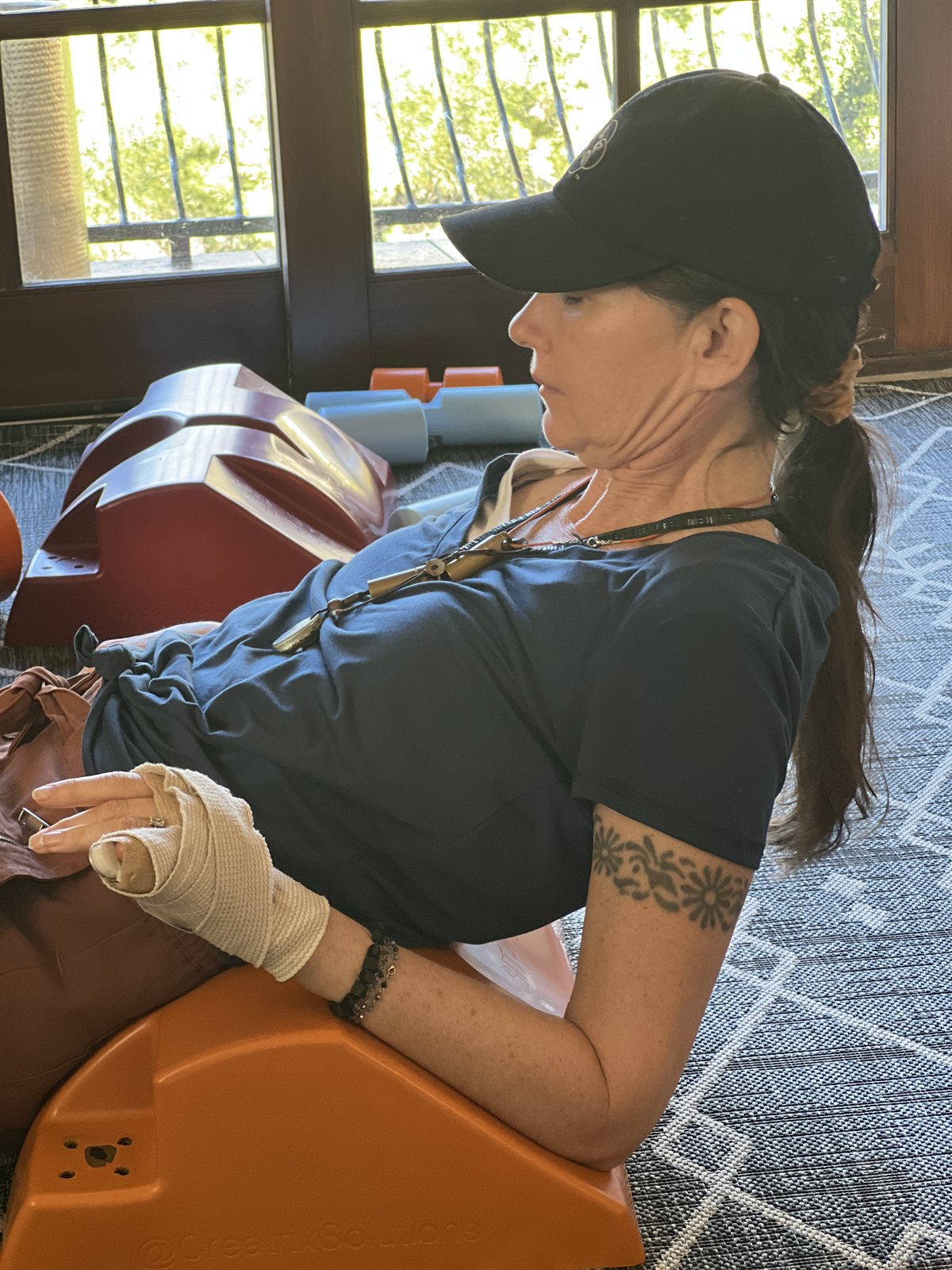
The book classifies passive fulcrum work, which builds from a few minutes toward 15 to 20 minutes, as preparation, not an adaptation stimulus. Adaptation requires active function against the appropriate resistance, applied to the spine from the anterior direction. A mattress and a pillow are passive supports. The curve itself is trained with the active steps: the Pelvic Tilt over a fulcrum, the Sit-Up over the PowerCushion starting at about 45 degrees, and Neck Flexion at 6 reps, 6 times per day.
Night symptoms the book lists for referral
The book’s screening red flags include unrelenting night pain, fever or chills with spinal pain, bowel or bladder changes, saddle anesthesia, progressive neurological weakness and severe radiating pain that does not settle. The instruction for any of them is to stop the session, document what you observed, and refer. New numbness or tingling, radiating symptoms, weakness or sharp escalating pain during training mean pausing and seeking medical evaluation.
Keep Exploring
This article is for educational purposes only and is not medical advice. Consult a qualified healthcare provider about any injury, persistent night pain, or change to your sleeping setup.