
Non-obviousness is 1 of the 3 patent criteria, and Chapter 4 of my book Invent It and Be Your Own Boss defines it as the requirement that an invention not be an obvious combination of existing technologies or design features to a person skilled in the field at the time of invention. An examiner who finds the invention obvious over the prior art rejects the claims on that criterion. This article covers how the examiner tests obviousness, the 3 ways an invention shows it is not obvious, and how I answered a finding of no inventive step on 1 of my own patents.
The Skilled Person Test
Chapter 4 describes the test examiners use: a hypothetical skilled person with average knowledge and skills in the relevant field. If the invention would not be obvious to that person, it shows an inventive step and meets that 1 criterion. Chapter 4 sets the time of the test as the time of invention, so the examiner judges the combination by what the field knew at that point. The Patent Cooperation Treaty (PCT) process uses the same idea under the name inventive step, which is 1 of the 3 criteria, with novelty and industrial applicability, in the written opinion of the International Searching Authority.
3 Ways an Invention Shows Non-Obviousness
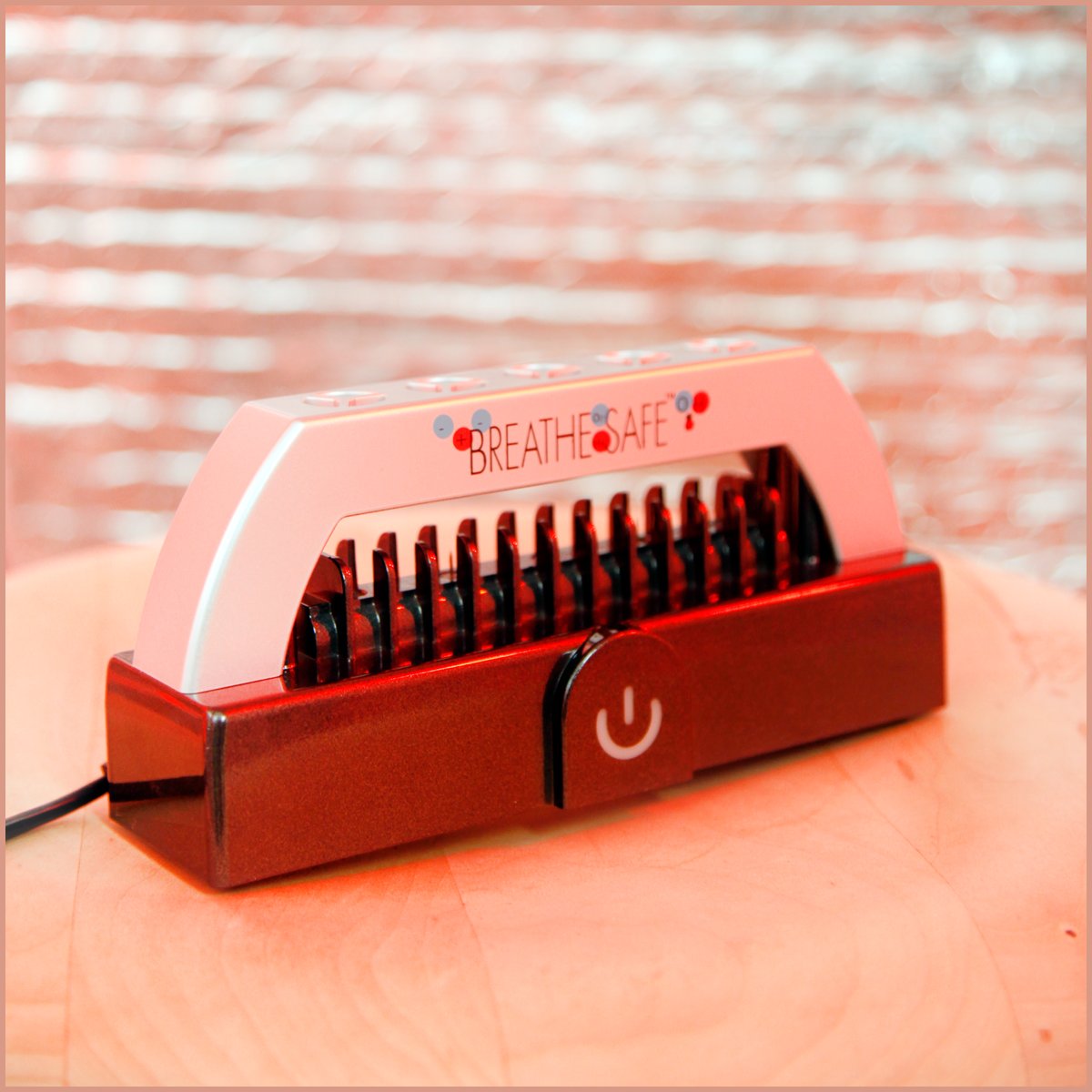
Way 1 is a combination of elements in a unique or unexpected way. My Water Container with an Ozone Diffuser, patent 10967335, is the Chapter 4 example: its degassing unit neutralizes excess ozone before the air is exhausted, sits in fluid communication with the aeration chamber, is positioned outside that chamber, and contains multiple filtering and straining layers. Chapter 4 states that this design and placement are not a straightforward combination of known parts.
Way 2 is an unexpected outcome. An invention that produces results against conventional wisdom in its field is likely to be considered non-obvious, and Chapter 4 states that this element of surprise strengthens the application. Way 3 is a progressive advancement: non-obviousness is not limited to breakthroughs, and an incremental improvement can qualify if it is a meaningful step beyond existing knowledge.
My Back Shaper: No Inventive Step, Then a Grant
I filed the provisional application for the Cushioning Posterior Fulcrum Back Shaper on September 28, 2016 and the PCT application on September 28, 2017. The written opinion of the International Searching Authority, issued December 26, 2017, accepted novelty and industrial applicability and found no inventive step relative to the prior art. I used that opinion to add features and functionality to the design. My attorneys then filed a PCT continuation-in-part and a U.S. utility application, the utility application on March 28, 2019, and the U.S. patent, 10966552, was granted April 6, 2021. Chapter 6 states my advice from that case: if similar prior art could block a grant, pay for the PCT application to get the written opinion, even with no plans for international patents. Chapter 6 records that without the written opinion and the 2 filings it prompted, the invention might not have been granted a patent.
How Chapter 6 Says to Answer the Rejection
Chapter 6 lists 3 parts of an answer to an examiner. Part 1 is a well-reasoned argument, and the book names 2 landmark cases, Alice Corp. vs. CLS Bank International and Mayo Collaborative vs. Prometheus, as references for countering an examiner’s reasoning in rejections generally. Part 2 is context against the prior art: a skilled attorney can show how the invention differs, and the book cites the treatise Chisum on Patents and Judge Pauline Newman’s statement that “the mere existence of some prior art does not automatically preclude patentability.” Part 3 is claim refinement: the examiner’s questions show where claims need to be clarified or narrowed, and Chapter 6 cites Supreme Court Justice Breyer’s flexible, commonsense approach to claim interpretation.
Chapter 6 gives 1 worked case: a self-cleaning toothbrush rejected on prior art citations, where the inventor’s attorney identified 2 technical distinctions, a novel bristle arrangement and an ultrasonic frequency, and secured the patent with detailed claim amendments and expert testimony under 35 U.S.C. Section 103, the obviousness section of the patent statute.
The Cost of Each Round
An office action response is typically due in 3 months, extendable to 6 months for an added fee, and each round of argument costs money. All but 3 of my patent grants included rejected claims that were defended and revised before issuance. Chapter 1 ties the number of rounds to the work done before filing: an exhaustive prior art search, and distinct features stated clearly in the claims, raise the chance of approval, and Chapter 1 states that every rejection demands a financial outlay to answer.
Keep Exploring
This article is for educational purposes only.