
How to turn a real problem into a patented product and a real business — from an inventor who has lived every step.
The Inventor’s Blueprint™ is Eileen Durfee’s practical framework for turning real-world problems into protected, developed, and commercialized products.
Many people have ideas. Far fewer turn those ideas into prototypes. Even fewer protect those ideas with patents. Fewer still manufacture, market, sell, support, and improve those products in the real world.
Eileen Durfee knows that difference because she has lived it. She is an inventor, author, wellness educator, former nuclear power quality professional, former home builder and land developer, product developer, and founder of a connected wellness ecosystem that includes EileenDurfee.com, CreatrixSolutions.com, WellnessShoppingOnline.com, and SpinalFitnessHealthandWellnessCenter.com.
None of this is theory. Every step is drawn from Eileen’s real-world experience creating patented products, building brands, overcoming manufacturing obstacles, educating customers, and commercializing inventions.
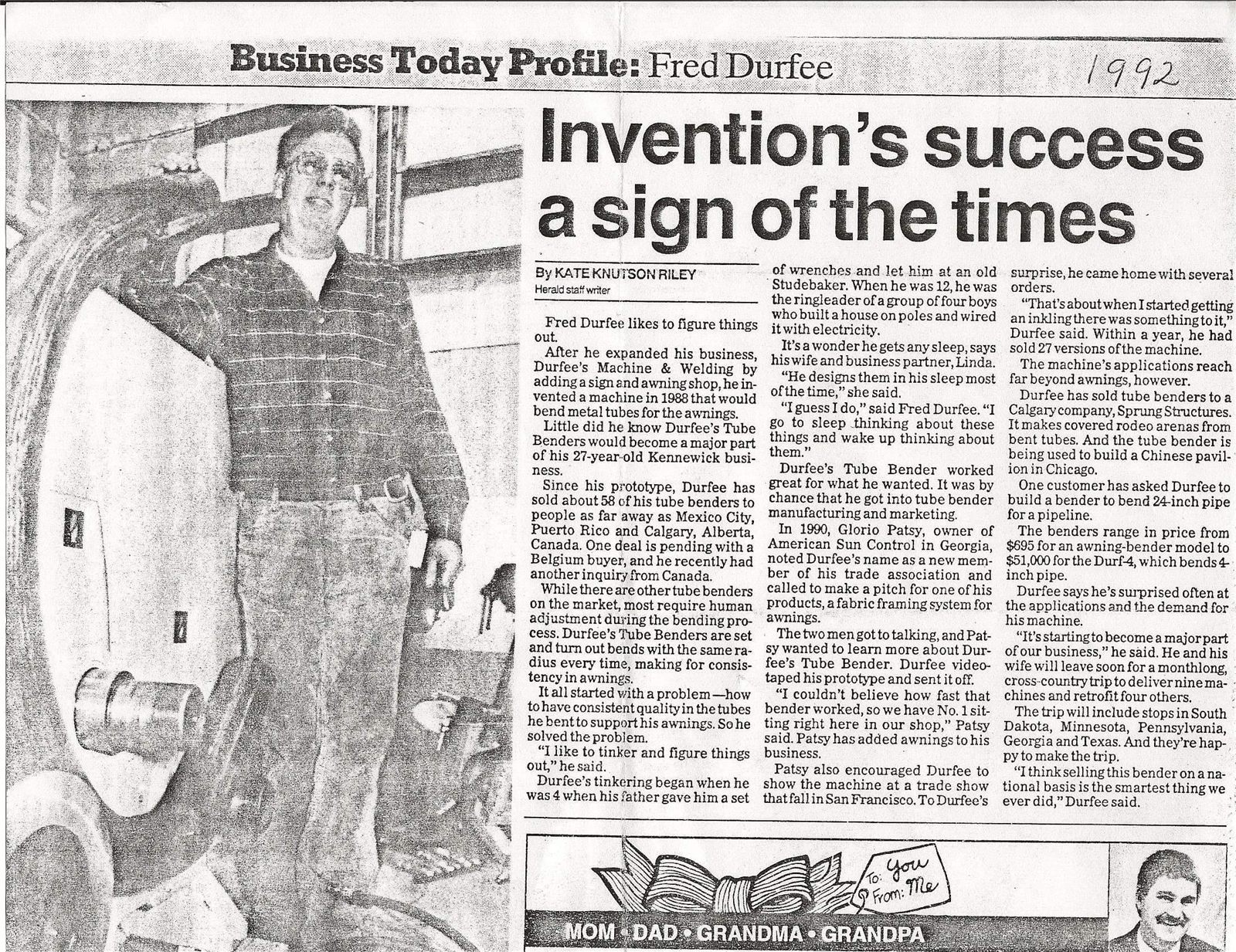
In 1992, a local business profile introduced readers to a Kennewick inventor who had built his own tube-bending machine — because no machine on the market could bend awning tubes with the consistency his shop needed. He designed the prototype in 1988, and within a few years had sold dozens of machines to buyers as far away as Mexico City, Puerto Rico, and Calgary.
“I like to tinker and figure things out,” he told the paper.
That inventor was Fred Durfee — Eileen’s father. His tinkering started in early childhood; by age twelve he was leading a crew of boys who built their own clubhouse and wired it for electricity. He saw a problem in his own business, built the machine that solved it, and took it to the world.
Three decades later, his daughter builds patented wellness products from the same town, following the same pattern: see the problem clearly, design the better solution, and carry it all the way to market. The Inventor’s Blueprint™ is that inheritance — written down so you can use it too.
Eileen did not become an inventor because she wanted a title. She became an inventor because she saw problems that were not being solved well enough — pain, posture, stiffness, poor recovery, chemical sensitivity, poor indoor air, limited home sauna options — and she experienced many of those challenges herself.
Instead of accepting existing products as the only options, she started asking better questions: Why does this product not work better? Why is this tool not shaped for the body? Could I design something better? Could this become a product people can actually use?
That question — could this be done better? — became the starting point for Eileen’s invention journey. The Inventor’s Blueprint™ teaches that invention begins with observation. Not hype, not guessing, not copying trends. Real invention begins when someone notices a problem clearly enough to design a better solution.
It is especially useful if you are asking: Is my idea worth pursuing? Should I patent it? How do I know if the market wants it? How do I find a manufacturer? How do I keep going when it gets hard?
The Blueprint does not promise every idea will succeed. It helps inventors think more clearly before spending time, money, and energy in the wrong direction.
Every strong invention begins with a specific problem that matters to real people — painful, expensive, inconvenient, unsafe, or poorly solved. A weak invention begins with “I have an idea.” A strong one begins with “people are struggling with this, and current solutions are not good enough.” If the problem is weak, the invention will be weak.
Many inventors fall in love too early and assume no one else has thought of it. Research existing products, competing designs, customer complaints, price points, materials, and patent risks. A good invention does not need to be different in every way — it needs to solve the problem in a meaningfully better way.
The insight is the “why” behind the invention — what you understand about the problem that others miss. It is what separates invention from imitation, and it becomes the foundation for the prototype, patent strategy, marketing message, and customer education.
An idea in your head is not enough. Sketches, models, 3D prints, fabric samples, functional mockups — a prototype does not have to be perfect; it has to help you answer better questions. The first version is rarely the final version. The goal is learning, not perfection.
People do not always use products as intended. Materials, heat, electrical safety, body positioning, instructions, warnings, testing, and support all matter — especially for wellness products. Eileen’s nuclear power quality background shaped her respect for safety and accountability. Responsible invention builds trust.
A patent is a legal tool, not magic — it does not manufacture, market, or guarantee sales. Learn provisional versus non-provisional filings, prior art, claims, office actions, and international protection. Patent strategy should always be connected to business strategy.
Loving your idea does not mean customers will. Interviews, preorders, small batches, trade shows, and practitioner feedback reveal whether people understand the product, believe the problem matters, and will pay — before you commit to inventory and tooling.
A product can look good as a prototype and be difficult, expensive, or unreliable to manufacture. Tooling, molds, minimum orders, quality control, packaging, margins, returns, and inventory cash flow — a product must be manufacturable, profitable, understandable, and supportable.
Many inventions fail because the inventor focuses only on the product. Customers need to understand the problem, the difference, the correct use, and why they should trust you. A product with strong education can become part of a larger movement.
Commercialization is not one launch day. Reviews, returns, improvements, supplier issues, copycats, cash flow, new versions — this is where the idea becomes real. Invention is not just creativity. It is endurance.
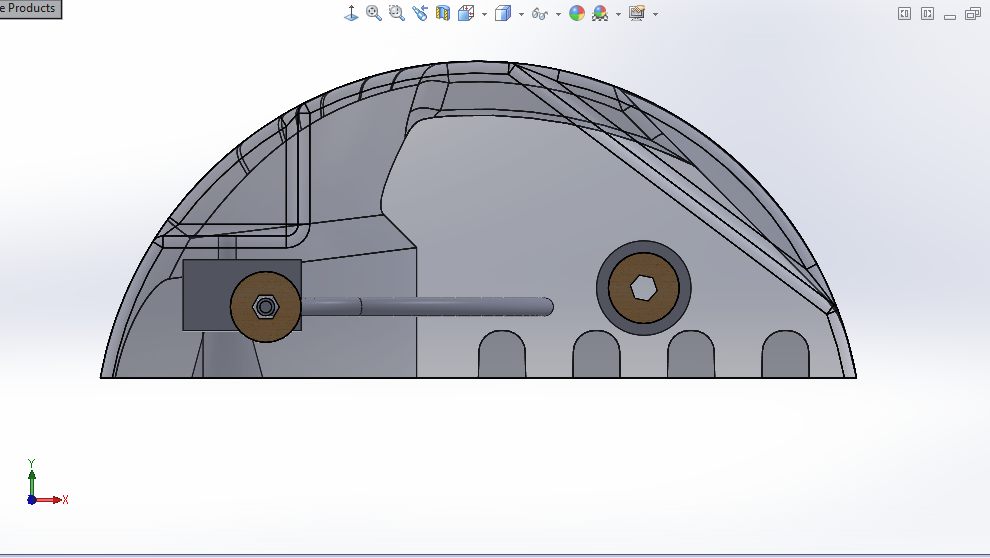
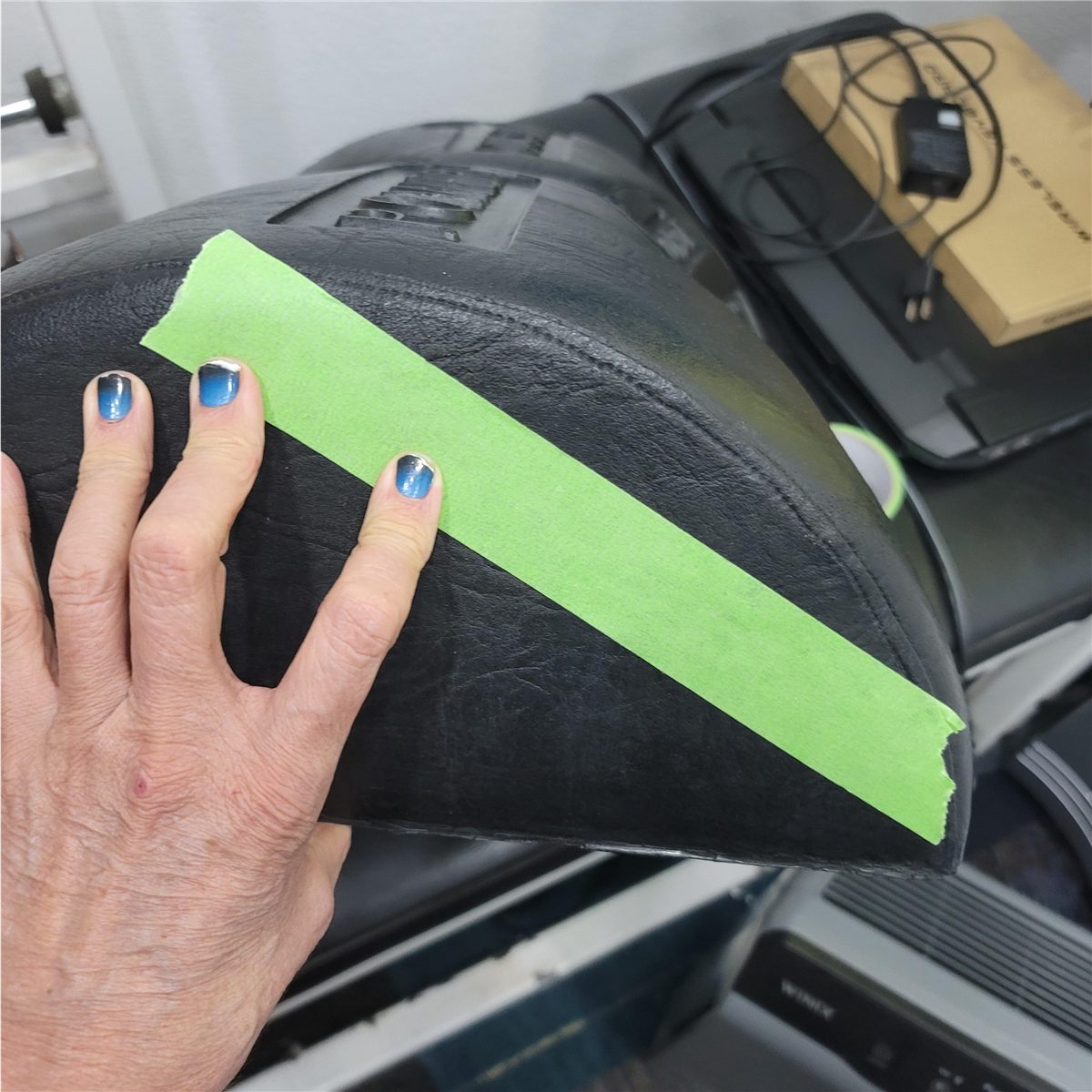
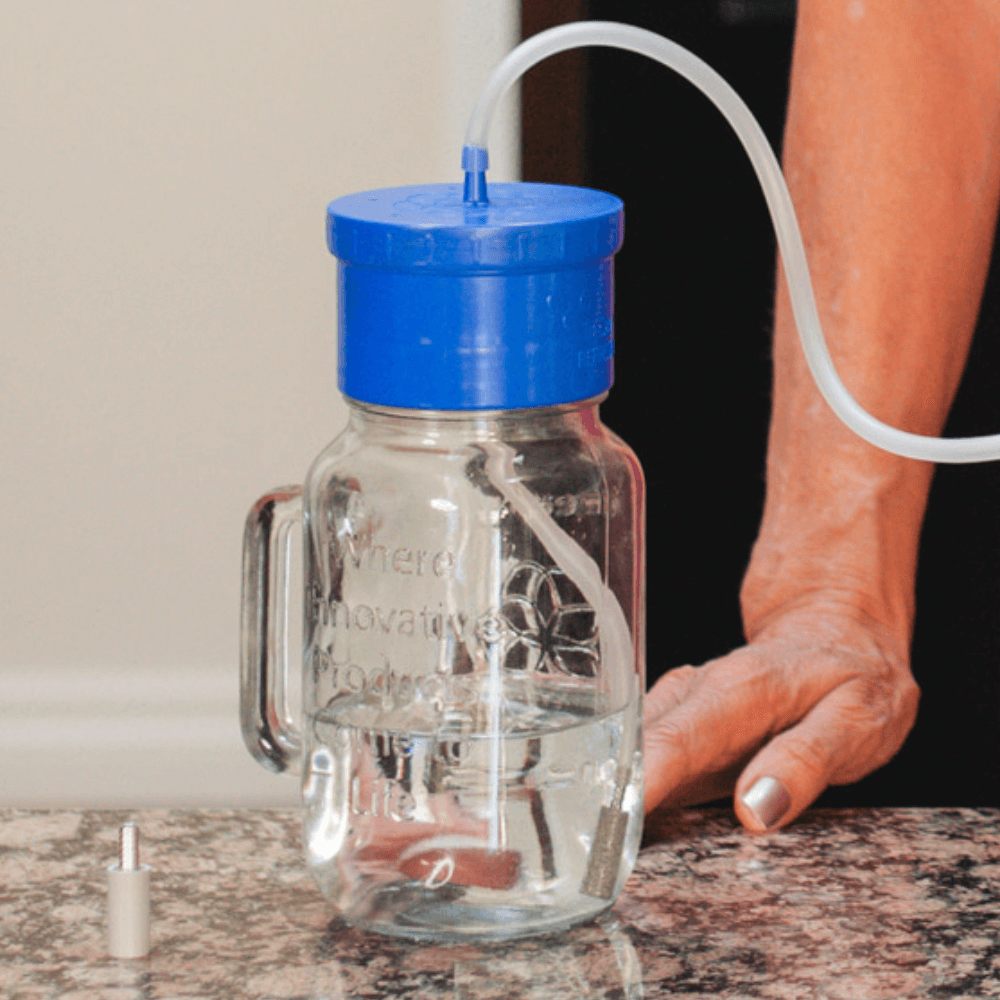
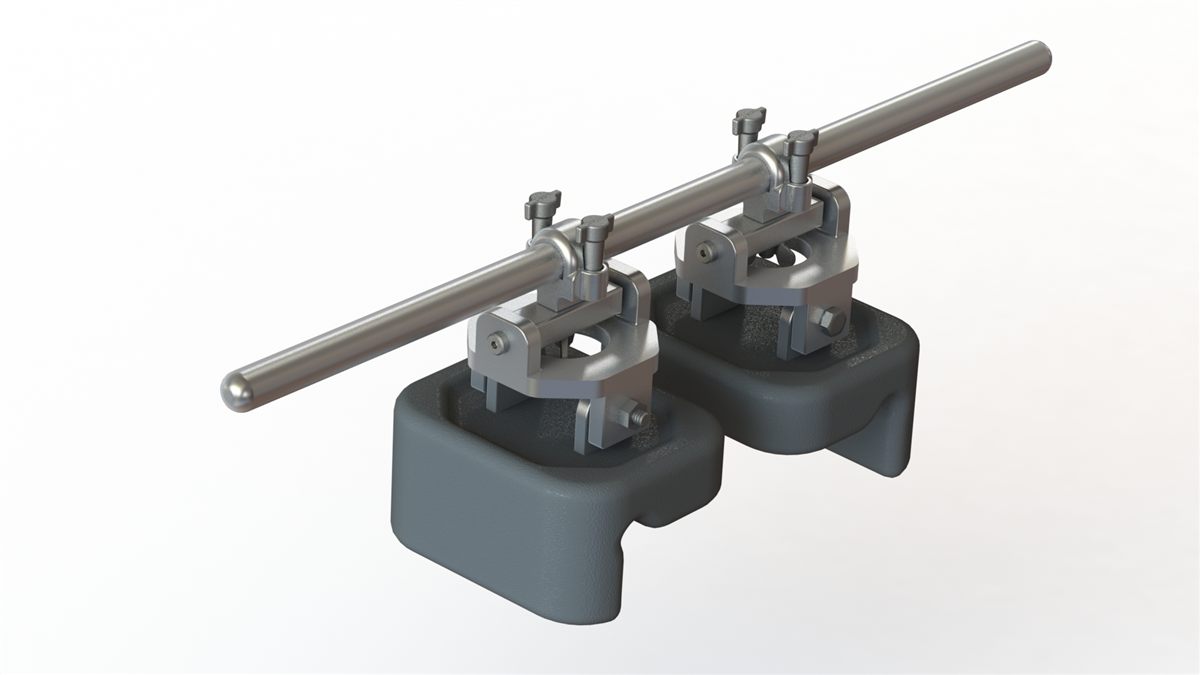
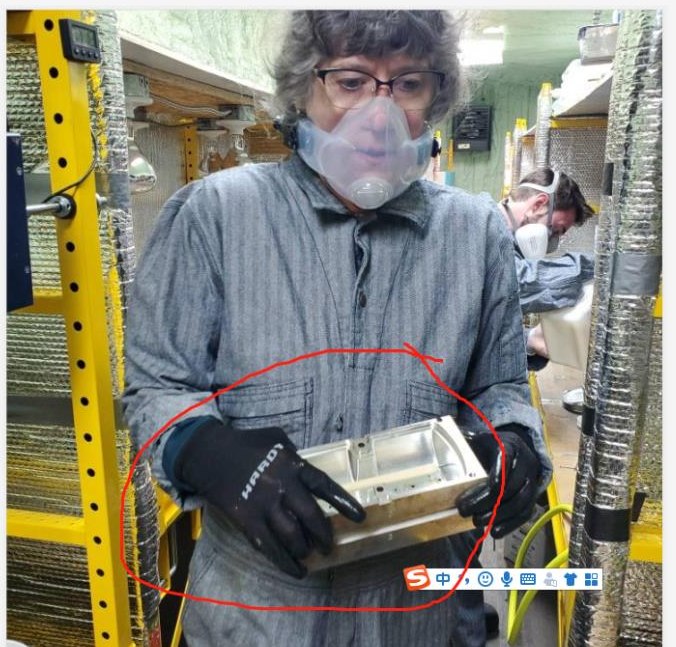
Eileen’s inventor authority comes from real product development: patented technologies in near infrared sauna, sauna portability, spinal fitness tools, cervical posture support, plasma air purification, water ozone diffusion, and water sterilization and degassing — commercialized as Sauna Fix®, Breathe Safe®, the Neck Shaper Kit, Back Trac, and more.
Eileen’s wellness inventions are not random products. They grow from the same six foundations that shape The Eileen Durfee Method™ — practical tools for better function.
Sauna Fix® supports near infrared heat, sweating, circulation, recovery, and home sauna routines.
The Neck Shaper Kit, Back Trac, and spinal fitness tools support posture, spinal curves, mobility, and healthy aging.
Sauna, sweating, water wellness, and environmental exposure reduction connect to detoxification support.
HTMA personalizes the nutrition and mineral side of the framework for people using sauna, exercise, and recovery routines.
Breathe Safe®, water wellness technology, and ozone diffusion address air, water, oxygen, and daily environmental burden.
Every invention supports the larger goal: aging with more strength, mobility, recovery, independence, and resilience.
Many people say “I have an invention” when what they really have is an idea. The Blueprint helps you see which stage you are truly in:
Women solve real problems every day — at home, in health, caregiving, wellness, fitness, and business — but many never take the next step to protect or commercialize those ideas.
Women inventors often face being underestimated, limited access to funding and manufacturing contacts, less visibility in patent conversations, and the challenge of balancing family demands — all while underpricing their own ideas.
Eileen’s story shows what is possible. She came from technical work, home building, wellness education, and personal health challenges. She turned observation into invention, ideas into patents, and patents into products, brands, and an educational ecosystem. The Inventor’s Blueprint™ encourages women to take their ideas seriously.
Inventors become emotionally attached before testing whether the idea works or whether customers want it.
Assuming no one else has thought of it is dangerous. Research first.
A patent is expensive. It should support a real commercialization or licensing plan.
Tooling, samples, minimum orders, packaging, testing, shipping, and defects can cost more than expected.
Wellness inventors must be especially careful with medical, health, safety, and performance claims.
If customers do not understand why the product matters, they will not buy it.
Margins, returns, advertising, wholesale, affiliate commissions, shipping, and support costs are easy to forget.
A good product can fail if the customer does not know how to use it correctly.
Inventors need attorneys, designers, manufacturers, marketers, photographers, copywriters, accountants, and advisors.
Invention is hard. Commercialization takes persistence.
The Inventor’s Blueprint™ introduces the framework. Eileen’s books are the deeper destination — the full story, strategy, worksheets, and practical guidance.
A Practical Guide for Inventors, Product Creators & Problem Solvers. Written from lived experience — identifying a real problem, building and testing prototypes, patent strategy and the Patent Cooperation Treaty process, learning from patent examiner feedback, manufacturing challenges, building a product brand, educating customers, overcoming obstacles as a woman inventor, and turning personal struggle into innovation.
The Companion Workbook for Turning Your Invention Idea Into an Action Plan. Where the main book teaches the strategy and lessons, the workbook helps you slow down and apply the process to your own concept — evaluate the problem, clarify the customer, compare existing products, plan prototypes, think through patent questions, estimate costs, and prepare for commercialization.
Before you spend money on your idea, answer these honestly:
The Inventor’s Blueprint™ is Eileen Durfee’s practical framework for turning a real problem into a developed, protected, and commercialized product.
It was created by Eileen Durfee — inventor, author, wellness educator, former nuclear power quality professional, and founder of patented wellness product brands.
No. The framework can help many inventors, but Eileen’s experience is strongest in wellness products, spinal fitness tools, near infrared sauna, air wellness, water wellness, and health-related product development.
Not always. Be careful about public disclosure and get proper legal advice, but early prototyping is often important for understanding whether the idea works. Patent strategy and prototyping should be planned thoughtfully.
No. A patent does not guarantee sales, manufacturing success, profitability, or customer demand. It is one part of a larger business strategy.
Falling in love with an idea before validating the problem, market, cost, manufacturing path, patent strategy, and customer education needs.
Many new products require explanation. If customers do not understand the problem, the difference, or the correct use, they may not buy — or may use the product incorrectly.
The Inventor’s Blueprint™ introduces the framework. Invent It and Be Your Own Boss expands on the invention and commercialization journey, while the Invent It Action Workbook helps readers apply the process to their own idea.
Visit the Patents & Inventions page for the full portfolio and the stories behind each invention.
Explore the Inventing, Entrepreneurship, and Patents categories in the Wellness Library.
A better product starts with a better question. A better patent starts with a clearer invention. A better business starts with a real problem. If you have an idea: start with the problem, study the market, define the insight, build the prototype, protect what is unique, validate demand, plan manufacturing, educate the customer — and commercialize with persistence. That is the Inventor’s Blueprint™.