
I owned a far infrared sauna before I owned a near infrared one. Near infrared incandescent bulbs were recommended to me for a greater therapeutic effect. After the first near infrared session I felt calm, with stable energy. By day 3 I was sweating more than I had been sweating in the far infrared sauna. I sold the far infrared sauna.
What the 2 names mean in nanometers
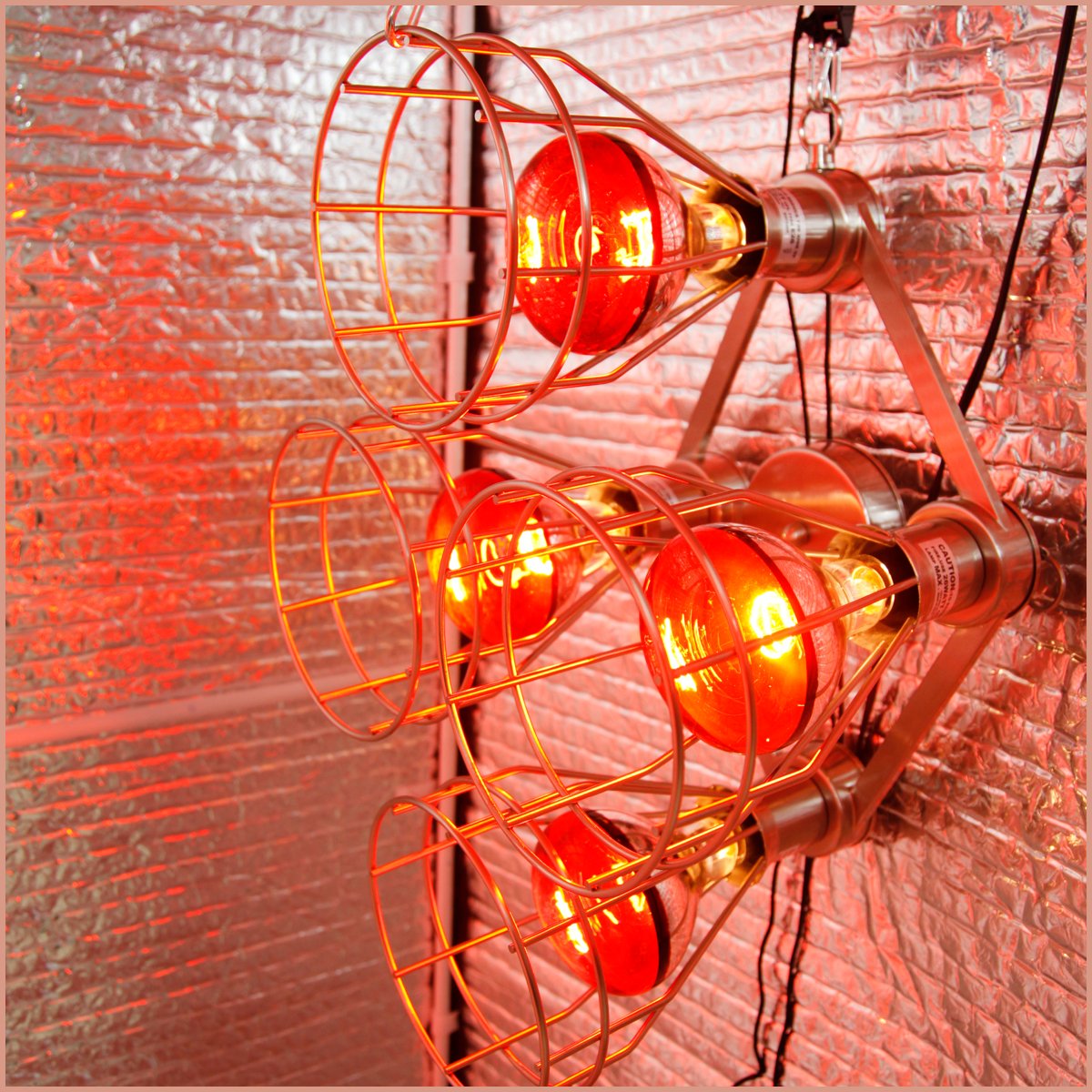
Visible red light ends near 700 nm, and infrared begins there. The International Commission on Illumination names the first infrared band IR-A, from 700 to 1,400 nm, and that band is near infrared. Far infrared is the long-wavelength end of the infrared range, thousands of nanometers and longer. A far infrared sauna uses carbon or ceramic panels that emit in that long-wavelength range. An incandescent bulb emits a continuous spectrum that begins in visible light, and the published range for the Sauna Fix lamps in my Kennewick center is 550 to 3,000 nm.
My book, Spinal Fitness, states the difference. A conventional far infrared sauna primarily heats the body through longer infrared wavelengths. Full-spectrum incandescent sauna therapy delivers visible red light, near infrared light, mid infrared and far infrared heat from the same incandescent source.
What the shorter wavelengths reach
Chapter 20 of the book separates red light from near infrared light by depth. Red light is visible and primarily reaches superficial tissue: the skin and the surface circulation. Near infrared light is invisible and penetrates more deeply into muscles, fascia, joints and nerves.
The book names the mechanism for the red and near infrared bands as photobiomodulation. Specific red and near infrared wavelengths interact with cytochrome c oxidase, an enzyme in the mitochondrial electron transport chain with a role in oxygen consumption and ATP production. Scientific reviews describe that enzyme as 1 of the major intracellular photoacceptors for red and near infrared wavelengths. A sauna that emits only the longer far infrared wavelengths supplies heat without the red and near infrared bands that the book ties to that enzyme.
What changed in my own sessions
Two things changed, in this order. Session 1: a calm state with stable energy after the session. Day 3: I was sweating more than in the far infrared sauna. I had been a person who was always cold and who did not sweat even after 45 minutes in a sauna, so sweating more by day 3 was the change I noticed first. The difference was large enough that I sold the far infrared sauna.
The book gives the physiology behind the heat side of a session. Heat widens blood vessels and increases blood flow to muscles, fascia and joints. Controlled thermal stress stimulates heat shock proteins, which assist with protein folding and cellular repair. Sweat carries water, salts and metabolic waste out through the skin, and it carries sodium, potassium, magnesium and trace minerals with it, so the book’s rule is to replace minerals and not only water.
Differences in how a session runs
The book describes the Sauna Fix as a no-preheat design, because incandescent lamps radiate onto the body from the first minute. The lamps face 1 side of the body at a time, so the session is divided into quarter turns: front, right side, back, left side. The Sauna Fix tent in my Kennewick center runs to a maximum of 155 degrees Fahrenheit, and sessions there run 20 to 40 minutes.
The book gives 2 placements for a session on a training day. A pre-training session runs 10 to 15 minutes at comfortable intensity to warm muscles and fascia. A post-training session follows the exercise, a brief rest and water, and ends with a shower and minerals.
Side by side
- Source: far infrared uses carbon or ceramic panels; near infrared uses incandescent bulbs.
- Visible red light: absent from a far infrared panel; present in an incandescent bulb, from 550 nm in the Sauna Fix lamps.
- Preheat: 0 minutes for incandescent lamps.
- Position: a quarter turn through 4 positions in front of the lamps.
- My result: more sweat by day 3 with the near infrared bulbs than with the far infrared sauna.
Stop signs in the heat
The hot room page at my center names 5 signs to end a session: dizziness, nausea, confusion, unusual shortness of breath and faintness. The book’s instruction for a first-time user is to begin gradually, because short sessions are more effective than overdoing it, and to replace sodium, potassium and magnesium after a session.
Keep Exploring
This article is for educational purposes only.