
Every so often someone tries a near infrared sauna for the first time and asks me, half-apologetically, whether theirs is broken. It only heats one side, they say. The front of me is glowing and the back of me is waiting its turn.
Nothing is broken. That is the design — and the turning you do because of it is quietly one of the most useful parts of the session.
Two Kinds of Infrared, Two Kinds of Heat
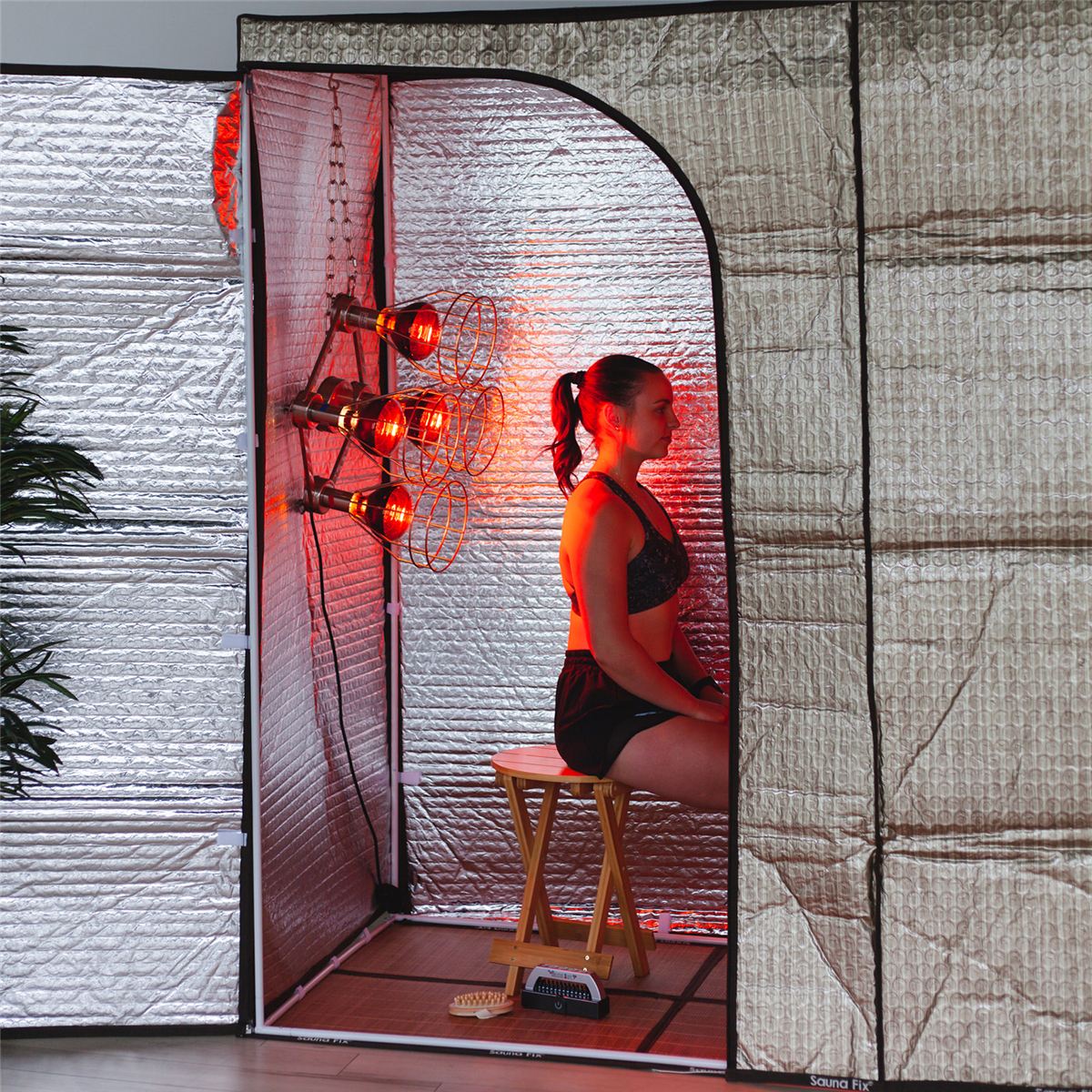
A far infrared sauna wraps you in ambient warmth from every direction at once, so your body temperature rises evenly. A near infrared lamp sauna works differently: the lamps face you, the light lands on the side of the body pointed at them, and the other side stays cooler until you rotate.
It would be easy to read that as a limitation. In my sauna guide I describe it the other way around: heating one side at a time is a feature, because of what it makes your circulation do.
The Shunting Effect
When one side of the body warms, blood moves toward the surface of the heated side. Turn a quarter or half turn, and the warmth lands somewhere new — and the blood redirects. Face, turn, face, turn, through the whole session.
That alternation between warmed and cooling surfaces keeps blood actively moving rather than settling into one steady, even distribution. In my guide I describe this shunting effect as doubling the circulation benefit of a comparable stationary session: oxygen and nutrients are being driven into deep tissues while the vascular and lymphatic systems keep getting fresh reasons to move.
Sitting still in even heat is pleasant. Rotating in directional light asks more of your circulation — which is rather the point.
Light That Reaches Deeper Than Warmth
The other half of the story is penetration. Traditional hot-air saunas warm tissue only a few millimeters deep, and they need 180–220°F of air to do it. Far infrared reaches roughly an inch and a half. Near infrared lamps penetrate around three to four inches into soft tissue — NASA research has documented photon penetration deeper still in some tissues — and they do it at a much gentler 110–140°F.
That lower operating temperature matters for real people. It is the difference between a session someone with heat sensitivity or deep fatigue can actually finish, and one they endure for six minutes and abandon.
What Rotating Looks Like in Practice
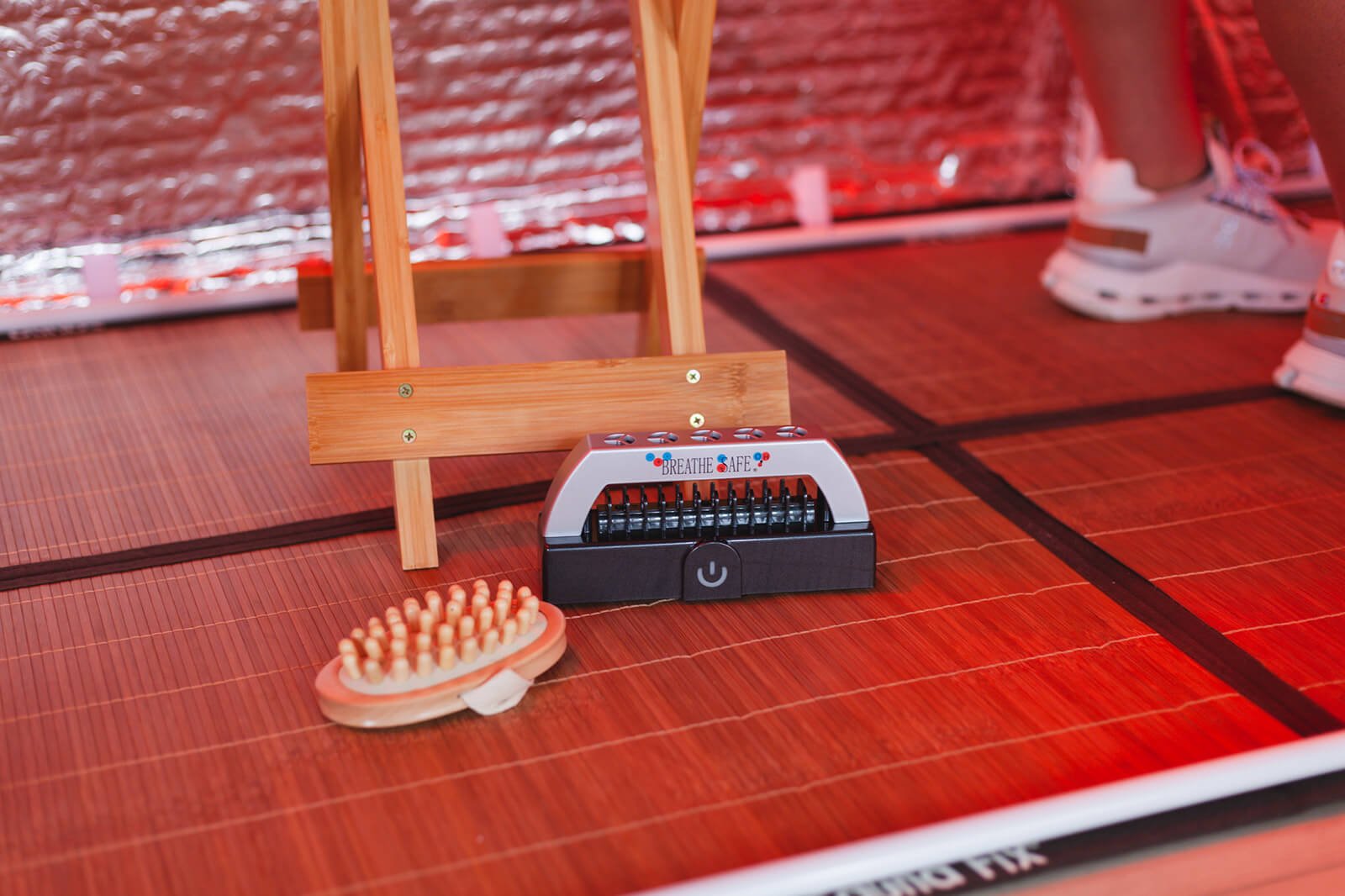
There is no complicated protocol. You sit on a stool, and every few minutes you turn — front, side, back, side. Most people settle into a rhythm without watching a clock, the same way you turn over in the sun before anyone tells you to. By the end of a session every surface has had its time facing the lamps, and your circulation has been redirected over and over along the way.
If you want the fuller picture of how a session unfolds from the first minute to the last, I have walked through it separately in the anatomy of a near infrared sauna session.
Why an Inventor Loves an Imperfection
I designed my own near infrared sauna, and I remember when I stopped thinking of one-sided heat as a compromise and started treating it as the mechanism. Engineering teaches you that the constraint you cannot remove is often the place the design should lean in. The lamps only face one way; the body can turn. Put those together and the “flaw” becomes a circulation feature no evenly-heated box can reproduce.
So if your first session feels lopsided — good. Turn. That is the sauna working.
The light side of this practice is collected on the Near Infrared Therapy pillar, and the elimination side on the Detoxification pillar.
Keep Exploring
This article is for educational purposes only and does not constitute medical advice, diagnosis, or treatment.