
“Strength is valuable, but strength is not automatically protective.” That sentence opens the section of my book Spinal Fitness titled “When Strength Training Becomes a Liability”, and the section closes on the sequence the whole system follows: structure first, strength second. The mathematics behind it come from my chiropractor and mentor, Dr. John Scherger (1950-2016), whose analysis models the spine as a lever system under gravity.
What structure means in this sequence
A stronger muscle produces more force. That force is useful only if the spine and joints have the structure to receive, direct and stabilize it. If the spine lacks its curves, if the joints are poorly aligned, or if the body relies on compensation, added strength increases the force traveling through a vulnerable system, and the body can generate more force than the joints can safely manage.
With the S-shaped spine present and stable, muscle effort combines with resistance into a stabilizing resultant force. Without that structure, the same muscular effort can shear through joints, increase compression, provoke guarding and accelerate fatigue; a person can feel stronger in the gym while the joints become less durable in daily life. For people with a lost spinal curve, chronic guarding or repeated back injury, the first goal in the book is to restore the structure that reduces the need for compensation, and the second is to strengthen it.
The numbers behind the rule
In the book’s broad model, proper structure does the same job with about 77 pounds of total muscular effort and 1,218 pounds of compression. Improper structure needs about 1,166 pounds of effort and 2,708 pounds of compression. That is a 15-to-1 advantage in effort and about a 2-to-1 advantage in compression for the properly curved spine. In the improper contact model, the stabilizing effort alone produces about 1,255 pounds of compression at the L5-S1 joint.
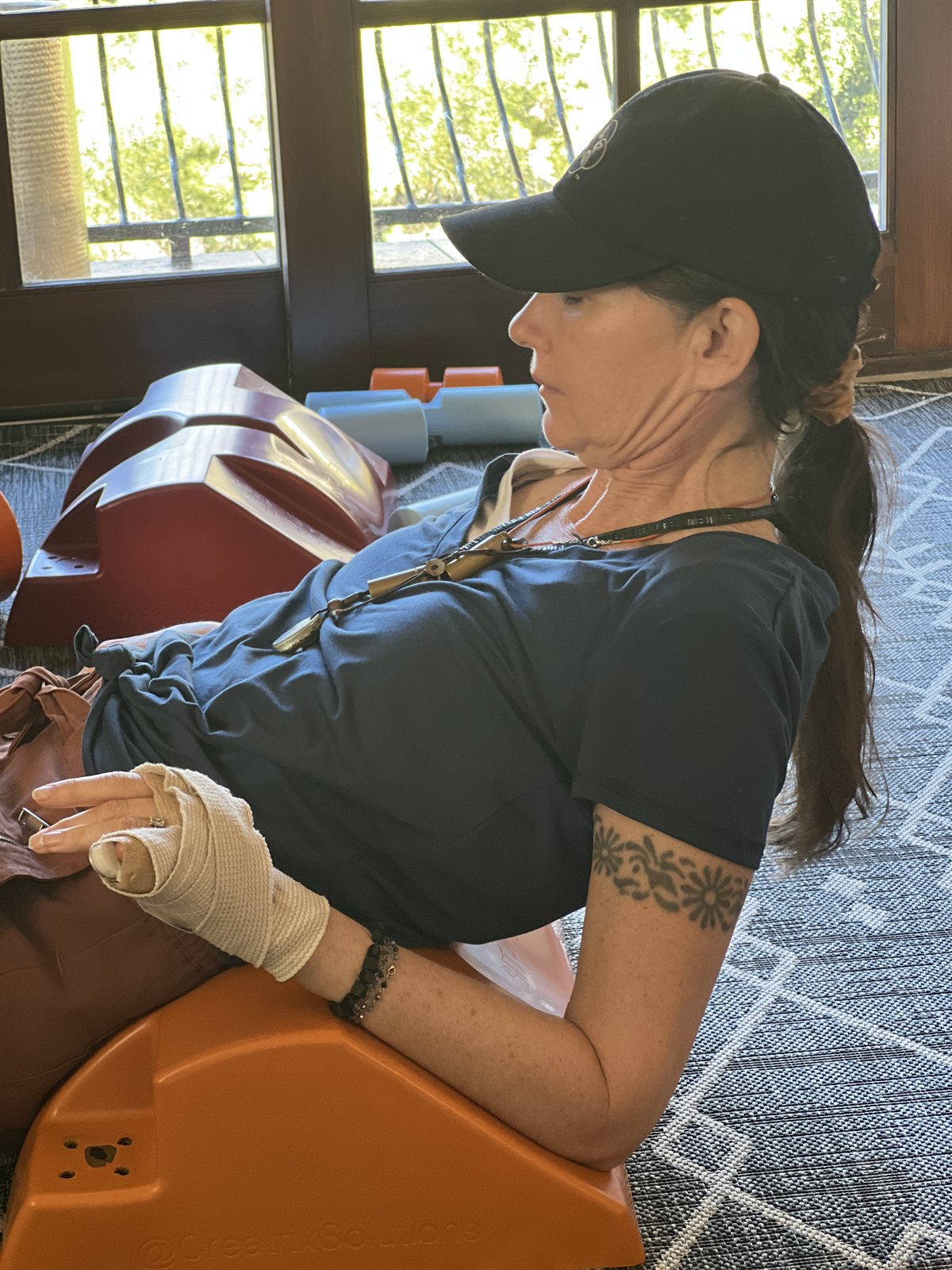
The Sit-Up over the PowerCushion shows the same split inside a single exercise. Against a 100-pound upper trunk, proper posture needs 170 pounds of effort, with a resultant of 196 pounds per joint, 1,176 pounds of total compression and zero total shear, using 2 muscles (the bilateral external obliques) and 6 joints. The best improper model needs 388 pounds of effort and 1,639 pounds of compression. The worst needs 741 pounds of effort and 2,501 pounds of compression.
Direction of resistance
Resisting a posterior force, whether lifting, rowing, doing back extensions or bending over to control a load, creates total compression at L5-S1 above 1,200 pounds just from stabilizing a 100-pound upper body. The force of effort across all lumbar joints exceeds 1,700 pounds. Those figures are nearly identical in proper and improper posture, so no form correction makes that direction safe at high loads or high repetition.
For that reason all 5 Spinal Fitness steps work from the anterior direction, where the spine has excellent mechanical advantage. The book lists back extensions, bent-over rows, standing bicep curls and repetitive forward bending under load among the movements where the posterior spinal muscles are the primary movers, to approach with caution, and names deadlifts and Olympic lifts under expert coaching as having their place.
The fast-twitch cost of lost posture
When the center of mass moves forward of the hips, the hamstrings, spinal extensors and hip stabilizers work continuously to hold the body upright. Those muscles are then doing slow, endurance-type contraction. Over time the continuous demand signals the body to convert fast-twitch fibers to slow-twitch, and the athlete loses the explosive capacity the training is meant to build. The book’s formula for keeping fast-twitch fibers available has 2 parts: explosive training with adequate rest, and proper spinal posture, which places the musculature in a minimum energy state. On that basis the book defines Spinal Fitness as a prerequisite for athletic development.
The order of the correction loop
The correction loop runs in a fixed order of 5 phases: decompression, load correction, structural rebuild, cervical integration, stabilization. The 5 steps carry it out:
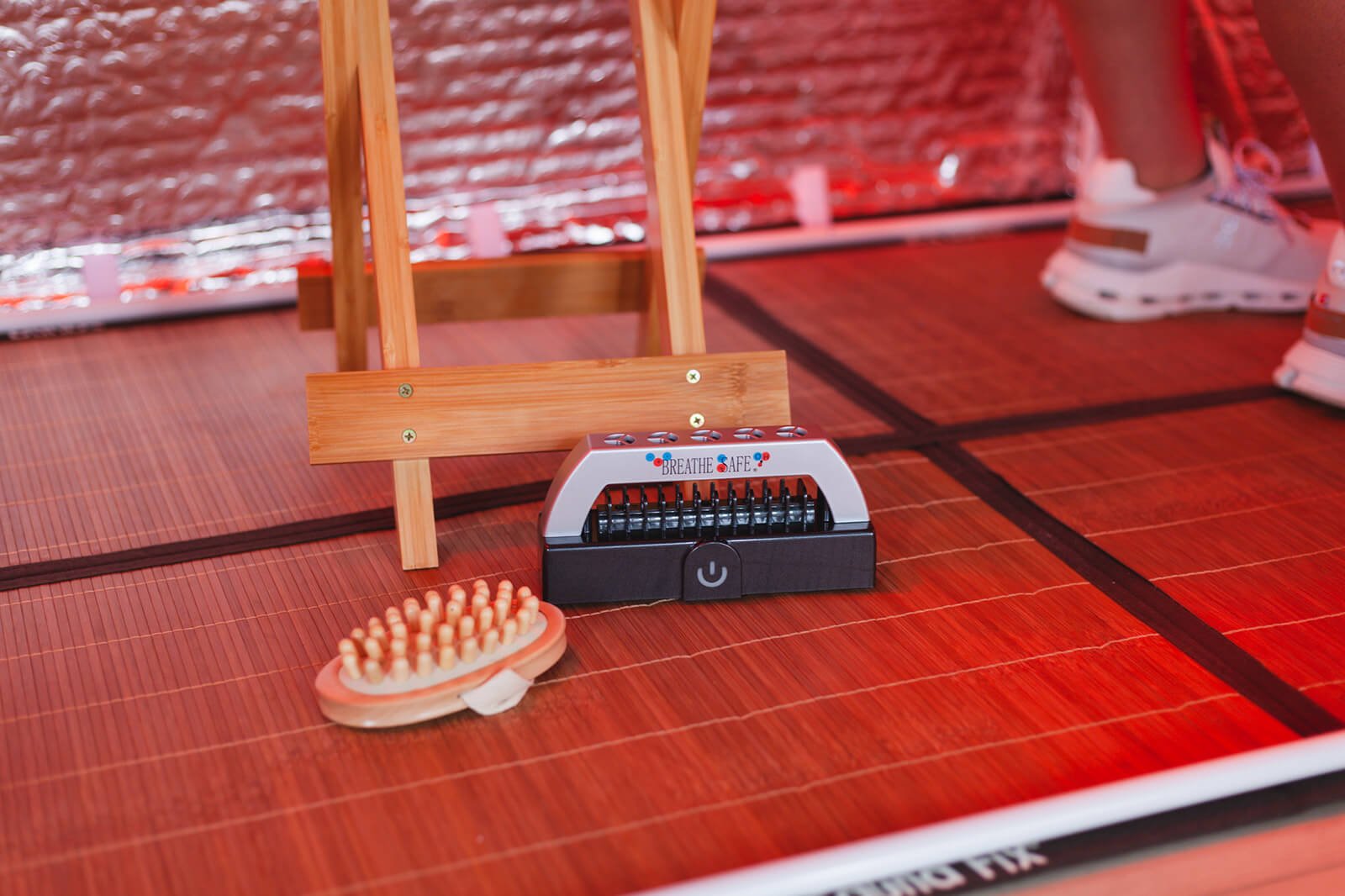
- Back Trac rolling, which restores segmental motion and reduces guarding.
- The Pelvic Tilt over a fulcrum, the segmental exercise for the L4-S1 relationship.
- The Sit-Up over the PowerCushion, which restores the lumbar curve during trunk motion against gravity.
- Neck Flexion at the micro-dose standard of 6 reps, 6 times per day.
- The Spinal Twist plus the Neck and Back Shaper rolls, with supported rest capped at 18-20 minutes.
Disc hydration, facet spacing, ligament tension and muscle guarding are all time- and position-dependent, so a body that is still guarding heavily gains less from strengthening than a calmer, better-organized body. The trainer instruction in the book is to keep all 5 phases in order even when the client is eager or strong. A client still bracing through Step 1, Step 2 or Step 4 is not ready for more load, and skipping phases forces compensation into the next phase.
Lying passively over a fulcrum such as the rolls or the PowerCushion is preparation for the spine, not an adaptation stimulus. Adaptation requires active function against the appropriate resistance, because the body adapts to the effects it is consistently subjected to: for the spinal curves, that effect is gravity and resistance applied from the anterior direction. The Sit-Up, Neck Flexion and the Pelvic Tilt all load the spine from the front while it is structurally supported.
How progression is gated
The progression rule reads: progress dose, whether reps, range or density, only when the current dose no longer produces the intended strain, or when the person demonstrates cleaner form with less compensation than in the previous session; enthusiasm is not a progression criterion. Dosing has 3 dimensions. Duration for passive fulcrum work begins at a few minutes and builds toward 15-20 minutes. Intensity has 2 levers, the external load and the density or diameter of the fulcrum. Frequency, such as the 6-times-per-day Neck Flexion standard, is the most powerful lever, because adaptation responds to cumulative stimulus; the body adapts to the most consistent stimulus, not the most intense one.
In every exercise in the system, muscle strain is acceptable and pain is a stop, and every rep is controlled. New numbness or tingling, radiating symptoms, weakness, bowel or bladder changes, or sharp escalating pain mean pausing training and escalating to medical evaluation.
Where added load fits in my method
Weighted Back Trac rolling is my own later step, added beyond the 5 steps written in the book. Unweighted rolling restores segmental mobility and reduces guarding. A controlled load on the chest, either a weight plate or the Force Applicators, makes the roller the fulcrum and increases the bending moment around it. The core then has to regulate how far and how fast the trunk travels around that fulcrum: the transverse abdominis increases trunk stiffness, and the rectus abdominis acts as an anti-extension brake on how far the rib cage opens away from the pelvis. The progression runs unweighted, then weighted, then Force Applicators, and the gate for any added load is the book’s bracing rule above. The strengthening that holds is curvature-inducing work for the postural muscles.
Keep Exploring
This article is for educational purposes only and is not medical advice. Consult a qualified healthcare provider before beginning a new exercise routine, especially after an injury or surgery.