
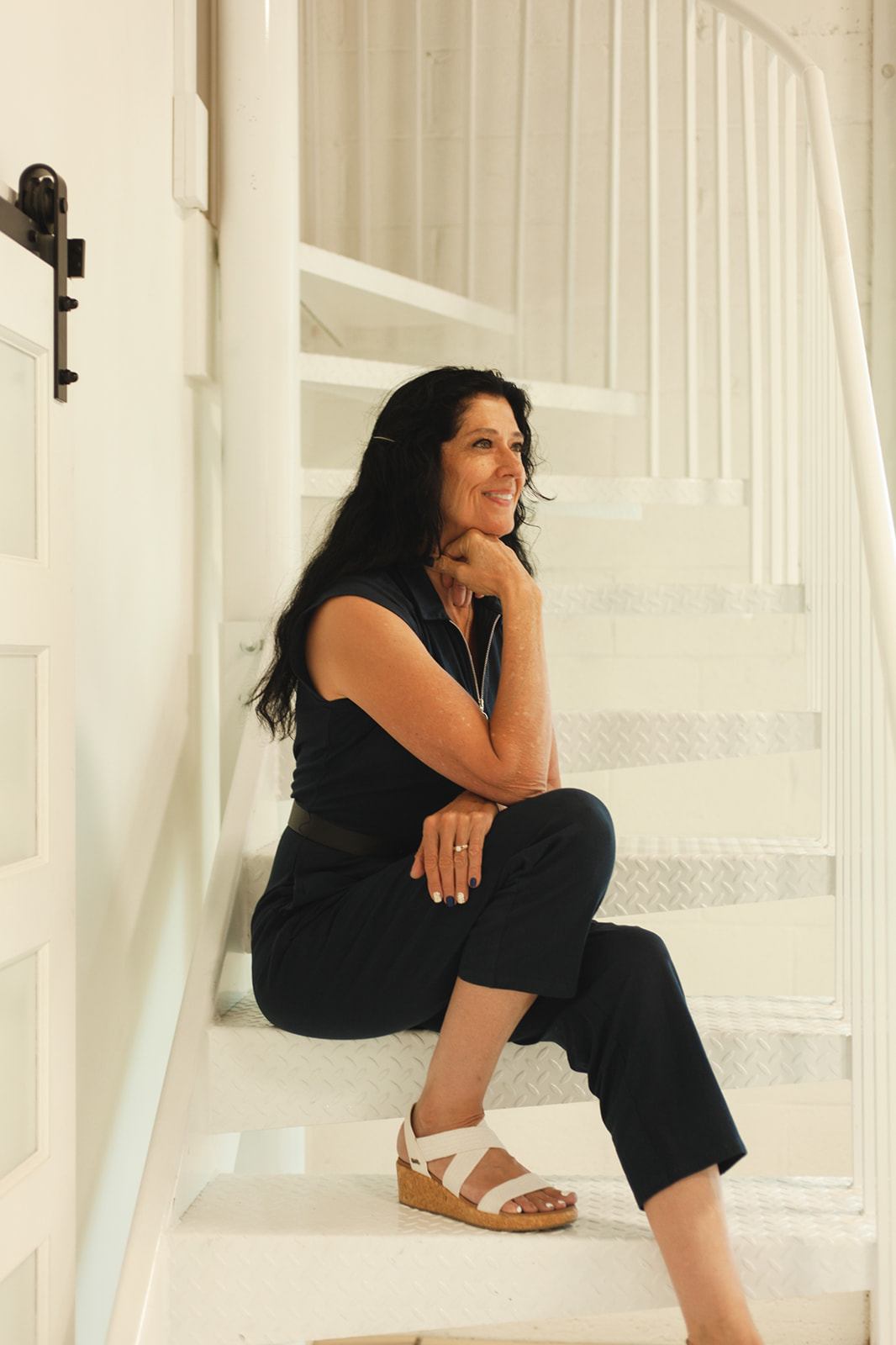
Practitioner Eileen Durfee, NBS (Nutritional Balancing Science), NASM-CPT, is a wellness educator, inventor, author and Nationally Certified Spinal Fitness Specialist; the speaker sheet in her 2026 book Invent It and Be Your Own Boss lists her as an inventor, author, CEO and Health and Spine Expert. Her health work combines hair tissue mineral analysis (HTMA), spinal fitness training, and the equipment she patented for sauna, air, ozone water and spinal use: 10 U.S. patents and 6 international patents.
Hair Tissue Mineral Analysis Since 2010
Eileen began hair analysis in 2010 under ARNP Julie Walker in Kennewick, Washington, and worked directly with Analytical Research Labs, testing family and friends. She listened to every cassette tape Dr. Paul Eck recorded and read every ARL newsletter. Eileen holds a NBS (Nutritional Balancing Science) degree, earned through Dr. Larry Wilson’s program beginning in 2011, and has practiced independently since autumn 2017. Since 2011 she has worked with thousands of people in more than 91 countries, using HTMA lab testing to design detoxification, nutrition and diet programs.
How an HTMA Screening Is Run
HTMA is a screening tool for nutritional and toxic-element status, not a diagnostic test. The sample is scalp hair cut within 1.5 inches of the scalp, about 250 mg, unwashed, because washing strips more than 90% of the sodium and potassium from the hair. Results are reported in mg%, each reading reflects about 2 to 3 months of hair growth, and a retest follows every 3 to 5 months.
Eileen reads each ratio as a range spanning both laboratories. Trace Elements puts the ideal Na/K at 2.4; Analytical Research Labs uses 2.5. The published ranges are Na/K 2.4 to 2.5, Ca/Mg 6.67 to 7, Ca/K 4 to 4.2, Na/Mg 4 to 4.17 and Ca/P 2.5 to 2.6, and both labs set Zn/Cu at 8. For calcium the 2 labs publish different ideals: Trace Elements has used 60 mg% since 2008, and Analytical Research Labs uses 40 mg%.
Toxic ratios judge a metal against its antagonist, such as calcium to lead at 84:1 or higher; hidden toxicity means the ratio fails while the metal itself reads within range. Trace Elements classifies 8 metabolic types, Fast 1 to 4 and Slow 1 to 4, as stress stages layered on dominance, and a move from Fast 4 to Slow 1 is the shift from a wired pattern to an exhausted one. The labs write conditions as trends of a mineral pattern, such as a cardiovascular trend; a trend describes the chart, not a diagnosis of the person.
Genetic variants can influence nutrient requirements and metabolic pathways. Eileen uses genetic information alongside symptoms, history and laboratory data to help identify appropriate nutritional support.
Spinal Fitness Training and Equipment
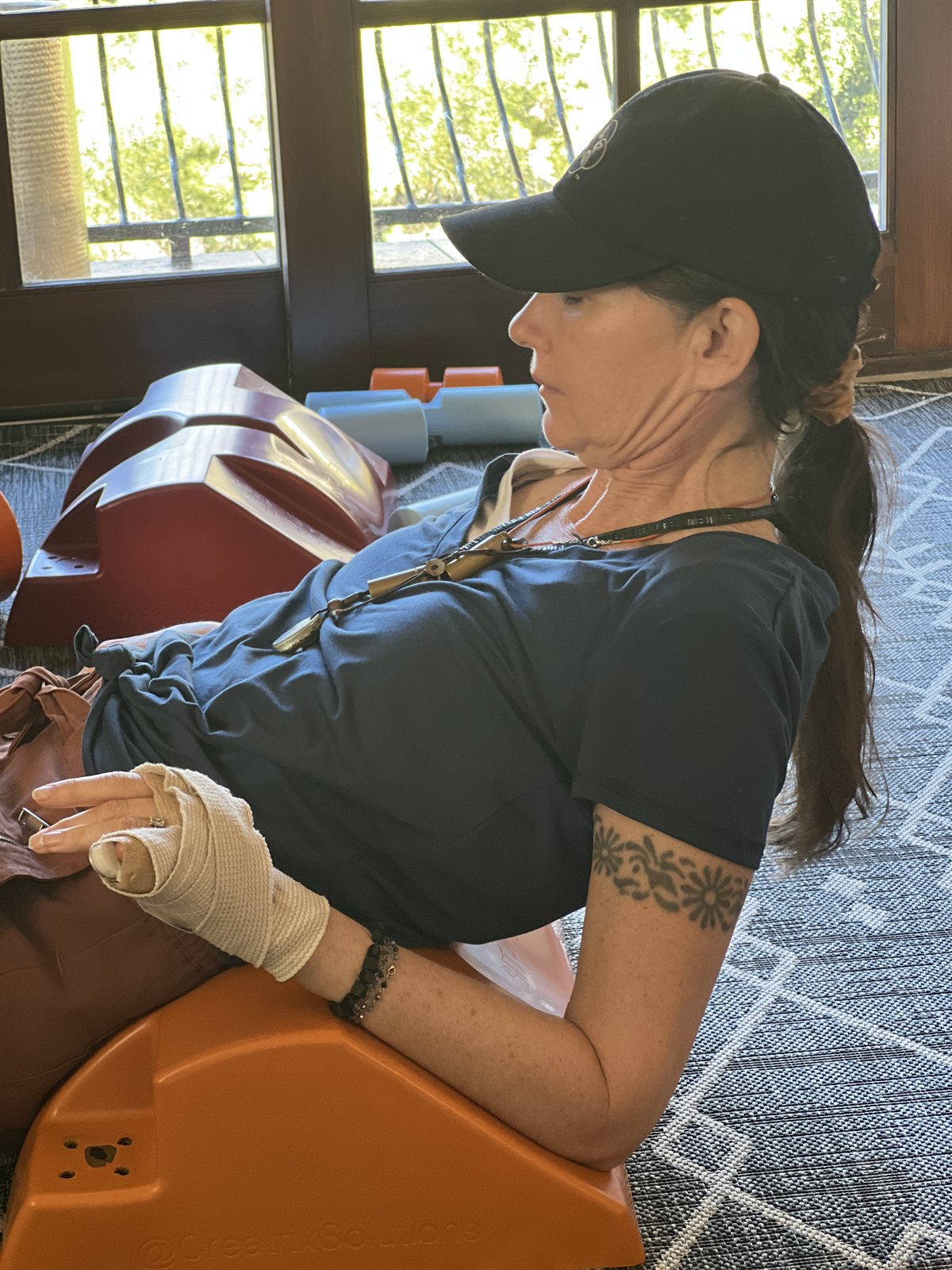
Eileen is a NASM-certified personal trainer and a Nationally Certified Spinal Fitness Specialist, and she offers personal training at Spinal Fitness Health and Wellness Center in Kennewick. Visitors to the center can be sized for the spinal fitness rolls and try them for segmental traction using their own body weight.
Her Spinal Fitness Training and Certification Program has 4 levels: Spinal Fitness Basics, Posture Evaluation and Exercises, Exercise Techniques and Equipment, and Trainer of Trainers, with an annual workshop required for Levels 3 and 4. Her workplace talk, BACK SMART, teaches 5 steps to reduce workplace back pain and injury costs; her book identifies back pain as the number 1 cause of missed workdays and a $100-billion-a-year problem.
The spinal equipment carries 5 of her U.S. patents: the Cushioning Posterior Fulcrum Back Shaper (10966552), the Weighted Target Applicator (10779665), and design patents for the Back Roller (D915613), the Back Roll Spinal Brace (D859668) and the Neck Roll Spinal Brace (D858779). Back Shaper rolls come in 5 diameters and 3 densities at 12 inches long, and Neck Shaper rolls in 5 diameters and 3 densities at 7 inches long; the groove supports the transverse processes of the vertebrae while the spinous process floats.
Engineering Background
After high school Eileen worked at the Hanford Nuclear Reservation, then traveled to power plants across the United States as a nuclear quality engineer, including inspection work at the Diablo Canyon Nuclear Power Plant; her other roles include inspector, auditor, trainer, land developer, home builder and nonprofit manager. She began her own health program in 1985, testing diets and detox protocols on herself, and her father, a machinist and inventor, trained her in machinery and design from childhood.
Her Own Measurements
From 2017 to 2020 Eileen went from a size 14 to a size 6, more than 30 pounds lighter. Between January and July 2026 she gained 11 pounds of muscle and lost 12 pounds of fat, a net scale change of about 1 pound, measured on her Hume scale and band; the figures are her own record. Her program in that period was lifting twice a week and walking 3 days a week, with methylation support, more choline, more frequent meals, and protein and carbohydrates timed before and after workouts.
She writes symptoms down, because symptoms that disappear are easily forgotten, and she has slowed her own program in response to reactions while adding coffee enemas, sauna sessions and rest.
Books and Media
Invent It and Be Your Own Boss (2026) is her second book, with a 20-section companion Action Workbook. She has appeared on ABC, CBS and NBC and as a guest on Dr. Wendy Myers’ Myers Detox Podcast.
Keep Exploring
This article is for educational purposes only and is not medical advice. Hair tissue mineral analysis is a screening tool; questions about a medical condition belong with a licensed healthcare provider.