
Mirrors are useless for posture. You straighten up the instant you look into one — everyone does — so the mirror faithfully reports a posture you do not actually have. If you want to know what your spine is doing all day, you need tests that catch it off guard. Here are the two I give people, and they cost nothing.
The Wall Test
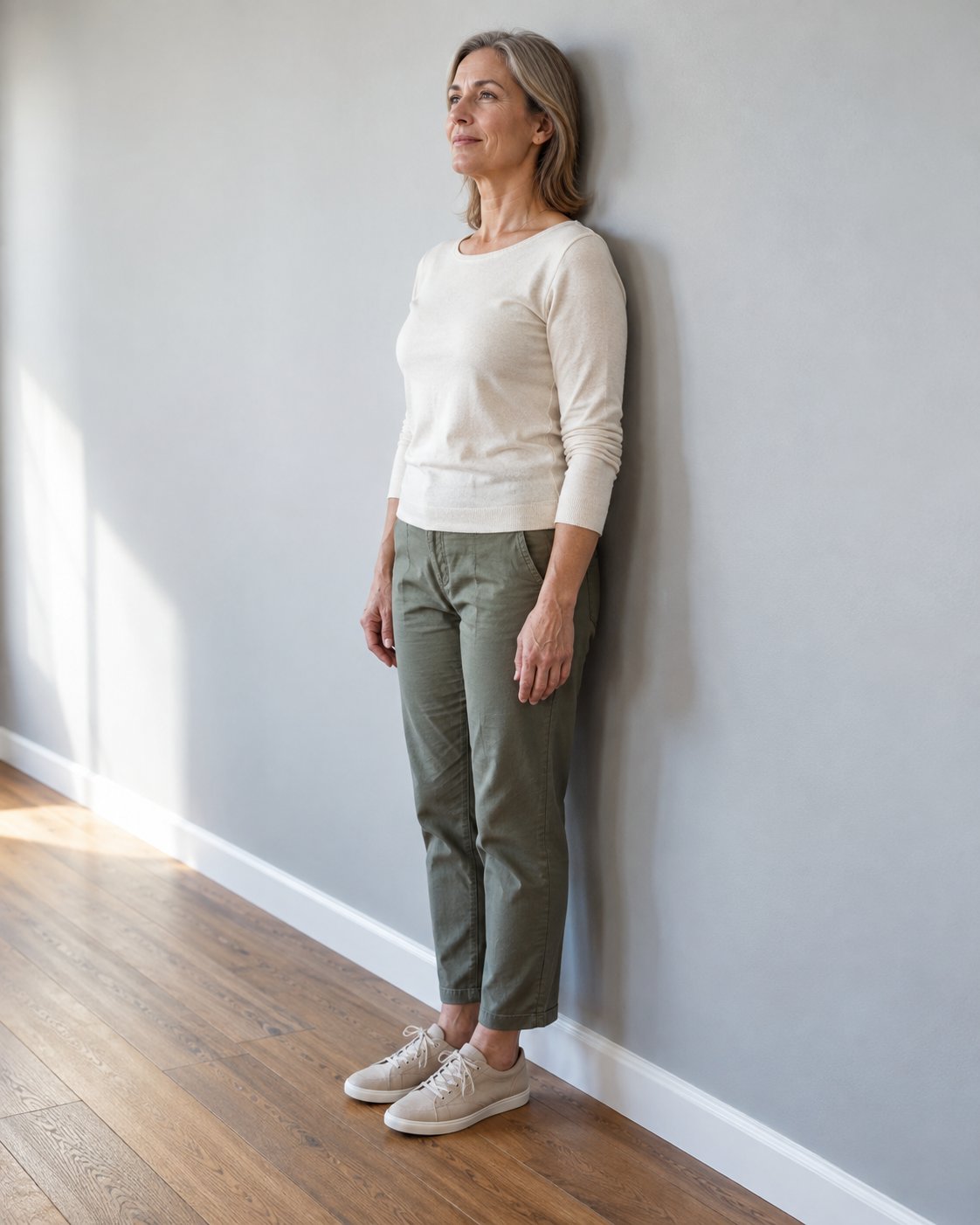
Stand with your back to a wall, heels a couple of inches out, and let your body settle naturally — do not arrange yourself. Then notice three contacts: do your shoulder blades touch? Does the back of your head touch without lifting your chin? And how much space sits behind your lower back — a flat hand’s worth, or a whole fist? A head that will not reach the wall without tilting the chin up is the classic sign of forward head drift. A lower-back gap that swallows a fist suggests the lumbar curve is exaggerated; no gap at all suggests it has flattened. Neither is a verdict — both are information.
The Photo Test
Have someone photograph you from the side, standing the way you normally stand, ideally when you are thinking about something else. Then look at one thing only: the ear. In easy alignment, the ear sits roughly over the shoulder. Every increment it rides forward means the muscles of the neck and upper back are carrying extra load all day — the burden climbs surprisingly fast with each inch of drift, which is why the end of a desk day aches the way it does.
What To Do With What You Find
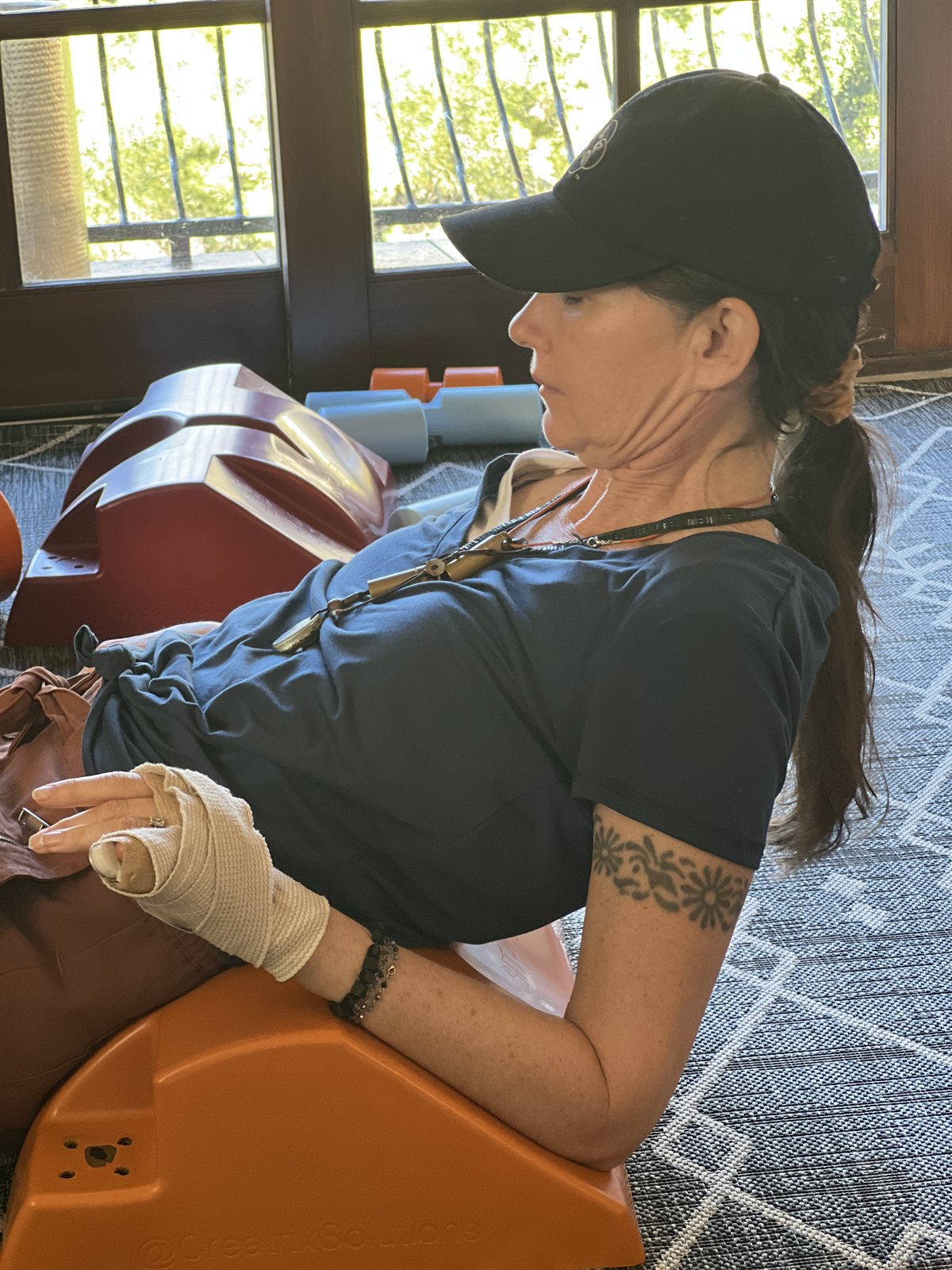
First: nothing dramatic. Posture changed slowly and it changes back slowly, through time-in-better-positions rather than through remembering to sit up straight, which lasts ninety seconds. Supported floor work is my daily tool — this week’s companion article on CreatrixSolutions walks through using the Back Trac for exactly the lower-back curve the wall test measures. Repeat both tests monthly; the trend across photos is honest in a way no single glance is.
When to Get Assessed Properly
If the tests surprise you, or anything hurts, a proper evaluation beats self-experiment. That is precisely what we do at my center in Kennewick — the Spinal Fitness Health and Wellness Center — and a posture-focused visit takes less time than people expect.
Keep Exploring
This article is for educational purposes only and does not constitute medical advice, diagnosis, or treatment.