
At some point in mid-life, most people discover at a routine appointment that they are shorter than they used to be. Almost everyone shrugs it off. It gets filed with grey hair and reading glasses — one more thing age simply does.
I want to argue with that shrug. Height loss is not cosmetic trivia. It is one of the most honest structural measurements your body ever gives you, and it is telling you something specific about your spine.
Where the Height Actually Goes
You do not lose height from your bones getting shorter, in most cases. You lose it from the spaces between them.
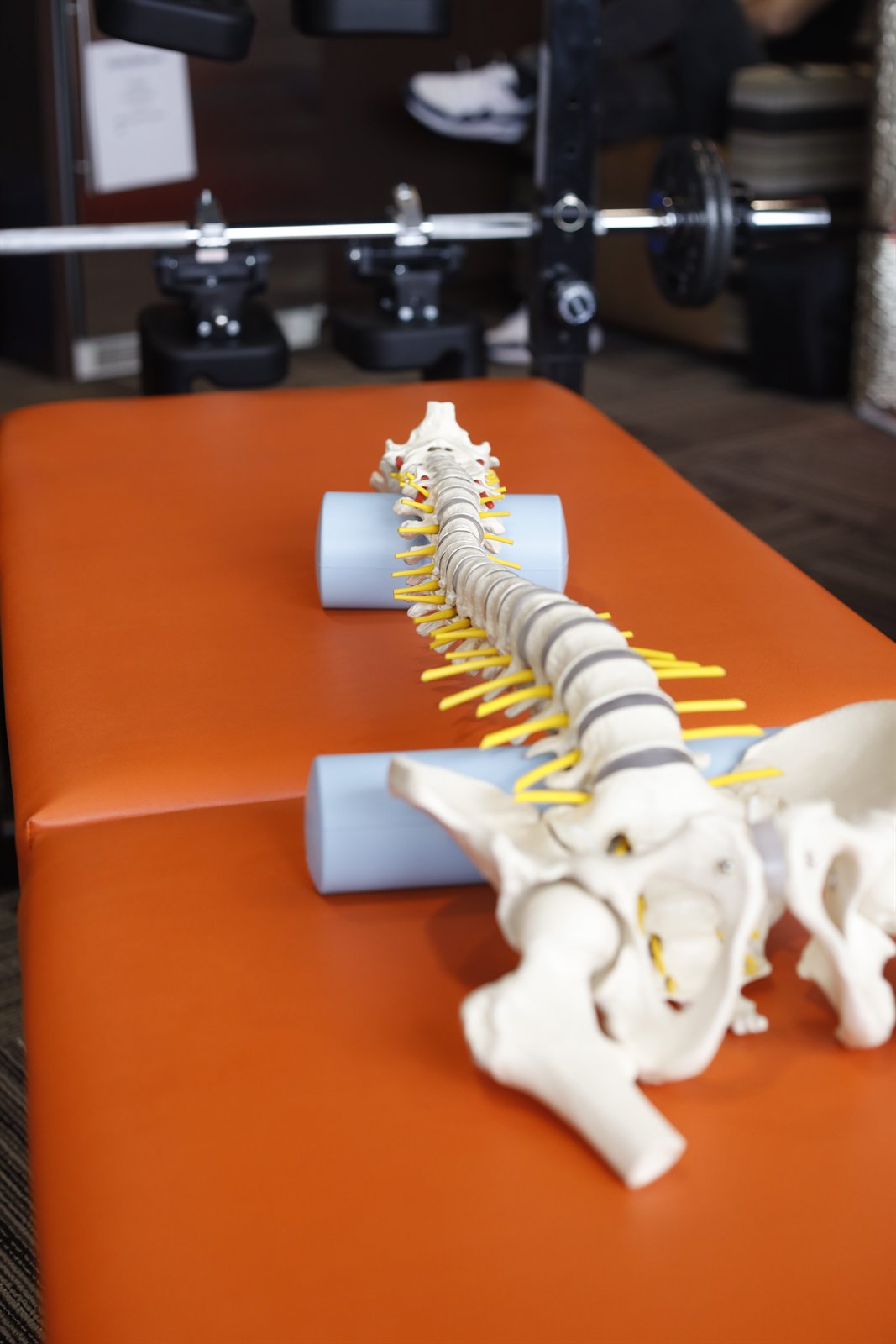
The spine carries twenty-three intervertebral discs — living shock absorbers that also act as spacers, holding the vertebrae apart so nerve roots can exit freely. Those discs have a peculiar vulnerability: they have no direct blood supply. They receive their nutrition exclusively through the pumping action of movement and proper spinal loading. Move well and load well, and the discs stay hydrated and tall. Sit collapsed for years, and they slowly dehydrate and lose height — and you lose it with them.
Lose a little disc height at each of twenty-three levels and the arithmetic becomes visible at the doctor’s office.
Why the Number Deserves Respect
In my guide Is Your Posture Aging You I cite research showing that adults who lose height from spinal compression show measurably higher cardiovascular and all-cause mortality risk with every centimeter lost. That correlation does not mean the height loss itself is doing the damage — it means the processes behind it, compression and degeneration and the postural collapse that drives them, reach far beyond the spine.
Height loss can also accompany declining bone density, which is a conversation worth having with your healthcare provider — it is a measurement, and measurements deserve follow-up, not a shrug.
The Collapse Pattern That Steals Inches
The typical sequence is not mysterious. The head migrates forward — every inch it travels adds roughly ten pounds of effective load on the cervical spine. The upper back rounds to carry it. The chest folds down, the lumbar curve flattens, and the whole column settles into a shape that is mechanically shorter than the one you grew up with.
Some of that shortening is degenerative and slow to change. But a surprising portion of it is postural — a shape your muscles are holding, not a structure that is gone. That is why people can measure taller after a period of dedicated postural work: the discs did not regrow in a month, but the collapse pattern released.
What Degeneration’s Timeline Looks Like
Spinal degeneration progresses through recognizable stages, from normal alignment through early curve loss, to visible disc-space narrowing, to the advanced stages where height loss becomes measurable and nerves become involved. The stage most worth knowing about is the early one — curve loss with slightly reduced disc height — because it is usually painless and almost always missed. Pain is a late-stage messenger. The tape measure often speaks first.
That is the real value of paying attention to height: it is an early, free, objective signal in a process that otherwise announces itself only when it is well established.
What I Do With That Signal
As a Spinal Fitness Specialist my starting point is always assessment — identifying which curves have been lost or exaggerated and where the spine sits in the degeneration timeline. From there the work runs in a specific order: decompression to restore space, curve restoration, then retraining the deep postural muscles that hold alignment automatically. I have spent years designing equipment for exactly this work, and the order matters more than the effort.
If you have lost noticeable height, or your ears now sit ahead of your shoulders in photographs, treat it as information. An evaluation can tell you precisely what the tape measure has been trying to say — my colleagues and I offer them at Spinal Fitness Health & Wellness Center in Kennewick.
The structural side of this subject is collected on the Spinal Health and Biomechanics pillar, and the aging side on the Healthy Aging pillar.
Keep Exploring
This article is for educational purposes only and does not constitute medical advice, diagnosis, or treatment.