
You will spend roughly a third of tonight in one room, breathing one air supply, while your body does its deepest repair work of the day. Yet the bedroom is usually the last room anyone thinks about when they think about wellness. Upgrading the air you sleep in is one of the quietest, most passive improvements you can make — it works on you every night, whether or not you think about it.
Why Bedroom Air Deserves Attention
Bedrooms concentrate their own particular air profile: dust and dander settle into bedding and carpet, doors stay closed for hours, and in newer, tightly sealed homes there is less fresh-air exchange than the room’s occupants assume. Meanwhile, sleep is precisely when you cannot make conscious choices about your environment — the room decides for you.
What Is Actually in the Air Up There?
Three categories do most of the work. Particles: dust, dander, and the microscopic debris of dust mites, whose favorite habitat on earth is a warm mattress — every toss and turn stirs the reservoir back into the breathing zone, which sits inches above the pillow. Gases: the volatile organic compounds that off-gas from mattress foams, pressed-wood furniture, fresh paint, and anything fragranced, all accumulating behind a closed door. And carbon dioxide, the one nobody measures: two sleeping adults in a closed bedroom can push CO2 well past outdoor levels by morning, and stale, CO2-heavy air is part of why some bedrooms produce groggy mornings regardless of how long you slept. Each category has a different fix — which is why no single gadget solves “air quality,” and why the upgrade below is a set of small moves rather than one purchase.
The Simple Upgrades
- Wash what you sleep on, often — bedding is the room’s biggest particle reservoir.
- Air the room daily — even ten minutes with the window open exchanges a surprising volume.
- Crack the door at night — the zero-cost CO2 fix; a door open two inches changes the overnight math.
- Keep the floor clear — soft clutter collects and re-releases dust with every disturbance.
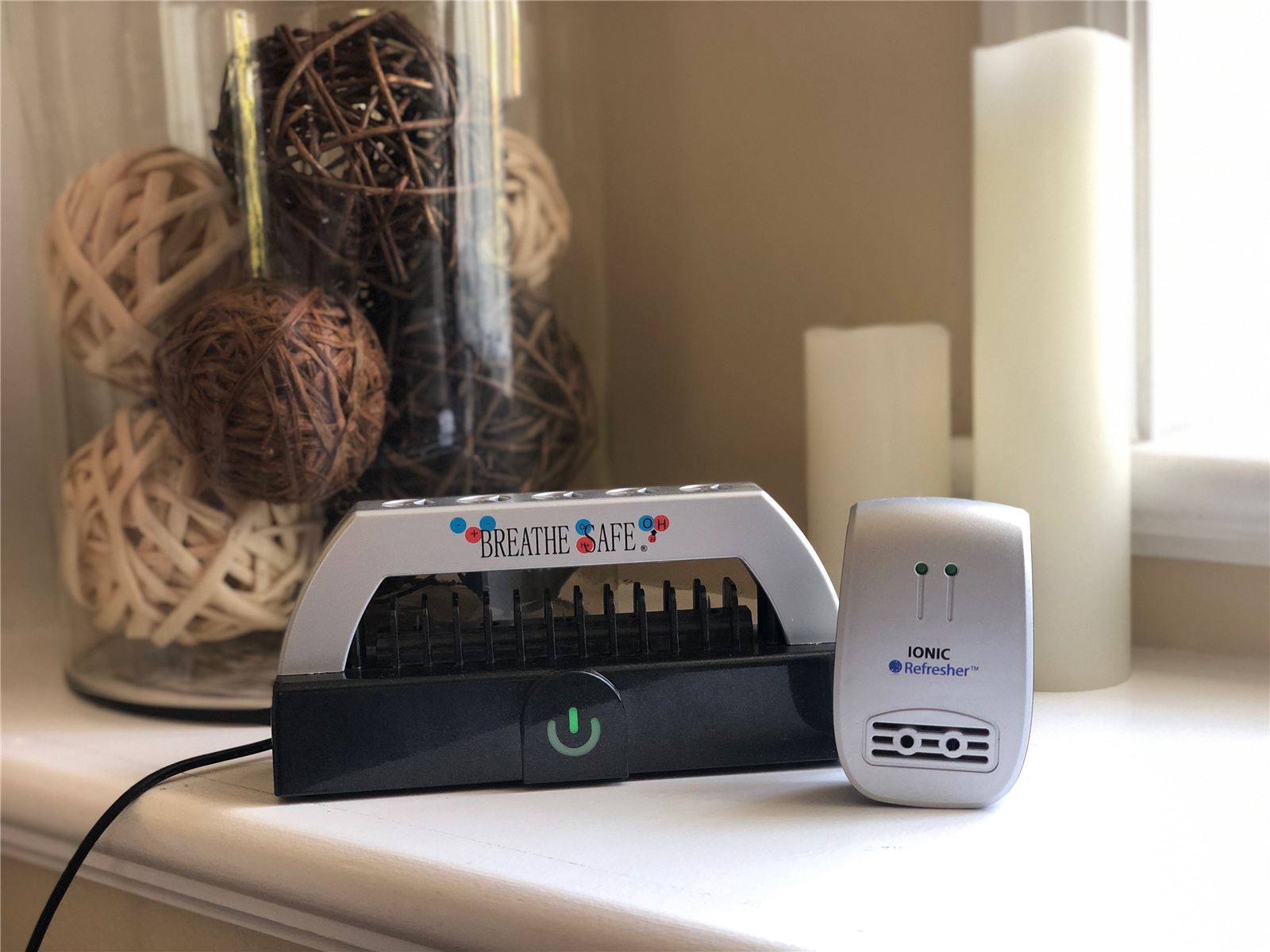
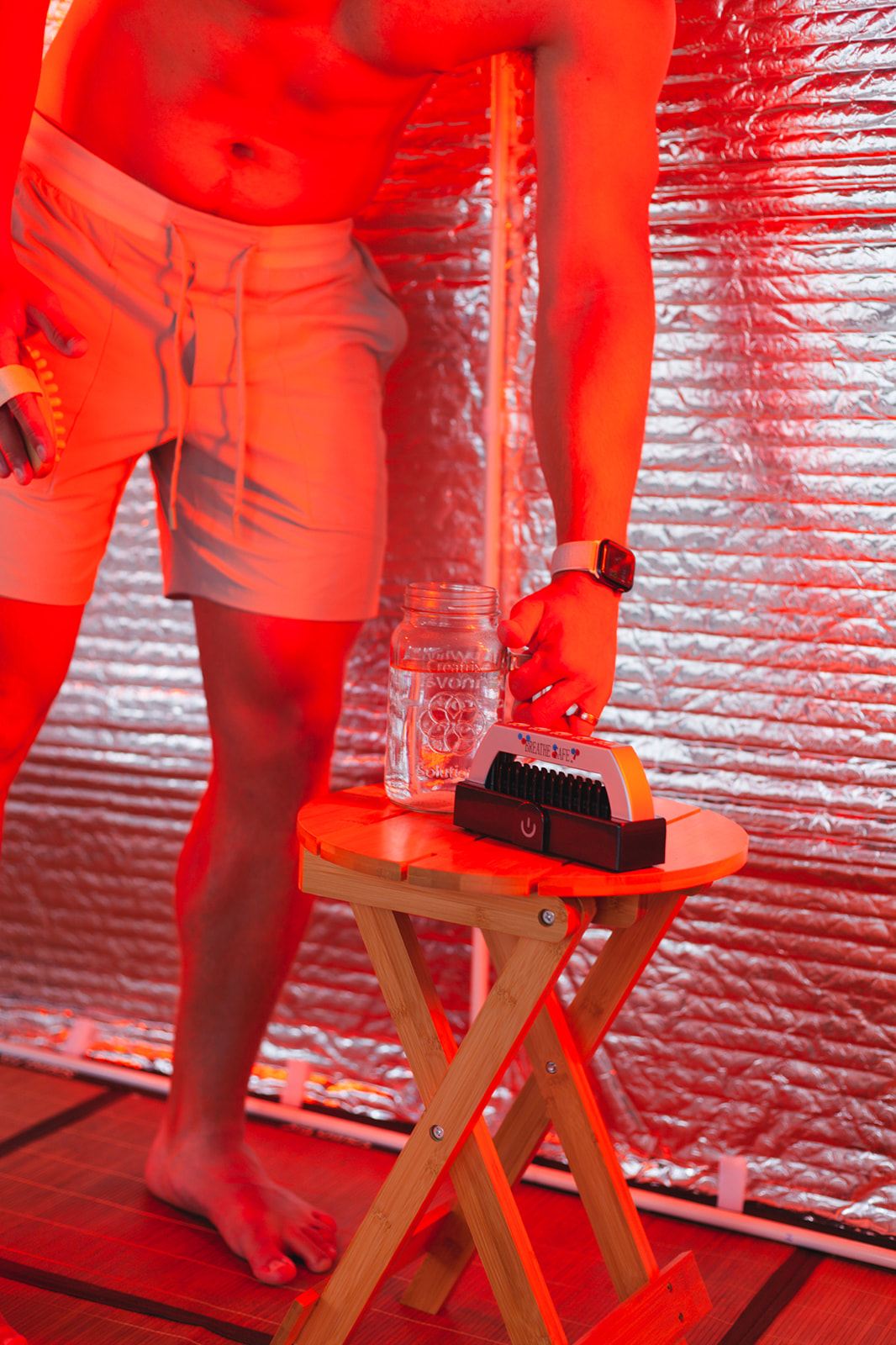
- Add active air support — this is where a plasma ion generator earns its nightstand spot. The Breathe Safe® produces the same balanced ions found in fresh outdoor air, runs on just two watts, and is small enough to live beside the bed permanently — with published chamber testing behind it.
Why I Built the Breathe Safe® Around Ions Instead of Filters
A design story, because the reasoning matters more than the spec sheet. When I set out to build an air device I would actually use in my own bedroom, I kept returning to a simple observation: the freshest air anyone breathes — after a thunderstorm, beside a waterfall, in the mountains — is not filtered air. It is ionized air, rich in charged particles that indoor environments strip away. Ions do something filters cannot: they travel to the particles. Charged particles cluster together and settle out of the breathing zone instead of hanging suspended, and the effect fills the room rather than only the airstream that happens to pass through a machine.
The engineering constraints followed from the bedroom itself. It had to be silent, because a fan loud enough to pull a room’s air through a filter is a fan loud enough to notice at 3 a.m. It had to sip power — the finished unit draws two watts — because it would run every night for years. It had to need no filter subscriptions, because recurring chores are where bedroom gadgets go to die. And because “trust me” is not a spec, I sent it to the chamber and published the testing. I designed the Breathe Safe to be the appliance you forget: plugged in beside the bed, doing quiet work on every breath of the eight hours you cannot supervise.
The Mattress Question
You spend eight hours a night with your face inches from it, so the mattress deserves its own paragraph. New foam mattresses and pillows off-gas volatile compounds most strongly in their first weeks — that “new mattress smell” is the chemistry announcing itself — which is why the single best move with any new bedding purchase costs nothing: unwrap it and let it breathe somewhere ventilated for several days before it joins your bedroom, and keep the room aired generously during its first month. Shopping for the long term, materials with certifications for low chemical emissions (or traditional materials like natural latex, wool, and cotton) start the whole eight-hours-a-night relationship from a better place.
An old mattress presents the opposite profile: the off-gassing is long finished, and the issue is what has moved in — years of settled dust and the dust-mite ecosystem that comes with it. A washable encasement over mattress and pillows puts a barrier between that reservoir and your breathing zone for the price of a set of sheets, and it is the rare upgrade that helps the very next night. No need to replace a comfortable mattress over air quality; encase it, wash the layers above it hot, and spend the savings on the habits that matter more.
A One-Weekend Overhaul, In Order
If you want the compressed version: Saturday morning, strip and wash all bedding hot, and while it dries, clear the floor and vacuum slowly — including under the bed, the room’s dust archive. Saturday afternoon, air the room hard, both door and window, and relocate anything fragranced or freshly painted elsewhere. Sunday, set the new defaults: window cracked during the morning routine, door cracked at night, ion support on the nightstand. Total cost of the first two days: almost nothing. The defaults are what you are really building — the overhaul just clears the starting line.
The Bigger Picture
Bedroom air is one corner of a larger idea: the home environment either supports the body’s daily recovery or quietly taxes it. Air, water, light, and the materials around you all participate. The Environmental Wellness pillar walks through the whole healthy-home framework, room by room and habit by habit — and the kitchen edition of this article covers the room where the other big exposures live.
Frequently Asked Questions
Ion generator or HEPA filter — which should I choose?
They solve different halves of the problem, so it is not a rivalry. A HEPA unit captures the particles that pass through it and has the track record for allergy-grade filtration; an ion generator conditions the whole room’s air silently and endlessly, no consumables, the way outdoor air conditions itself. Plenty of bedrooms run both: HEPA doing an afternoon shift with the door closed, ions on duty all night.
Do houseplants clean bedroom air?
Honestly, no — not at household scale. The famous plant studies were run in small sealed chambers; translated to a real bedroom, you would need a greenhouse’s worth of foliage to match ten minutes of an open window. Keep plants because they are good company, and let ventilation and active support do the air work.
Don’t ion generators produce ozone?
Some designs do, which is why the question is exactly right to ask — and why testing matters more than marketing in this category. A properly engineered plasma unit generates balanced positive and negative ions while keeping ozone within established safety limits, and the way to know is published data rather than promises. That is precisely why the Breathe Safe’s chamber testing is public: check the numbers, not the adjectives.
Should the bedroom be humid or dry?
The comfortable middle — roughly 40 to 50 percent relative humidity. Drier than that irritates airways overnight; damper than that is the climate dust mites and mold spores are hoping for. An inexpensive hygrometer on the dresser tells you which direction your room drifts, and seasonal habits (a humidifier in furnace season, more ventilation in muggy months) handle the rest.
What about opening the window in winter?
Ten cold minutes while you make coffee exchanges the room’s air and costs the house very little heat — the walls and furniture hold their warmth and re-warm the fresh air quickly. It remains the cheapest air upgrade in this article, twelve months a year.
Every home is different — start with the room where you spend the most unconscious hours, and let the improvements compound from there.