

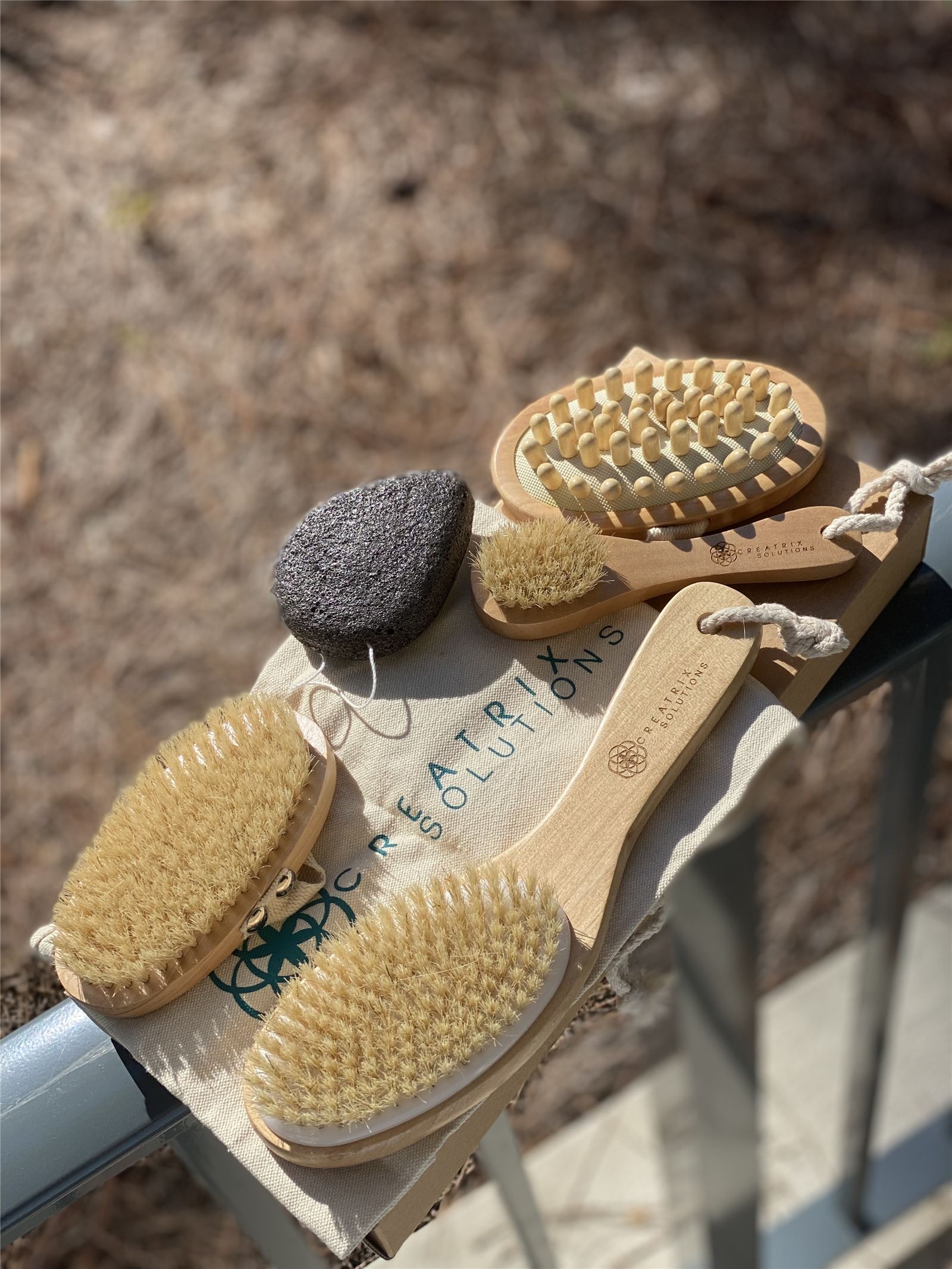
The skin is the body’s largest organ of elimination, and it works best when its surface is clear and its circulation is awake. That is the logic behind one of the oldest wellness rituals there is — dry brushing — and why it pairs so naturally with a near infrared sauna session. Five minutes with a natural-bristle brush before you step into the heat turns a good session into a complete routine.
Why Brush Before the Sauna?
Dry brushing sweeps away the dead surface cells that accumulate on skin, leaving pores clearer as sweating begins. The brushing action also stimulates circulation in the skin — the same tissue the sauna’s radiant heat is about to bathe — so the two practices reinforce each other. Brushing first, sweating second is the order that lets each do its job.
What Dry Brushing Actually Does — and Doesn’t
It is worth being precise, because dry brushing attracts more mythology than almost any other five-minute habit. What the mechanism genuinely supports: the bristles exfoliate the outermost layer of dead cells, and the brisk friction dilates the small vessels in the skin — you can see the response as a light, warm pinkness. The skin’s lymphatic vessels also sit close to the surface and rely on movement and muscle action rather than a pump, which is why traditional practice strokes toward the heart, following the direction lymph travels.
What dry brushing is not: a deep-tissue treatment or a shortcut that replaces the elimination organs. The brush works at the surface; the sweat, circulation, and the liver and kidneys do the real chemistry. That division of labor is exactly why the pairing makes sense — the brush prepares the surface, and the sauna session drives the deeper response. Treat the brushing as the opening act, not the show.
The Five-Minute Routine

The traditional pattern is simple: brush toward the heart, with light, brisk strokes.
- Start at the feet — soles, tops, then long strokes up the calves and thighs.
- Hands and arms next — fingertips toward shoulders.
- Torso and back — upward on the lower body, gentle circles over the abdomen; a long-handled brush reaches the back.
- Lighter where skin is delicate — the pressure should feel invigorating, never scratchy. Skin lightly pink is plenty.
Then step into the sauna and let the session do the rest. Afterward, rinse off and moisturize — skin that has been brushed and sweated absorbs what you give it, which is exactly why choosing clean, natural skincare matters most right after a session.
The Sequence I Settled On
After years of daily near infrared sessions, my pre-sauna routine has worn itself into a fixed order, and each step earned its position for a reason.
Brush first, always on completely dry skin — before the sauna, never after. Damp skin grabs the bristles so the strokes drag instead of glide, and skin that has just spent twenty minutes sweating under radiant lamps is warm, open, and deserves a rinse and moisture, not friction. Brushing a freshly-sauna’d back is the most common way people talk themselves out of the habit, because it simply feels wrong — and it is.
Second: the brushing happens right beside the tent, so the thirty seconds between finishing the last stroke and settling under the lamps never gets cold. The circulation the brush wakes up in the skin is exactly what I want the near infrared light to meet.
Third — the part almost nobody teaches — take care of the brush like the tool it is. Bristles collect what they sweep. Mine gets a wash with mild soap every few weeks, a hard shake, and a rest somewhere it can dry completely, bristles down so water does not sit in the base. A brush that stays damp in a humid bathroom defeats the cleanliness that is half the point. Kept dry, a quality natural-bristle brush earns its keep for a year or more before the bristles soften past usefulness.
Finding Your Pressure: The Goldilocks Test
Skin varies enormously — in thickness, sensitivity, and how it responds to friction — so “brush briskly” means something different on every body. Here is the calibration that works: after a stroke, the skin should show a faint, even pinkness that fades within a few minutes, and the sensation should make you want the next stroke. Too soft, and you feel essentially nothing — the bristles glide without engaging, and the circulation response never arrives. Too hard, and you get streaky redness that lingers, a scratched-not-swept feeling, and skin that flinches from the brush tomorrow. Thin-skinned areas — inner arms, chest, anywhere veins show — take the lightest touch on the body, while soles, heels, and the outer thighs can take the most enthusiasm you have. Older skin generally prefers a softer bristle and a lighter hand across the board; it exfoliates just as well with less force. When in doubt, err gentle: the practice compounds daily, so there is nothing a harder stroke achieves that a week of lighter ones does not.
Brushing Through the Seasons
The routine stays the same all year; the skin underneath it does not. Winter is dry brushing’s high season and its highest-risk season at once: forced-air heating parches skin, which makes exfoliation more valuable — flaky skin sweats less freely — but also less forgiving, so drop the pressure a notch and be religious about the post-sauna moisturizing. Summer brings the opposite: skin is generally more resilient, but never brush sunburn — wait until it fully settles — and brush before sun rather than after a day of it. If you use retinoids or exfoliating acids in your skincare, let the brush and the actives work different days rather than stacking them on the same patch of skin. The year-round constant: brushed skin drinks in whatever you apply next, so make sure what you apply next deserves the invitation.
How Often — and When to Let Skin Rest
For most skin, once a day before the sauna is the sweet spot, and every other day is plenty when you are starting out — let your skin tell you which it prefers. The signal to ease off is skin that stays red, feels tender, or looks irritated rather than lightly pink: that is over-brushing, and lighter pressure or an extra rest day fixes it. Brush around, never over, anything irritated or broken, and give sunburned skin the week off. The practice should feel like waking the skin up, never like sanding it down.
Choosing a Brush
Look for natural bristles with a firmness that suits your skin, a handle for the spots you cannot reach, and materials that stay fresh between uses. The dry brushing collection was assembled for exactly this sauna-companion role.
Frequently Asked Questions
Should skin be wet or dry?
Completely dry — both the skin and the brush. That is what lets the bristles glide and exfoliate; on wet skin the same strokes drag and irritate. Save the water for the rinse after your sauna session.
Does dry brushing help with cellulite?
Honestly: the brisk circulation can leave skin looking temporarily plumper and more even, and regular exfoliation improves skin texture — but the brush does not change the structure beneath the skin, and no five-minute surface habit does. Enjoy the glow for what it is, and let consistency with the whole routine — movement, sweating, minerals — do the deeper work.
Can I brush my face?
Not with a body brush — facial skin is far too delicate for those bristles. If you enjoy the practice on your face, use a separate, much softer brush made for it, with featherweight pressure, or simply let a warm cloth do that job.
How often should I replace the brush?
When the bristles soften enough that you no longer feel the gentle scratch that does the exfoliating — typically a year or so with regular washing and thorough drying. A brush that smells musty despite washing has been retired by the bathroom humidity; store the next one somewhere it can dry fully.
Can family members share one brush?
Give everyone their own. The brush works on the skin’s surface and keeps a little of what it sweeps, so it is personal equipment in the same category as a toothbrush — and inexpensive enough that sharing saves nothing.
Dry brushing is a gentle practice for intact, healthy skin — brush around any irritated or broken areas and let them be.