
Your kitchen is where you nourish your family — and, quietly, where a surprising share of the household’s daily chemical exposure happens. The good news is that the kitchen is also the easiest room in the house to clean up. A handful of one-time swaps, most of them inexpensive, can permanently lower what your family absorbs with every meal.
Here are the swaps that matter most, in the order Eileen recommends tackling them — followed by the reasoning behind that order, so you can adapt it to your own kitchen.
How Do Kitchen Chemicals Actually Get Into You?
It helps to understand the routes, because they explain why some swaps matter more than others. There are three: ingestion (compounds that migrate from cookware, packaging, and water directly into food), inhalation (cooking fumes, combustion byproducts, and fragrance chemicals that go airborne), and skin contact (residues on dishes and surfaces). Heat accelerates the first route dramatically — plasticizers migrate into food many times faster from a hot container than a cold one — which is why the highest-priority swaps all involve the intersection of heat and materials. Fix where heat meets plastic and non-stick coatings first, and you have addressed the largest exposure route in the room.
1. Retire the Non-Stick Pans
Non-stick coatings release perfluorinated compounds when heated — the same family of “forever chemicals” now being scrubbed from water supplies nationwide. Replace them with cast iron, stainless steel, or ceramic. A well-seasoned cast iron skillet is naturally non-stick, lasts generations, and even contributes a little dietary iron. If your current pan is scratched or flaking, move it to the top of the replacement list: damaged coatings shed particles directly into food.
2. Get Plastic Away From Heat
Heat dramatically accelerates the migration of plasticizers into food. The two non-negotiables: never microwave food in plastic, and never pour hot leftovers into plastic containers. Move your storage to glass or stainless steel — start with the containers you use most and replace the rest as they wear out. “BPA-free” is not the finish line, either: the substitutes used in many BPA-free plastics behave similarly under heat, which is why the material swap beats the label swap.
3. Fix the Water You Cook With
Most households filter drinking water but boil pasta in straight tap water — even though boiling concentrates rather than removes many contaminants. Use filtered water for cooking as well as drinking, and match your filter to what is actually in your municipal water report. Skip long-term reliance on reverse osmosis or distilled water as your only source: stripped of minerals, they slowly pull calcium, magnesium, and trace elements from your body. Remineralizing with a pinch of mineral-rich salt restores what filtration removes.
4. Clear the Air While You Cook
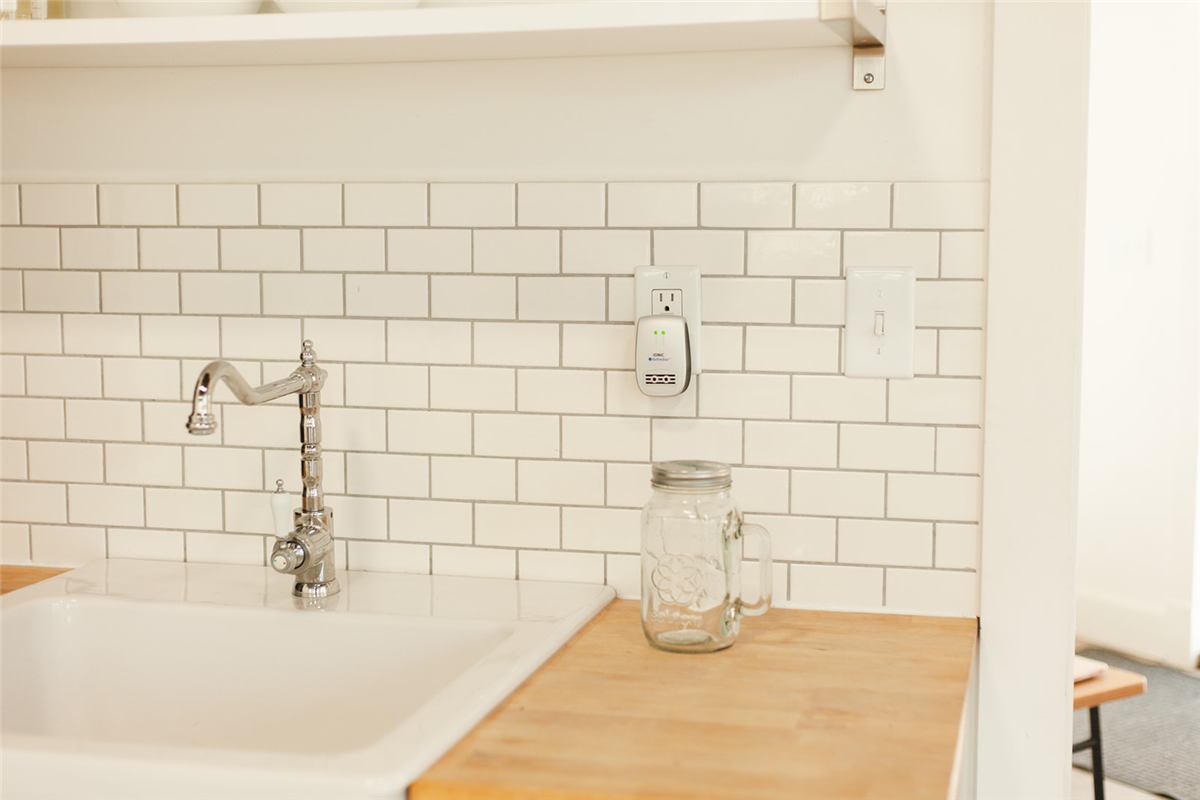
Cooking — on any stove — releases fine particulates, and gas ranges add combustion byproducts. Run the range hood every time you cook, crack a window when weather allows, and consider active air purification for the kitchen and main living areas. Eileen’s patented Breathe Safe plasma air purifier is compact enough to live right on the counter.
5. Simplify What Touches Your Dishes
Conventional dish soaps and “fragranced” cleaners leave residues on every plate and glass. Swap to fragrance-free, plant-based dish soap, and retire chemical all-purpose sprays in favor of white vinegar, baking soda, and castile soap — they clean nearly everything, for pennies.
Why There’s an Ozonator on My Kitchen Counter
Here is a habit from my own kitchen that most low-tox checklists never mention: I wash my produce with ozonated water. I came to it as an engineer, not a shopper — I manufacture ozone equipment, so I have spent years with the mechanism.
Ozone is simply oxygen carrying a third atom, and that third atom is restless. When ozone dissolves into a basin of water, it oxidizes what it touches — surface microbes, molds that shorten shelf life, and a portion of the surface residues that a plain-water rinse leaves behind. Then it does something no chemical sanitizer can: it decays back into ordinary oxygen and leaves nothing on the food. No residue to rinse off, nothing to store, nothing to dispose of. This is not a fringe idea — ozone is approved for direct food contact and used throughout commercial food processing for exactly these properties.
My routine is simple: fill a basin with filtered water, run the Tri-Oxy FRESH ozonator to saturate it, and let the produce soak for ten to fifteen minutes while I put the rest of the groceries away. Berries and greens come out cleaner and last noticeably longer in the refrigerator — a practical bonus that pays for the habit even before you count the exposure you skipped. I designed the Tri-Oxy FRESH for exactly this counter-top job, and it is the swap I would add right after the big five above.
If You Only Make One Change This Month
Get plastic away from heat. It costs almost nothing — you likely already own a glass dish or two — it addresses the fastest migration route in the kitchen, and it requires no research or shopping. Then let the rest follow as things wear out: the pan when the coating scratches, the containers as lids crack, the filter at the next replacement cycle. A low-tox kitchen is a direction, not a weekend project.
The Swaps That Don’t Deserve Your Worry
A low-tox kitchen should lower your stress, not raise it, so it is worth naming what you can safely skip. The microwave oven itself is fine — microwaves excite water molecules and leave nothing behind; the container is the only issue, so heat in glass and carry on. Quality stainless steel is stable for everyday cooking; the trace nickel concerns you may read about apply mainly to long acidic simmers, which cast iron or enamel handle anyway. And you do not need specialty “detox” gadgets, activated-charcoal sponges, or a new set of anything marketed with a leaf on the label. The physics of the five swaps above — keep heat away from plastic and coatings, filter what you drink and cook with, ventilate, simplify residues — does the real work. Spend your budget there and ignore the rest.
Frequently Asked Questions
Is cast iron safe — can you get too much iron from it?
For most households, the iron contributed by cast iron cooking is modest and often beneficial, since iron is a common shortfall mineral. Acidic foods simmered for long periods pick up the most. If your family includes someone managing an iron-loading condition, stainless steel handles the acidic dishes and your healthcare provider can help you decide where cast iron fits.
Are ceramic-coated pans actually non-toxic?
Quality ceramic coatings avoid the perfluorinated chemistry of traditional non-stick, which is the main win. They do wear faster than cast iron or stainless — once a ceramic surface loses its release and shows wear, treat it as done. Bare cast iron and stainless steel remain the buy-once options.
Does boiling tap water make it safer?
Boiling kills microorganisms, which is why boil-water advisories exist — but it does not remove chlorine byproducts, metals, PFAS, or medications. As water boils off, many of those actually become more concentrated. Filtration matched to your municipal water report is the tool for chemical contaminants; boiling is the tool for biological ones.
Should I replace plastic cutting boards?
They are worth migrating away from as they wear. Knife work shaves microscopic plastic particles into food, and deep knife scars also harbor bacteria. Solid wood boards are naturally antimicrobial and resurfaceable; keep one for produce and one for raw meat, and let the plastic boards retire.
What about aluminum cookware?
Bare aluminum reacts with acidic foods like tomato sauce, so it is a reasonable item to phase out — most modern aluminum pans are anodized or clad in stainless steel, which puts a stable layer between the metal and your food. When in doubt, the same three materials keep winning: cast iron, stainless steel, and glass.
The Bigger Picture
None of these swaps requires a renovation, and none needs to happen overnight. Replace things as they wear out, one category at a time, and within a season your kitchen goes from a daily source of low-grade exposure to the healthiest room in the house. For the room-by-room version of this process — air, water, bedroom, laundry, and more — Eileen’s free Healthy Home Detox Checklist walks the whole house, and the Environmental Wellness pillar explains the why behind each step.
Keep Exploring
This article is educational — written to help you understand your options and make informed choices for your household. Your healthcare provider can help you apply any of it to your family’s specific situation.