
85% of patents worldwide never reach commercialization. I hold 10 U.S. patents and 6 international patents and have commercialized 9 of the 10 U.S. patents, while keeping 100% ownership of my company. Chapter 8 of my book Invent It and Be Your Own Boss calls the route I used an alternative approach: start with an existing customer community, build what those customers need, and fund development with the federal R&D tax credit and National Science Foundation grants. These are the 6 parts of that route, with the numbers from my own businesses.
1. Start With a Customer Base You Already Serve
In August 2011 I earned my Nutritional Balancing degree and started a small business that uses Hair Tissue Mineral Analysis (HTMA) laboratory testing to design detoxification, nutrition, diet and supplementation programs. Since 2011 I have worked with people in 91 countries, and working with those clients is where I identified the equipment problems my patents address. The book lists 3 advantages of starting this way: reduced upfront costs, because nothing is manufactured or marketed at scale before the idea is validated; direct feedback from the people the product is for; and a loyal customer base built before any large launch. Consumer focus groups (Workbook Section 3, with 3 deep interview cards and a log) add a broader set of users to that feedback.
2. Turn Customer Workarounds Into Product Specifications
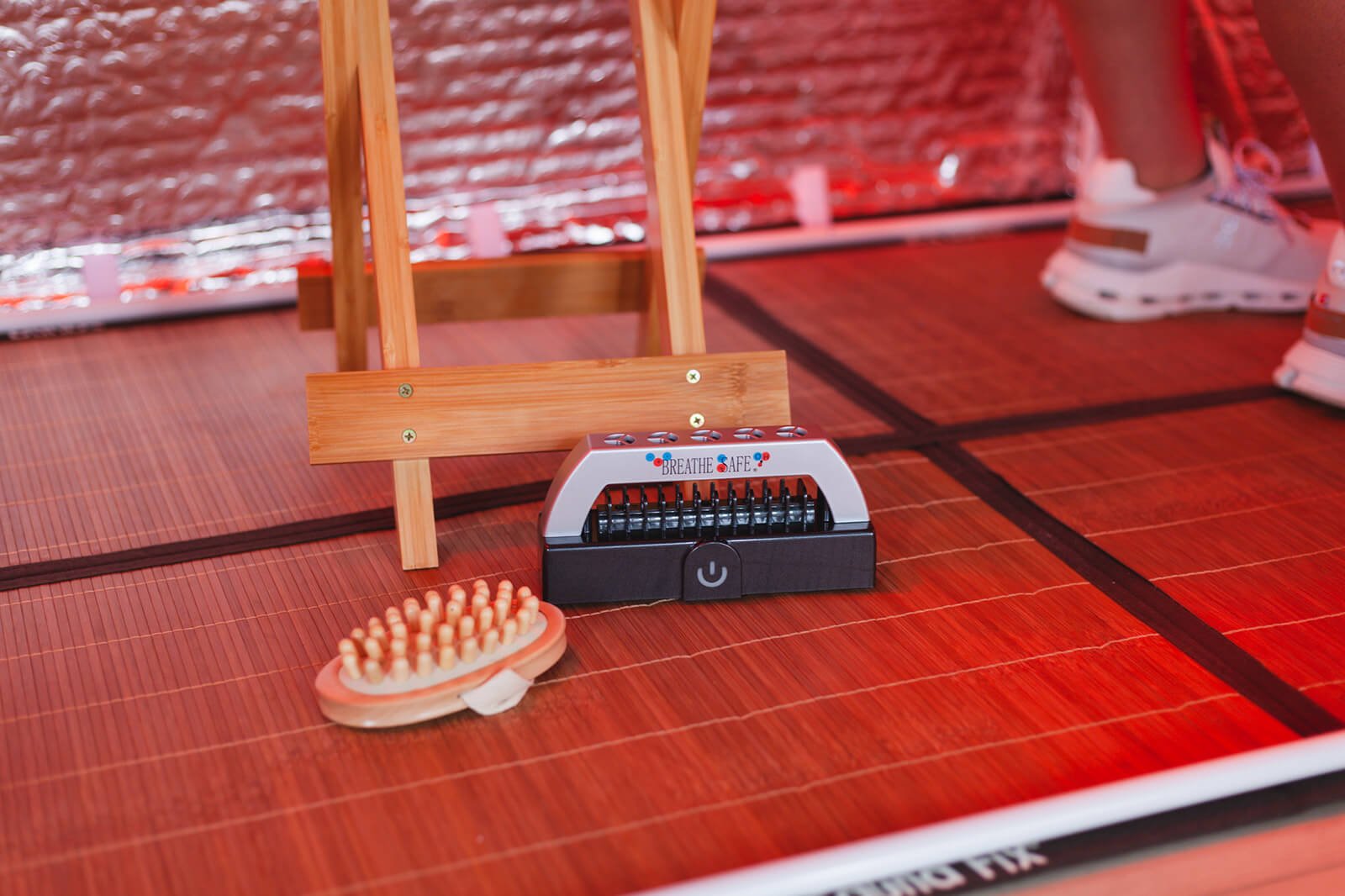
My sauna tent at the time measured 4 x 4 feet and 5 feet tall; the user crawled in and sat on a stool. One customer turned the tent on its side, with the floor against the wall, and lay diagonally. That workaround became the convertible sauna tent with brackets for standing, sitting or lying down, sized so a person 6 feet 5 inches tall can lie down, plus an exercise size of 3 feet by 6 feet 5 inches by 7 feet 11 inches with bamboo mats over radiant insulation. Canvas covers lost heat and wrinkled, shrank and sagged after washing, and wood releases volatile organic compounds from its pitch when heated, so I chose foil insulation and changed the bubble size of the panel material to raise its R-value from 4.5 to 15. A second customer with back and leg pain took coffee enemas standing up and rolled the bag; I designed a glass jar, adapter and pump assembly with long tubing so the enema can be done standing in the shower, which became the Enema Fix.
3. Measure, Then Redesign
A customer who measured ambient ozone at work showed me that the corona-discharge ozone generators I sold emitted unsafe ozone levels almost immediately. My first-generation REION, an ozone generator and air plasma machine, exceeded acceptable ozone limits on its plasma setting within a 5-foot radius. I revised the REION owner’s manual first, then designed the Breathe Safe plasma air purifier, with no ozone emission, and the Tri-Oxy Refresh countertop ozone degasser for water. For the Refresh I hired a draftsman through Upwork, bought a Formlabs 3D printer for prototypes, and bought ozone meters to measure both ambient ozone in the air and dissolved ozone in the water.
4. Bring Prototyping In-House to Cut Cost
Each prototype can cost more than the last; Chapter 1 of the book counts that spending as part of the learning process. Chapter 10 records that the 3D printer saved me thousands of dollars compared with outsourced printing or traditional molding. My father was a machinist and inventor, and with that background I bought a used CNC machine and taught myself G-code to cut aluminum molds for the polyurethane self-skinning rolls and cushions used in my spinal products. When supply chains broke and manufacturing stalled during the pandemic, I outsourced production and reworked processes to keep shipping.
5. Choose License, Manufacture or Sell for Each Patent
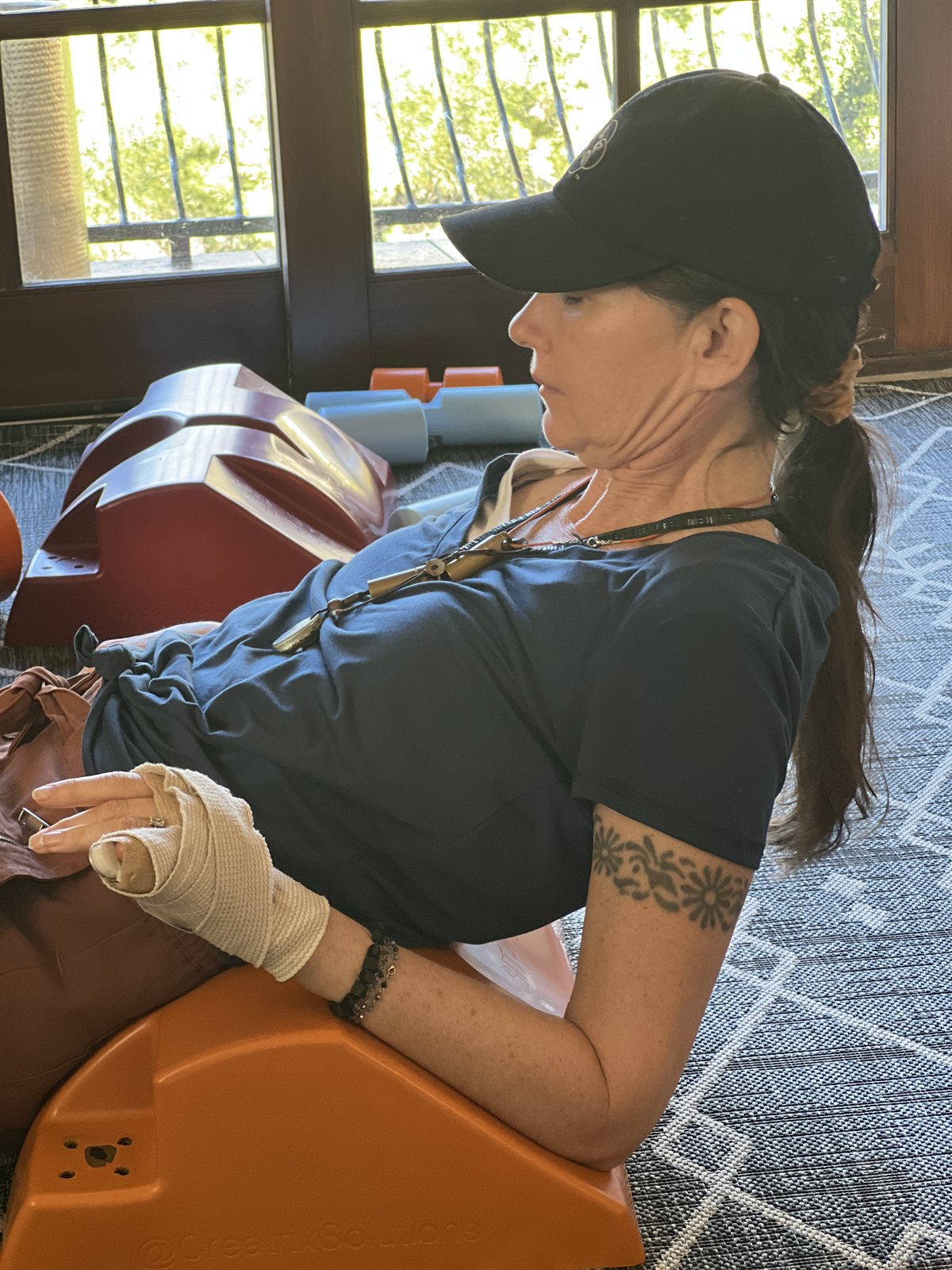
A patent holder has 3 commercial paths: license the invention to another company, manufacture and market it directly, or sell the patent outright. I manufacture and sell directly, which keeps 100% ownership and avoids giving away equity or depending on uncertain licensing deals, and I hold 2 patents that I plan to license. For the spinal inventions I added education: the Spinal Fitness Training and Certification Program has 4 levels.
- Level 1, Spinal Fitness Basics: spine anatomy, basic leverage and locomotion principles.
- Level 2, Posture Evaluation and Exercises: posture assessment, exercises to avoid, and the 5 essential steps for training clients.
- Level 3, Exercise Techniques and Equipment: advanced technique and the specialized spinal fitness equipment.
- Level 4, Trainer of Trainers: exercise form, client evaluations and lecture skills, to train others.
Level 3 and Level 4 trainers attend an annual workshop to keep their certification and pay a monthly licensing fee for ongoing resources, and the book places that program inside the commercialization strategy for the spinal inventions.
6. Fund Development With the R&D Credit and NSF Grants
The federal research and development credit, Section 41 of the Internal Revenue Code, reduces tax liability dollar for dollar for qualified research expenses such as wages for research staff, materials and supplies, and research software. I learned about it after filing my 2019 taxes, amended that return within the allowed 3-year window, amended 2020 and 2021, and claimed it in the original 2022 filing: just over $55,000 in credits against more than $9,000 in CPA fees. Claiming the Section 41 credit requires records of each research project, employee time on research, and material and supply costs. National Science Foundation grants run 1 to 5 years, and many programs use 2 steps: a project pitch, then an invited full proposal written to the grant’s Summary of Program Requirements. Registration on 3 sites, SBIR.gov, Research.gov and Sam.gov, comes first; I once spent weeks on a proposal, started those registrations at the last minute, and processing delays carried me past the deadline.
The Action Workbook covers this route in Sections 15 to 17 (Cost and Funding Strategy, Commercialization Strategy, and Licensing, Manufacturing, or Selling Direct), with Bonus Tool 6, an R&D and Development Expense Tracker, and Bonus Tool 7, a Commercialization Roadmap.
Keep Exploring
This article is for educational purposes only and is not medical advice. It is planning information from Invent It and Be Your Own Boss and is not legal, tax or financial advice.