
I hold 10 U.S. patents and 6 international patents, and the engineering behind them started at the Hanford Nuclear Reservation, the site known for its role in the Manhattan Project, where I went to work after high school and built the precision, process and clear communication skills I later used in invention and product development. I also worked as a nuclear quality engineer, traveling to power plants across the United States, and in 3 related roles: inspector, auditor and trainer. This article sets out 5 working practices recorded in my book Invent It and Be Your Own Boss, each with the product where it shows up.
Where the Engineering Background Comes From
My father was a machinist and an inventor, and I spent my childhood beside him learning machinery, design and building and the habit of iterating on a design until it works; that training, plus my background in drafting and engineering, is how I translate an idea into a physical invention. At the Diablo Canyon Nuclear Power Plant, my job included inspections that some workers defied, and through the 1980s and 1990s I worked in nuclear quality, residential land development and home building, all 3 of them male-dominated fields.
Practice 1: Measure the Hazard, Then Change the Design
While I was selling corona-discharge ozone generators, a customer who measured ambient ozone in their workplace showed me that the units emitted unsafe ozone levels almost immediately. My own first-generation REION, a 2-function ozone generator and plasma air machine, was found to exceed acceptable ozone limits on the plasma setting within a 5-foot radius during air purification; beyond 5 feet, the ozone broke down to safe levels.
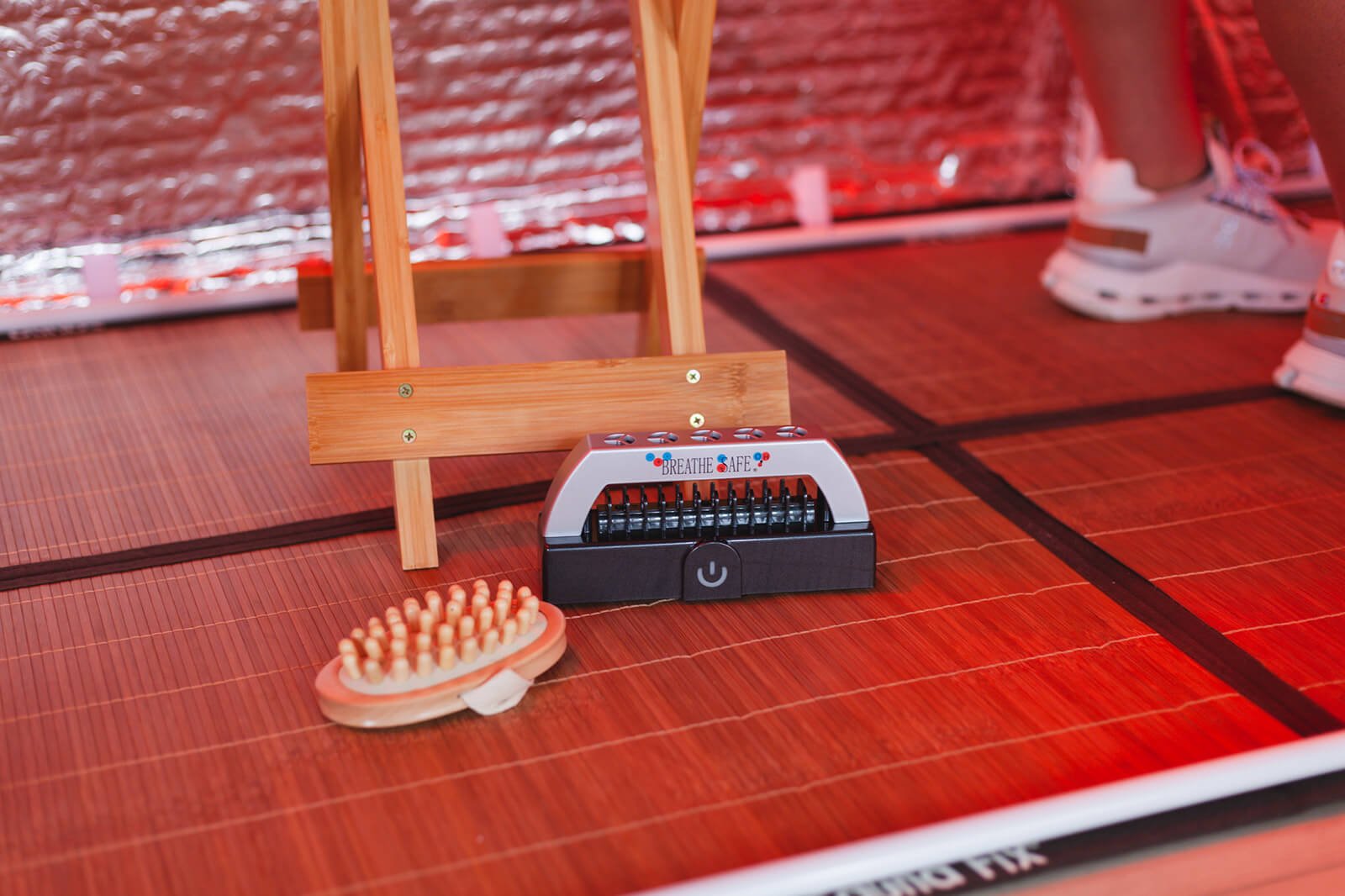
I responded in 3 steps. First, I revised the REION owner’s manual so the plasma air purification function could be used safely. Second, I designed a plasma air purifier with no ozone emissions, the Breathe Safe. Third, I designed an ozone degasser, the Tri-Oxy Refresh, for ozone gas escaping from water during ozonation.
The degassing equipment I bought for testing had 3 faults: it was fragile, not very portable, and inefficient at dissolving ozone gas into water at high concentrations. To design the replacement, I worked with a draftsman hired through Upwork, bought a Formlabs 3D printer for prototypes, and bought ozone meters to measure both ambient ozone in the air and dissolved ozone in the water.
Practice 2: Specify the Material by Its Number
The near-infrared sauna tents available in 2011 used heavy wooden light panels and canvas covers. Canvas held little heat, and sweat plus the frequent washing it needed for sanitation made the canvas wrinkle, shrink and sag until it was difficult to reattach to the frame. Wood contains pitch that releases volatile organic compounds (VOCs) when heated.
I chose foil insulation material instead of canvas or wood, but its starting insulation value, an R-value of 4.5, was too low, so I changed the bubble size in the insulated tent panel and raised it to an R-value of 15, which raised the ambient air temperature inside the sauna. I built the tents in 3 sizes: 4 by 4 by 5 feet for the original, a convertible 3 by 4 feet by 6 feet 5 inches with brackets for vertical or horizontal use, and an exercise sauna of 3 feet by 6 feet 5 inches by 7 feet 11 inches with bamboo mats over radiant insulation. A drop ceiling gives the user temperature control.
The spinal rolls are specified the same way: the Back Shaper and Neck Shaper rolls are each made in 5 diameters and 3 densities. One of my ozone water patents controls 3 variables to oxidize pathogens in water: ambient ozone level, liquid-phase ozone concentration and exposure time.
Practice 3: Test the Output, Then Use the Prototype
I tested the Breathe Safe plasma output, both negative and positive ions, and measured its reduction of VOCs, particles, bacteria and other airborne molecules. Breathe Safe is sold as a personal space air purifier, and its product claim does not imply medical benefits. In my own prototypes, a design flaw that looked minor in theory grew in practical use, and each of those findings produced a design change in the next version.
The patent office’s usefulness criterion asks for the same evidence: an invention has to function as intended, shown by a prototype, an experiment or a simulation, and the 3 checks the book gives for it are idea screening, practicality assessment and functionality testing.
Practice 4: Build the Tooling In House
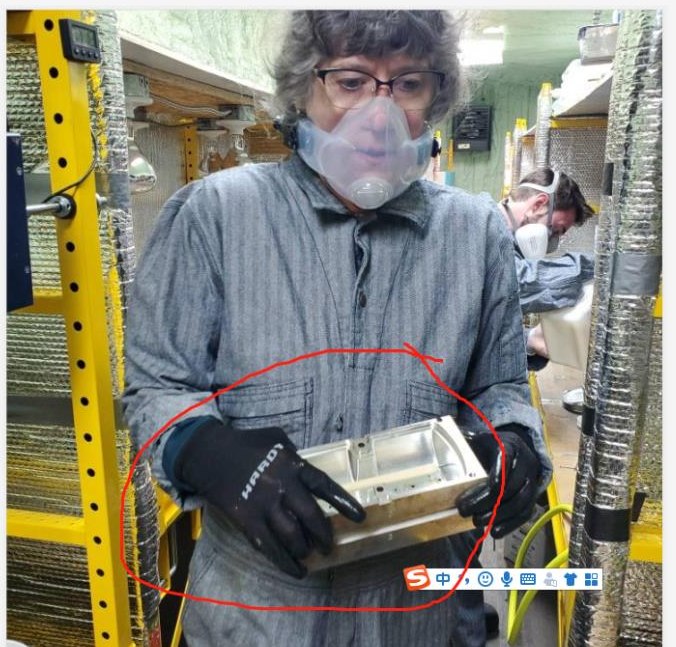
Building on my father’s mechanical training, I bought a 3D printer to refine prototypes, which saved thousands of dollars compared with outsourced printing or traditional molding, and then a used computer numerical control (CNC) machine, and I taught myself G-code for mold contouring. With it I cut aluminum molds and refined the designs for molding the polyurethane self-skinning rolls and cushions.
Practice 5: Audit the Application
The book’s rule is regular communication with the patent attorney through the whole application and a review of the attorney’s draft by the inventor before filing; by carefully reviewing my own applications, I found several errors in the legal claims and descriptions of my inventions.
A Patent Cooperation Treaty (PCT) application requires every claim in a single application, with no claims added later, so for my posterior support equipment I worked 36 hours without sleep to get every claim and detail into the PCT application. The Cushioning Posterior Fulcrum Back Shaper’s PCT application was filed September 28, 2017, and U.S. Patent 10966552 was granted April 6, 2021.
Keep Exploring
This article is for educational purposes only and is not medical advice. Product descriptions refer to the patents and their test methods and are not health claims.