
Every U.S. patent application filed electronically receives 2 identifiers on its acknowledgment receipt: a confirmation number and the official filing date, and that filing date sets the priority of the invention. Chapter 6 of my book Invent It and Be Your Own Boss lists the electronic filing in 11 steps, and Chapter 5 lists what the documents must contain for each of the 3 U.S. patent types. Chapter 5 gives 2 filing options, self-filing or a patent professional or attorney who manages the filing process, and calls consulting a patent attorney highly advisable.
The 11 Filing Steps
Chapter 6 sets the 11 steps in this order, from account to tracking.
- Create a USPTO.gov account.
- Gather the specification, claims, abstract, summary, drawings or photographs, and the ADS.
- Open the USPTO electronic filing system. The book names it EFS-Web; check the USPTO website for the current system name before you file.
- Log in with the USPTO.gov account credentials.
- Select the application type: utility, design or plant.
- Complete the ADS with the applicant, the inventor or inventors, the correspondence address and any priority claims.
- Upload the specification, claims, abstract and drawings or photographs, and attach the ADS if it was not completed inside the system.
- Calculate and pay the basic filing, search and examination fees. The amounts vary with the application type and the entity status, such as small entity or micro entity.
- Review every uploaded document and every entered field, and correct errors before submission.
- Submit the application and keep the acknowledgment receipt with its confirmation number and official filing date.
- Track the application status in the USPTO’s Patent Application Information Retrieval (PAIR) system, the tracking system the book names.
The 3 Patent Types and What Each Filing Contains
The U.S. Patent and Trademark Office (USPTO) issues 3 types of patents, and each type requires a different set of documents in a non-provisional application. A utility patent application needs a specification that explains the invention’s function and use in full, drawings where they are needed to show the components and their operation, and claims covering the functional features; its protection runs 20 years from the filing date. A design patent application needs a specification focused on the ornamental design, drawings or photographs that show the design’s appearance clearly and accurately, and a claim to that appearance; its protection runs 15 years from the date of grant. A plant patent application needs a complete description of the new plant variety, its characteristics and evidence of asexual reproduction, drawings or photographs of its distinctive features, and usually 1 single claim; its protection runs 20 years from the filing date.
My 10 U.S. patents include both of the first 2 types: 7 utility patents, such as the Plasma Air Purifier (10881757), and 3 design patents for the Back Roller (D915613), the Back Roll Spinal Brace (D859668) and the Neck Roll Spinal Brace (D858779).
The Specification, Drawings and Claims
Chapter 5 divides the specification into 3 parts: the background, which gives the context and purpose of the invention; the detailed description, which covers how the invention works, its components, and step-by-step instructions for its use or manufacture; and the advantages, which state the improvements over existing solutions. Drawings are element 2 of 3: they illustrate the features and the operation, and for a design patent Chapter 5 calls high-quality drawings or photographs crucial. Claims are element 3 of 3 and define the legal boundaries of the patent, so each novel feature has to be stated precisely enough to separate the invention from the prior art. Beyond those 3 elements, the application needs an abstract, a summary of the invention, and an application data sheet (ADS) with the applicant information, the correspondence address, and any domestic or foreign priority claims.
Provisional or Non-Provisional on Day 1
Chapter 5 puts 1 separate decision ahead of step 1: a provisional or a non-provisional application. A provisional application costs less, secures the early filing date and “patent pending” status, gives no enforceable rights, and expires after 12 months; a non-provisional or Patent Cooperation Treaty (PCT) application has to be filed inside those 12 months to keep the original date. A non-provisional application starts examination for a full grant, costs more, and its examination can take several years, against the provisional application’s 12-month life.
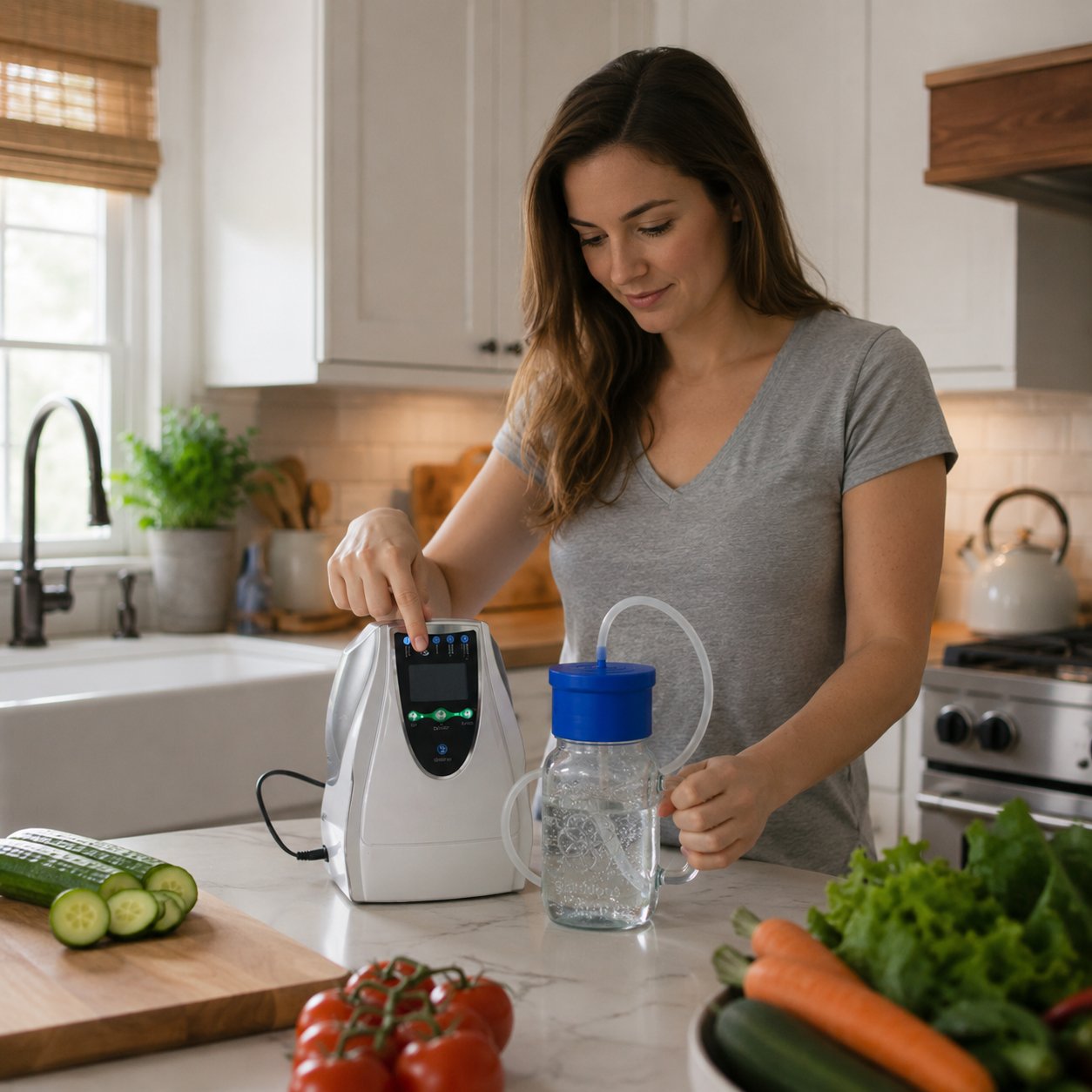
Two of my own patents show the 2 routes. For the System for Transporting a Sauna Device, the travel bag for the sauna lamp fixture, I converted a provisional application into a U.S. non-provisional utility application; it was filed June 28, 2016 and granted as patent 10449113 on October 22, 2019. For the Water Container with an Ozone Diffuser, I filed a provisional application on May 13, 2016 and a PCT application on August 26, 2016, and the U.S. patent, 10967335, was granted April 6, 2021.
Review Before Step 10
Chapter 1 records that I found several errors in the legal claims and descriptions of my own applications by reviewing them with my attorney before filing. Step 9 is the same review at filing: Chapter 6 says to review all the uploaded documents and entered information for accuracy before step 10, submission. Chapter 10 records the reason to catch them early: every interaction with the patent office, from revisions to claim arguments, carries its own expense, and all but 3 of my patent grants included rejected claims that had to be defended and revised before issuance.
The Invent It Action Workbook covers this stage in Section 13, Patent Application Preparation, and its Bonus Tool 3 prepares the call with your patent attorney. Section 12, Working With a Patent Attorney, adds an interview worksheet for choosing the attorney who will run the 11 steps with you.
Keep Exploring
This article is for educational purposes only.