
People often ask which one to do — the sauna or the enema — as though they are competing options and one must be better value than the other.
They are not alternatives. They support different exits, and the reason I use both is that neither one does the other’s job.
Two Routes, Two Jobs
The old elimination protocols list the organs of elimination as skin, lungs, liver, kidneys and colon, and then list the therapies that support them. Sauna and steam sit against the skin. Enemas and colonic irrigation sit against the colon. Both appear on the same list, and they appear separately, because they are doing separate things.
A sauna session moves material out through the skin and, incidentally, gives the lungs a good deal of deep breathing. It does nothing whatsoever for bowel transit.
The bile route runs the other way — liver into intestine and out. If that path is congested, sweating harder does not unblock it. I wrote about that loop separately: material that sits in a slow bowel can be reabsorbed and handed back to the liver, which then processes it twice.
So the pairing is not belt-and-braces. It is two doors in different walls.
How I Actually Order Them
Bowel route first when transit is the limiting factor, which for most people it is. There is no sense adding load to a system whose main outlet is slow.
Sauna after, not before — and here the reason is mundane rather than theoretical. A near infrared session is a fluid and mineral event. Sweat is filtered from blood and carries blood chemistry with it: sodium in the largest amount, then potassium and magnesium. Doing that on top of an already depleted day is how a sauna habit quietly runs someone down instead of building them up.
Which is why the boring parts — water, mineral replacement, and not stacking both in the same exhausting afternoon — matter more than the sequence does.
What I Use
I make both of these, which I mention so you can weigh what follows accordingly.
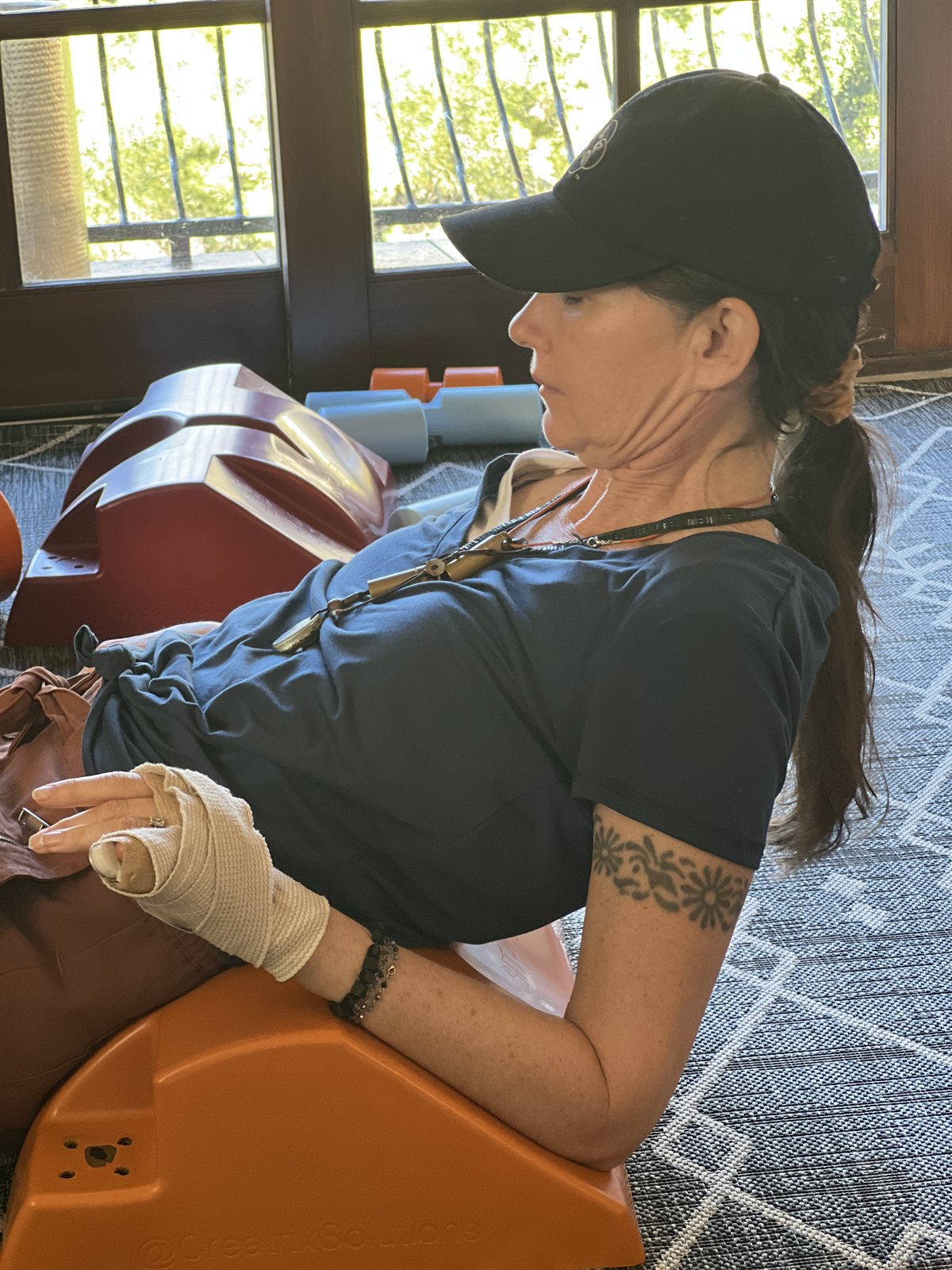
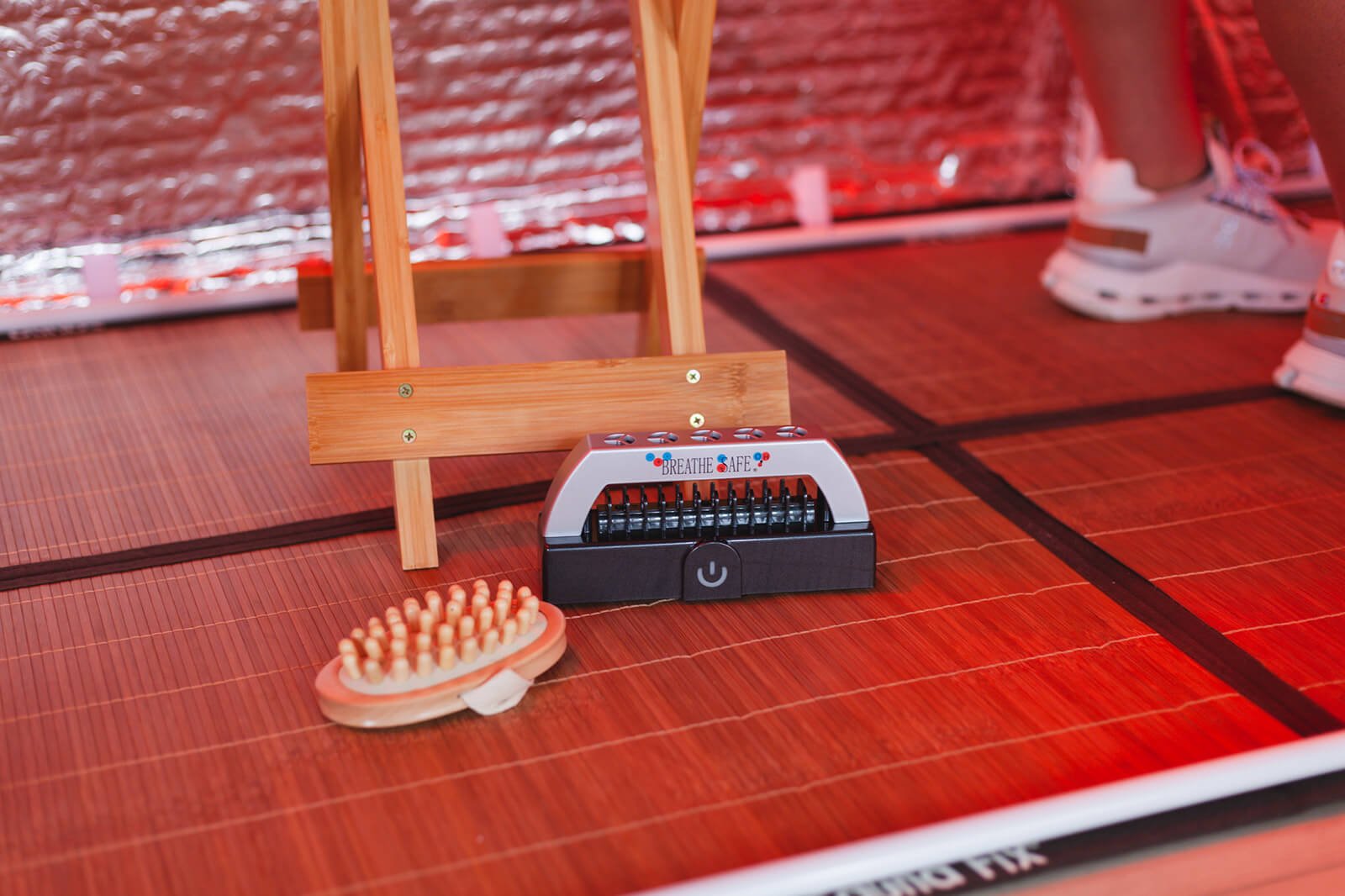
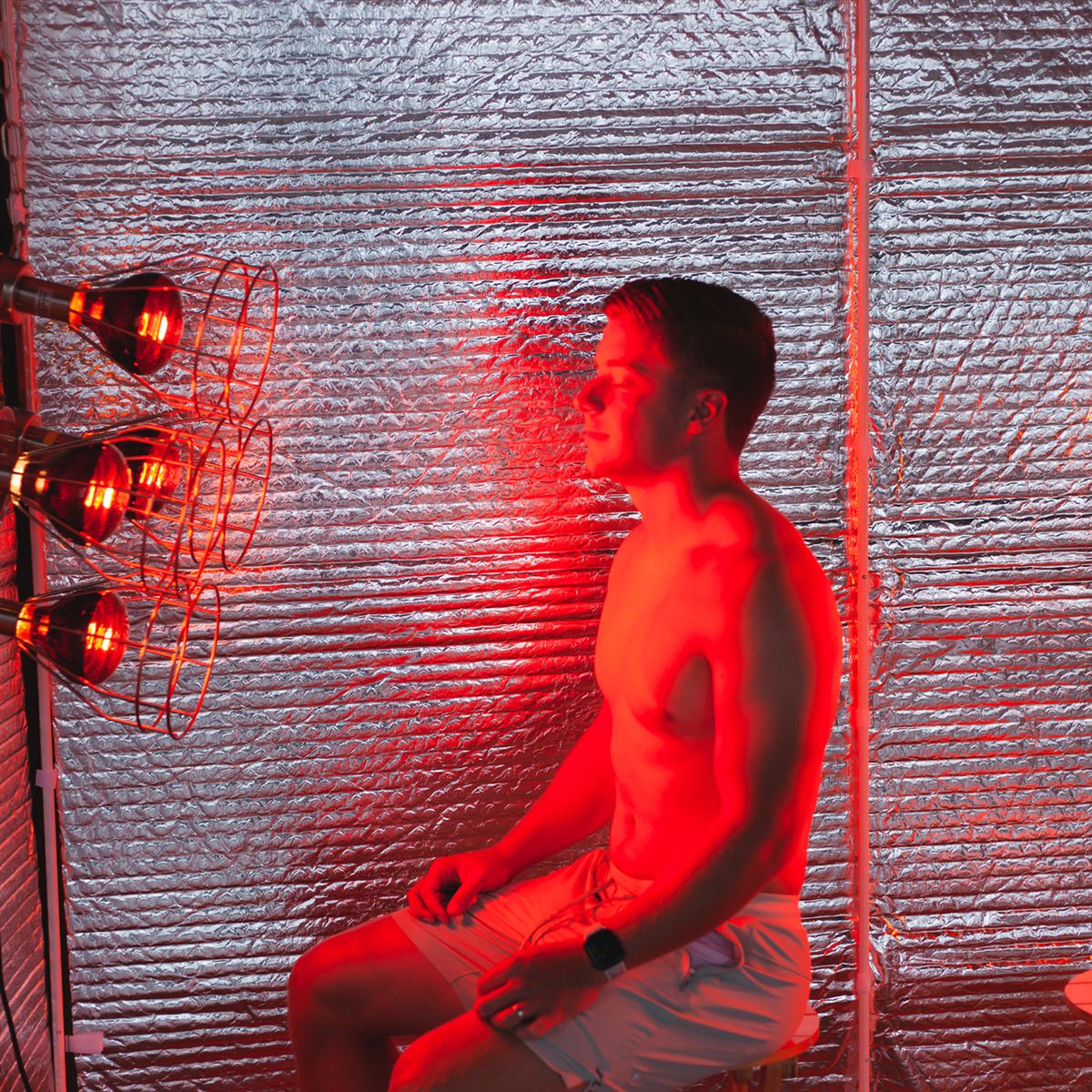
The Sauna Fix® is a near infrared lamp system rather than a heated cabin, so the session is shorter and the setup is small enough to live in a spare room or a tent. For the bowel route the Enema Fix® is the stand-up system I designed after using traditional bucket kits for years and getting tired of the mess; some people prefer a stainless steel enema kit, and that is a perfectly good choice.
I am not going to walk through procedure here — there is a proper step-by-step for that, and doing it badly is worse than not doing it. If you want the method rather than the reasoning, read how to do a coffee enema instead of improvising from a blog post.
Safety, Stated Plainly and Not Buried
This belongs in the middle of the article rather than in a footnote.
Enemas are not appropriate for everyone. Anyone with bowel disease, recent abdominal or rectal surgery, haemorrhoids, diverticular disease, heart or kidney conditions, or who is pregnant, should speak with a clinician before considering one. Frequency matters, water temperature matters, and more is emphatically not better.
Near infrared requires eye protection and sensible session limits. Heat is a genuine physiological load: if you are unwell, dehydrated, pregnant, or managing a cardiovascular condition, that is a conversation with your doctor first.
Neither practice treats or cures any disease, and I am not suggesting otherwise.
The Honest Limit of What I Can Tell You
I want to be straight about the evidence, because this subject attracts a great deal of confident writing that has nothing underneath it.
What I can source is that both practices appear in the elimination-support protocols I trained on, listed among the therapies that assist the eliminative organs during a period of active change. That is a tradition of practice and a rationale — it is not a clinical trial, and I am not going to dress it up as one.
What I can tell you from my own use is narrower and more useful: the combination is easier to sustain than either done aggressively, and the people who struggle are almost always the ones who went hard rather than the ones who went regularly.
The Actual Point
If you take one idea away, make it this: match the support to the exit that is limiting you.
Sweating more will not fix a slow bowel. Attending to the bowel will not replace what leaves in sweat. Working out which one is your constraint this month is more valuable than doing both harder.
The sweat side is covered on the Near Infrared Therapy pillar, and the wider picture on the Detoxification pillar.
Keep Exploring
This article is for educational purposes only and does not constitute medical advice, diagnosis, or treatment.