

I began hair tissue mineral analysis in 2010, under an ARNP named Julie Walker here in Kennewick, and in the years that followed I did what you do when a subject gets hold of you: I read all of it. Every Analytical Research Labs newsletter. Every cassette Dr. Paul Eck recorded, start to finish. I worked directly with the lab, testing family and friends. In August 2011 I signed up with Dr. Larry Wilson, and I have been reading charts ever since.
So when I say there are things in that older literature I do not repeat, I am not waving away material I have never read. I am declining material I know well. This piece is about where I draw that line — what a hair mineral chart can honestly show you, and where it stops. It stops at the person.
What the Screen Actually Reads
A hair tissue mineral analysis is a screen for nutritional and toxic element status. A small sample of hair goes to the lab and is analysed unwashed, because washing strips out much of what the test is there to measure. The report covers a broad set of nutritional and toxic elements, and each reading reflects a stretch of months rather than a single moment — which is part of why it is a trend tool and not a snapshot.
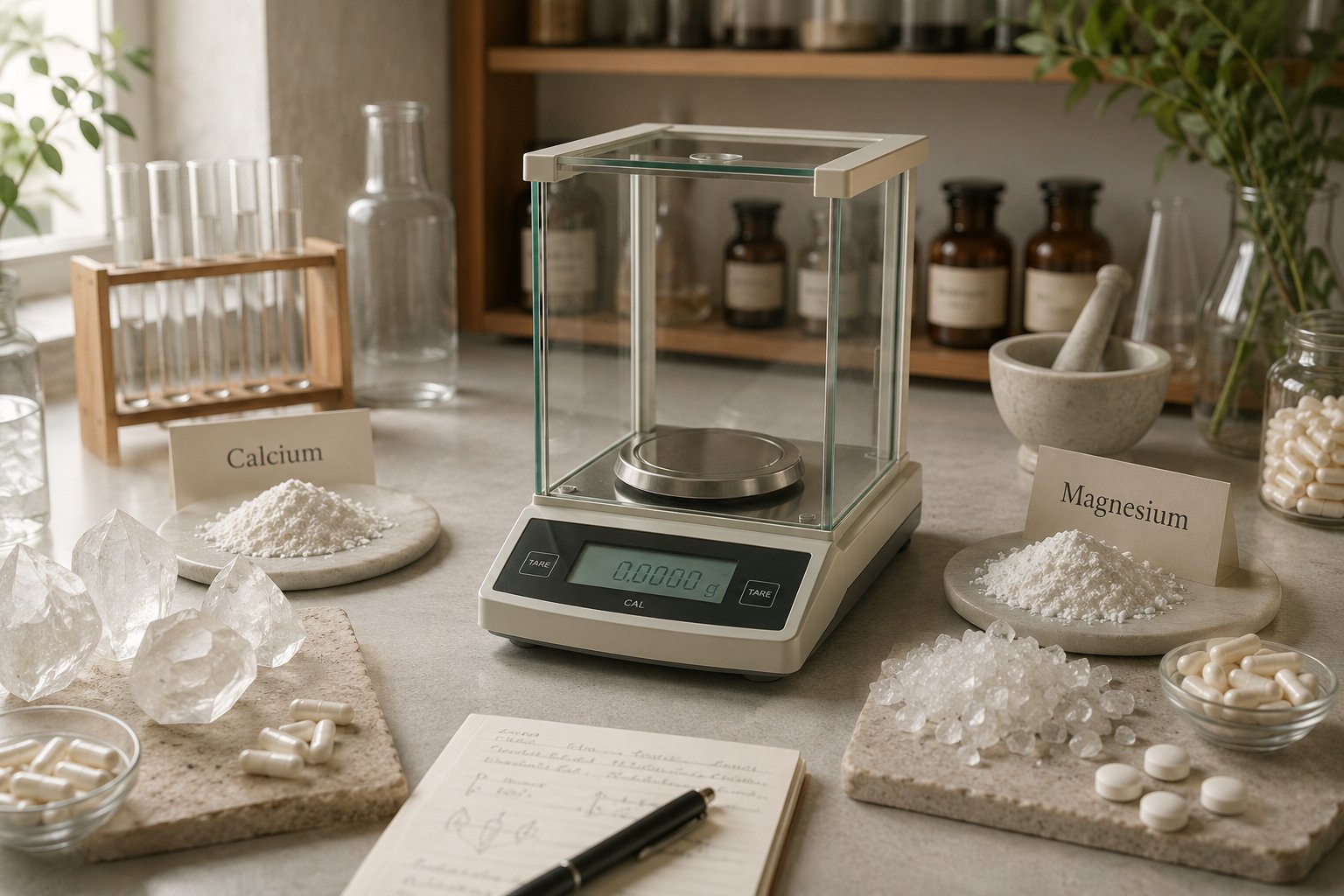
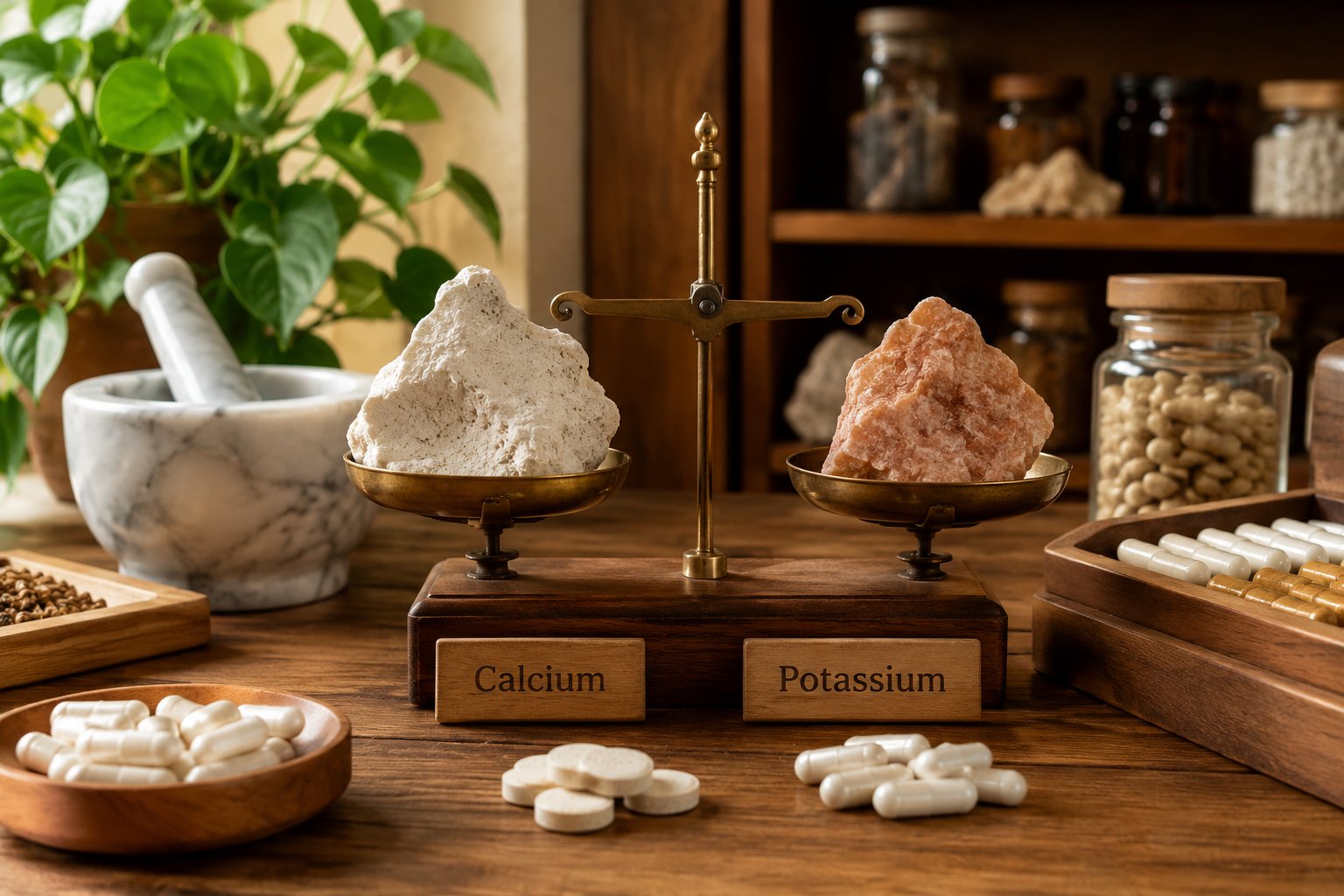
What makes that report worth anything is not a single number but the relationships between numbers. Calcium against magnesium. Sodium against potassium. Zinc against copper. A metal can sit inside its acceptable range and still read as a burden once you set it against the nutrient that antagonises it — that is what the word “hidden” means in this work, and no single-column list of levels would ever show it to you.
That is the whole honest inventory: elements, ratios, and trends over time. It is a screening and educational tool. It is not a diagnostic test, and it does not diagnose anything.
Where the Older Literature Reached
The archive is not shy. Much of it was written in the 1980s and early 1990s by people who were genuinely ahead of their time on tissue mineral status and genuinely out ahead of their evidence on nearly everything else. Alongside the careful mineral work there are grids assigning temperament words to element levels, passages that read behaviour off a ratio, and long lists tying patterns to named illnesses.
Some of that has not aged well. I am not going to reproduce any of it here, not even to argue with it, because reprinting a retired claim is how it gets a second life — somebody lifts the paragraph and leaves behind the paragraph that corrected it. What I want to hand you is the boundary itself, not a tour of what sits behind it. The longer story of how I came into this work is also the reason I feel entitled to draw it.
What I will say is that the more careful parts of that same literature warned about this in their own pages. They said no mineral pattern is fixed. They said patterns change surprisingly fast. They said never to attribute a behaviour to one mineral, because it is virtually impossible to be deficient in just one. And they said the plainest thing of all: a hair test cannot tell you how much of a pattern is biochemical and how much is circumstantial.
The Engineer’s Objection
Twenty years in nuclear quality engineering left me with a reflex I cannot switch off. I want to know what the instrument actually measured, and how many inferences are stacked between that measurement and the sentence somebody just said out loud.
For an element level, the stack is one deep. The spectrometer measured the element. For a ratio it is still shallow — arithmetic on two measured values. For a statement about which way a person’s metabolism is currently leaning, the chain is longer, but every link in it is traceable and there are decades of correlation work holding it up.
For “this chart says you are a stubborn person,” the chain has left the building. Nothing on that report was ever calibrated against temperament. There is no control for the week you have had, the job you left, the person you are grieving, or the household you grew up in. And there is no result that would prove the claim wrong — which, to an engineer, is the tell. A statement that cannot fail is not a finding. It is a horoscope with a lab bill attached.
A Pattern Is a Place You Are Standing
Here is the idea from this field I think is worth everything, and it happens to be the exact opposite of a personality label.
What the ratios describe is a metabolic dominance — the fast, sympathetic-leaning picture, or the slow, parasympathetic-leaning one — layered over where a person currently sits in a stress sequence. David Watts extended Selye’s three stages to five: alarm, resistance, recovery, adaption, exhaustion, on the sensible reasoning that most ordinary stress ends in recovery rather than in collapse. So a “type” is not a constitution you were issued at birth. It is a dominance plus a position, and the sodium-to-potassium reading those stages are drawn from is one of the parts of the chart that moves fastest.
That is why a fast, wired picture can burn down into a slow, flattened one, and why “I used to be wired, now I am exhausted” is such a familiar sentence. Nobody’s character changed. The chemistry moved along a sequence and the chart moved with it. A personality label written on the first test would have to be withdrawn on the second.
Why the Line Protects You
Labels stick. Minerals do not. Retest in three or four months and the numbers have moved, which is the entire point of retesting. But a person who has been told what kind of person they are will carry that sentence a great deal longer than the chart that produced it, and long after the chemistry behind it has changed.
There is a quieter harm as well. A label ends an inquiry. “You are just a high-strung person” closes the question and sends everybody home. A trend keeps it open: the calming minerals are reading low against the stimulating ones, that is a pattern worth watching, here is what tends to move it, and let us look again in a season. One of those is a verdict. The other is a starting point — and only one of them can be checked. The calcium-to-magnesium relationship is a good example of a number worth tracking across tests, precisely because it is a number and not an adjective.
What I Say Instead
When somebody wants to know what their chart says about them, the honest answer is that it says a great deal about their minerals and nothing at all about them. The chart is one input. I want to know what a person eats, how they sleep, what their water is like, what their work does to them, what they have already tried and what happened when they tried it. The lab measures the tissue. The person supplies everything the tissue cannot.
That is not a smaller offer than a personality profile. It is a larger one, because it puts the reader back in charge of the interpretation instead of handing them a verdict to live up to or live down. If you want the method laid out plainly before deciding whether it is for you, I wrote a beginner’s guide to what hair analysis measures, and the collection kit shows exactly what the sampling involves. Read both, then judge the method by what it can actually be held to — which is, in the end, the only fair way to judge anything.
Keep Exploring
This article is for educational purposes only and does not constitute medical advice, diagnosis, or treatment.