

Few subjects in this field come loaded with as much baggage as this one. People either treat the coffee enema as a miracle or as a punchline, and both positions save them the trouble of finding out what it actually is.
So: what it is, where it sits in a sensible routine, what I can honestly claim for it, and — the part most articles skip — who should not do one.
What It Is, Plainly
An enema introduces liquid into the lower bowel, which is retained briefly and then released. A coffee enema uses brewed and cooled coffee rather than plain water. That is the whole of it.
It is a very old practice, and for most of the twentieth century it was unremarkable enough to appear in ordinary nursing references. The controversy is recent and mostly concerns the claims people attach to it, not the procedure.
I am deliberately not giving instructions here. There is a proper step-by-step guide for that, and the details — quantity, temperature, timing, how the coffee is prepared — are exactly the things worth getting right rather than improvising. If you want the method, read how to do a coffee enema at home. This article is about the reasoning.
Where It Fits
In the elimination-support protocols I trained on, enemas appear on a list alongside sauna, warm baths, skin brushing, deep breathing, massage and castor oil packs — therapies that support the organs of elimination while the body is actively working through something.
The bowel earns its place on that list for a specific reason. Material processed by the liver leaves largely via bile into the intestine. When transit is slow, that material lingers, and some of it can be reabsorbed and returned to the liver to be handled again. Supporting the bowel is therefore not a side quest — it is maintenance on the main outlet.
That is the honest case for it: it supports a route that everything else depends on.
What I Am Not Going to Tell You
Here is where I part company with a lot of what is written about this.
I am not going to tell you a coffee enema cures anything, treats any disease, or removes a specific quantity of anything from your liver. I cannot source those claims, and the confident numbers that circulate online generally trace back to nothing you would want to rely on.
I am also not going to tell you it is a substitute for a bowel that works. If transit is chronically slow, that is worth understanding rather than routing around indefinitely.
What I will say is what the tradition says: it is a way of supporting an eliminative organ, it belongs to a category of unglamorous supportive practices, and it is most useful as part of a routine rather than as a rescue.
Who Should Not Do This
This section is not a formality and it is not going in a collapsible box at the bottom.
Speak with a clinician first — or simply do not — if any of the following apply: inflammatory bowel disease, diverticular disease, recent abdominal or rectal surgery, haemorrhoids or anal fissures, bowel obstruction or a history of one, heart disease, kidney disease, uncontrolled blood pressure, electrolyte problems, or pregnancy. The same goes for children, and for anyone who is generally unwell or dehydrated.
Three further points that matter more than people expect:
Frequency is not a virtue. More is not better, and daily use is not a goal to work toward.
Temperature matters. Comfortably warm, never hot. This is not a place for approximation.
Minerals matter. Anything that increases elimination has a cost on the mineral side. Ignoring that is how people end up feeling flat and blaming the wrong thing.
If something hurts, stop. Pain is not part of it, and pushing through is not resilience.
Equipment, Briefly
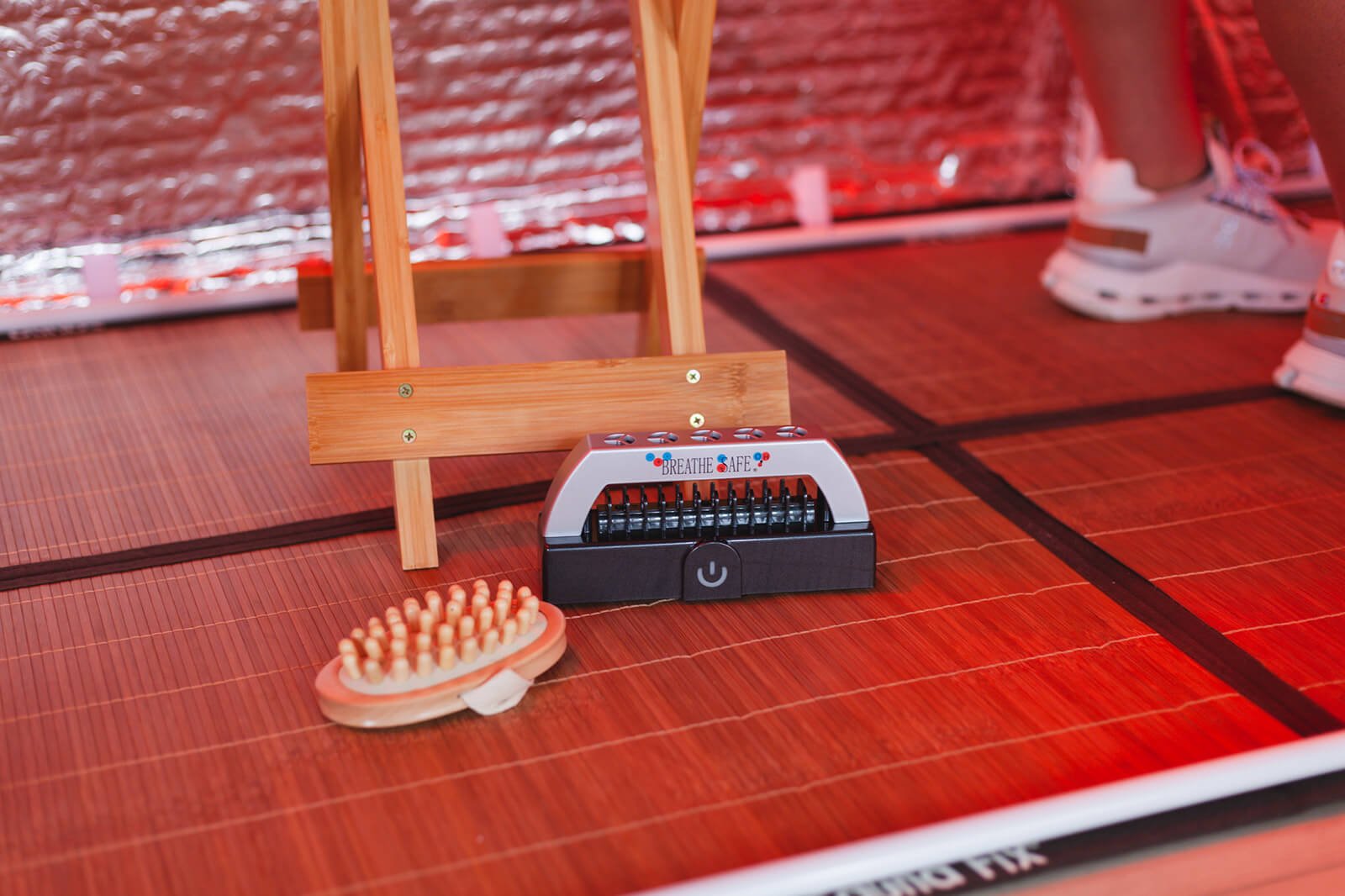
The traditional approach is a stainless steel enema kit, which is durable, easy to clean and entirely adequate.
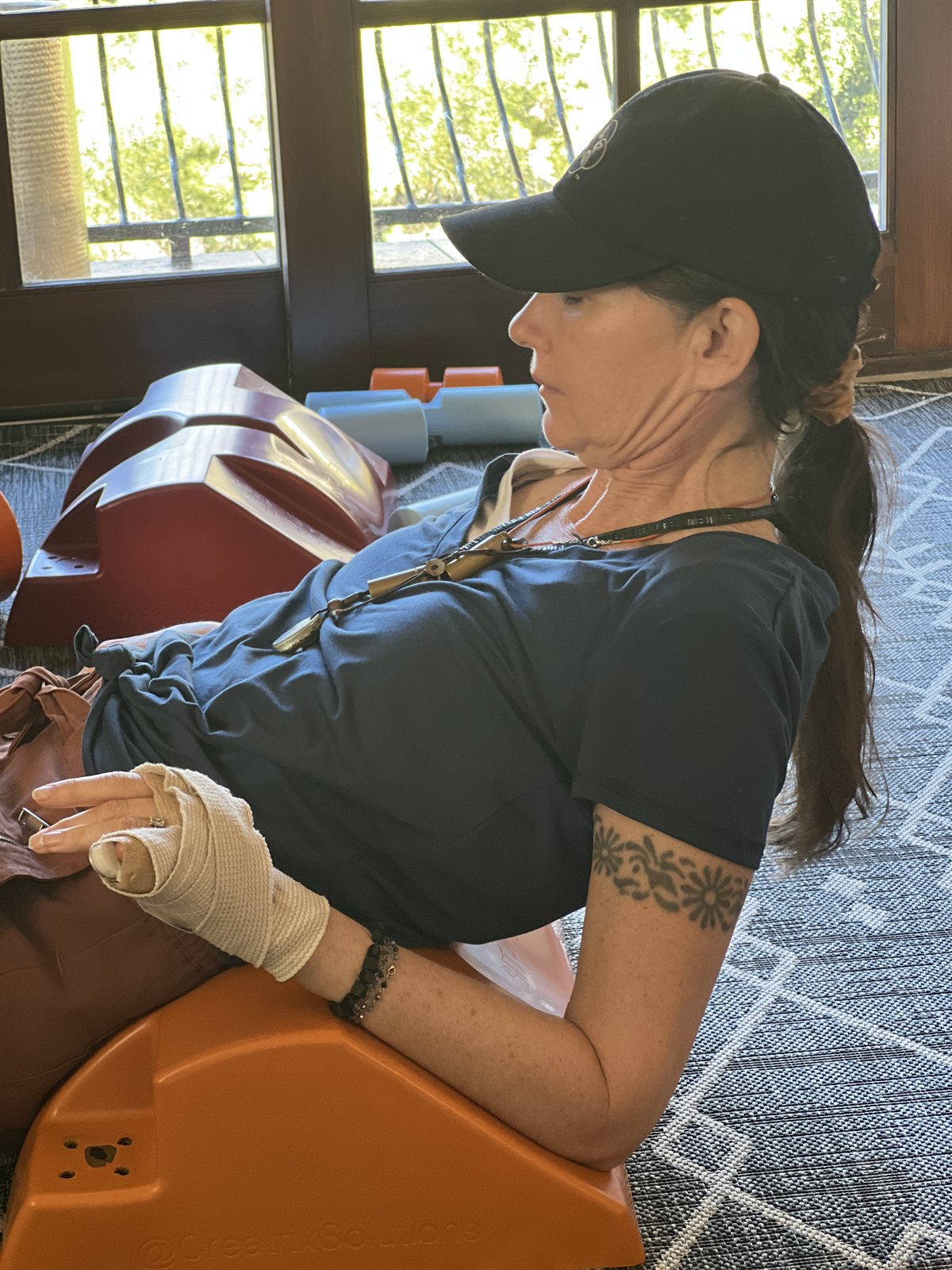
I designed the Enema Fix® because after years of bucket kits I wanted a stand-up system that did not turn the bathroom into an event. That is my bias, declared. Either works; the one you will actually use is the better one.
Why I Talk About It At All
Because the squeamishness costs people something real. This sits in a category of practices that are cheap, old, unexciting, and quietly useful — and it gets skipped in favour of things that are none of those but photograph better.
My own route into this world was through mineral testing in 2010, and what changed my thinking was not any single practice. It was realising how much of the result depends on whether the exits are open, and how little of the popular advice concerns itself with that.
The Caveat, Once More
Nothing here is medical advice, nothing here diagnoses or treats a condition, and none of it should override a clinician who knows your history. If you are under care, ask before adding this — not after.
What I hope is useful is the framing: an ordinary supportive practice with real contraindications, worth understanding accurately rather than either dismissing or overselling.
More on elimination sits on the Detoxification pillar.
Keep Exploring
This article is for educational purposes only and does not constitute medical advice, diagnosis, or treatment.