

Of all the mechanical systems in a house, the water softener is the one most likely to have been chosen by somebody else. You notice the furnace. You notice the water heater the day it fails. The softener sits in a corner of the garage, cycles at two in the morning, and takes a bag of salt a few times a year. Almost nobody decides to have one. It arrives with the address and quietly does its job for twenty years.
I spent my working life in nuclear power quality engineering, which is largely the discipline of evaluating systems you did not design and were not consulted about. So when I began working with hair tissue mineral analysis in 2010, household water was one of the first inputs worth taking seriously — because a softener is the only appliance in a house whose entire purpose is to change the mineral content of something you drink.
What a Softener Actually Trades
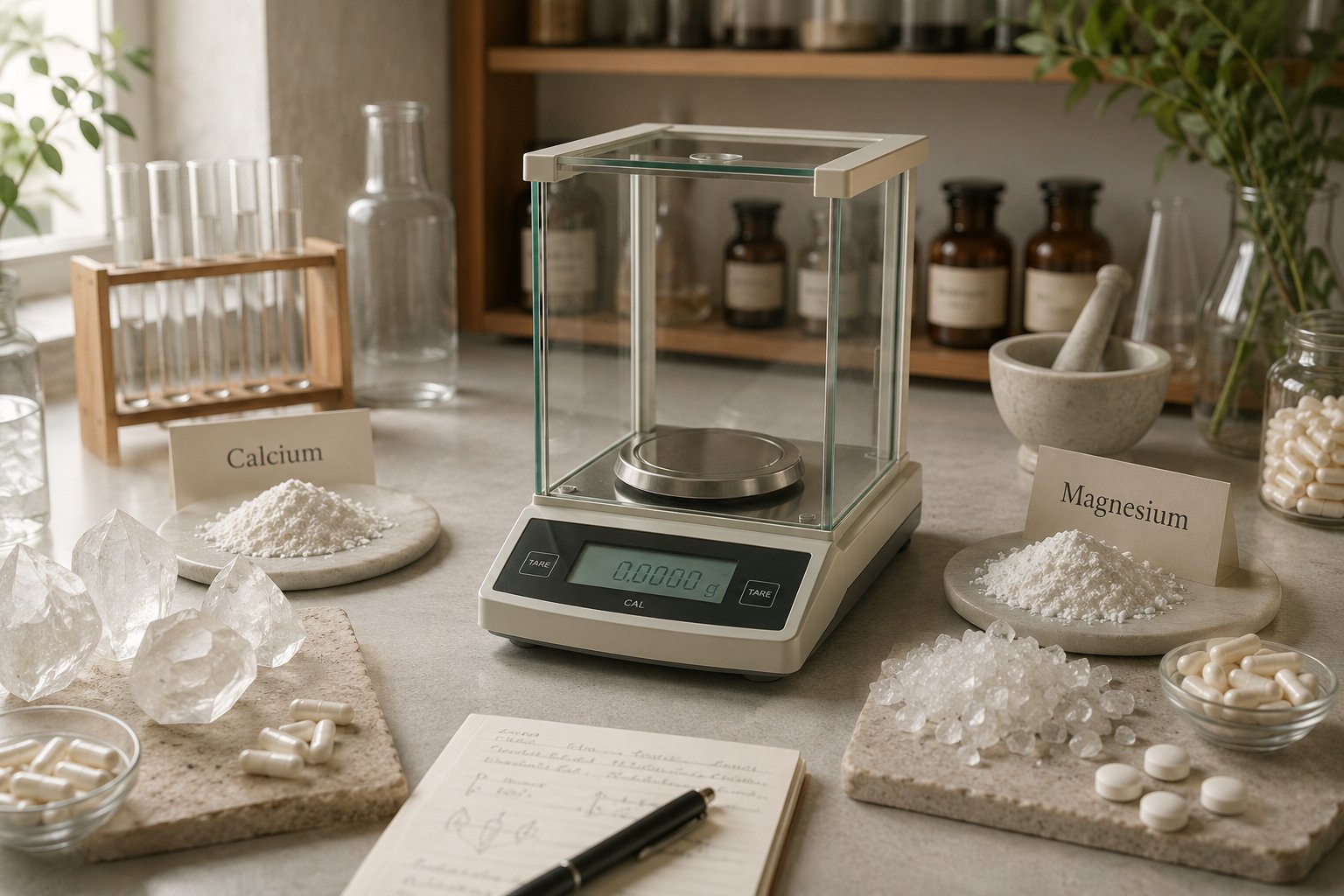
Ion-exchange softening is not a filter. The tank holds resin beads loaded with sodium, and as your water passes through, the calcium and magnesium stick to the resin and sodium comes off in their place. When the resin fills with hardness, the unit flushes itself with brine from the salt tank, sends the calcium and magnesium down the drain, and reloads the beads. That is the whole machine.
So the honest description is a swap, not a removal. Is softened water high in sodium? Higher than it was, always — and how much higher depends entirely on how hard the incoming water was. The softener adds sodium in proportion to the hardness it takes out, so a house on very hard water gets a bigger trade than a house on moderately hard water. The people most impressed by their softener are, by definition, the people whose water changed the most.
Engineers learn to distrust any device described only by what it removes. Every process has an output stream, and when the brochure lists only the good one, that is where to look.
Why It Shows Up on a Mineral Chart at All
Hair tissue mineral analysis is a screening tool for nutritional and toxic element status — not a diagnostic test, and not a prediction of anything. It reports elements in milligrams percent across roughly two to three months of growth, and what matters most is relationships rather than single numbers. Two of the relationships a chart reports sit right on top of this question: sodium read against magnesium, and calcium read against magnesium. Those are precisely the elements a softener moves in your drinking water, in opposite directions — which is why the tap can show up in a reading at all, and why it would show up as a trend across retests rather than a jump on one report. What the ideal ranges are, and how they are scored, belongs with the test itself rather than here.
There is a real relationship underneath the arithmetic. Excessive sodium works against magnesium — they antagonize each other, and pushing one up tends to press the other down. I have written elsewhere about how the calcium and magnesium pairing is read. Most people never think about the water when they think about their minerals. They think about food, supplements, stress. The tap is invisible.
But this is exactly where a chart gets over-read. Hair sodium is governed far more by adrenal activity than by what you swallowed. Aldosterone is the prime regulator of tissue sodium, and the teaching here is blunt: if adrenal activity is low, tissue sodium generally stays low no matter how much salt goes in. That is the cleanest statement of why a hair chart is not a dietary intake log. As the old line has it, diet is what is consumed, but nutrition is what is retained and utilized by the body. Your water is one input in a system with larger levers.
The Bypass Tap, and What It Buys You
The practical answer most plumbers already know is to keep one cold line unsoftened and run it to the kitchen — the tap you drink from and cook with — while the rest of the house stays soft. Showers, laundry and the water heater get the benefit; the glass in your hand does not get the trade. It is inexpensive while a house is being built and more of a project as a retrofit, but rarely as hard as people assume.
Two things to check before assuming you already have one. Many houses do have an unsoftened line, and it goes to the outside hose bibs so nobody wastes salt on the lawn — that is a bypass, but not the bypass. And a refrigerator water line is often plumbed off whatever was nearest. In quality work we call this verifying the as-built against the drawing. Trace the pipe, then tape a label on it at the softener — whoever owns this house in fifteen years will inherit the same puzzle you did.
Soft Water Is Also Slightly Hungry Water
Here is the part left out of the sodium conversation entirely. Softened water is low in total dissolved solids and tends to run on the acidic side, and mildly acidic water is a little more aggressive toward the pipe it travels through. That matters, because plumbing is itself a mineral source. Copper pipes are a recognized route for copper intake, and iron pipes for iron — the classic note in the literature is iron pipes especially with acidic water.
Copper and iron are both elements a hair analysis reports, and both are read against their antagonists rather than alone. So the sodium is the obvious trade, the one everybody argues about, and the plumbing is the quiet one. If you are going to think about water as a mineral input, think about the whole path it takes — not just the appliance in the middle of it.
Why the Answer Is Not Obvious in Either Direction
In the framework I work in, water is classified the way foods and herbs are — by its mineral profile. Hard water, high in calcium and magnesium relative to the stimulatory minerals, classifies as sedative and parasympathetic. Softened water, low in total solids and dominant in the stimulatory minerals, especially sodium, classifies as stimulatory and sympathetic. That frame is useful precisely because it refuses to name a winner. Which direction suits someone depends on the pattern they are already in — not something anyone can guess from the outside.
The other side of the ledger is real too. Hard water scales the inside of a water heater, shortens the life of every appliance that boils or sprays, films the glassware, and makes soap behave badly. Pulling out a working softener because sodium sounds alarming trades a small, manageable input for a failed water heater and a plumbing bill.
This is a trade-off with a known shape, not a mistake to be corrected. You are moving calcium and magnesium out of your drinking water and sodium in, in exchange for softer water everywhere else. Bypass the drinking line and you keep most of the benefit while giving back most of the trade. Leave it unbypassed and you have still made a choice — it is just worth making on purpose.
What I Would Do First
Find out what your water actually is before changing anything. On a municipal supply the utility publishes an annual report with hardness in it; on a well, a lab test tells you the same. Then trace which taps sit on which side of the softener. Those two facts cost almost nothing, and they turn the question from an opinion into a measurement.
And if you are going to test minerals, note the household water on the form the way you would note shampoos and dyes. Context changes interpretation. I have been an independent practitioner since the autumn of 2017, and the charts that teach me most arrive with the person’s circumstances attached — the water, the cookware, the work, the sleep. A number without its conditions is a precise answer to a question nobody asked. My free guides cover the household inputs worth writing down, and there is a longer version of how I came to this work if you want it. To see what testing involves, start with the collection kit and what it includes.
The softener came with the house. That does not make it right or wrong. It makes it a system somebody else specified, still running on your dime, doing exactly what it was built to do — and the only real error is never having looked at it.
Keep Exploring
This article is for educational purposes only and does not constitute medical advice, diagnosis, or treatment.